





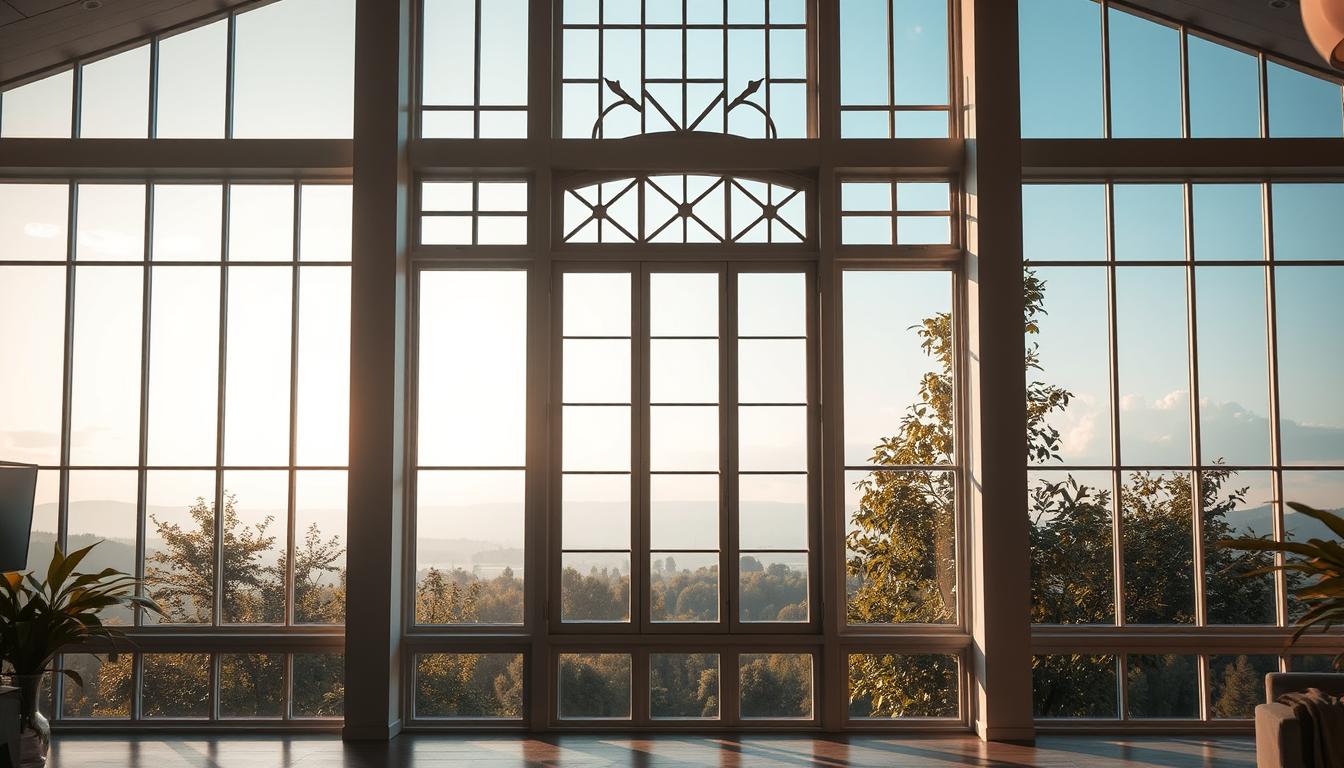
Windows are more than just holes in walls. They shape our view of the world outside. Every choice in window design and placement affects comfort, energy use, and our mental health. They connect our indoor and outdoor spaces.
Residential windows do more than let in light and air. They help us connect with nature, control noise, and manage energy. The right design and placement can transform a space, making it a bridge between home and the world.
The Role of Windows in Architecture
“We do not first see, and then define—we define first and then see,” noted Walter Lippmann. This quote shows how windows change how we see space. Window design is more than just a feature—it’s a way to tell stories.
Gothic cathedrals used stained glass to mix light with stories of faith. Victorian homes showed off fancy window styles to show off wealth. Now, modern windows like steel frames are changing what architecture can be.
Architects like Le Corbusier changed window design by seeing them as part of the building. His “ribbon windows” in Villa Savoye made lines between inside and outside fade away. Today, places like the Serpentine Gallery Pavilion use thin frames to blend in, focusing on connection over separation.
Steel windows, like those from Portella with 1/16-inch precision, are strong and look good. House N’s layered windows change how we see things with light. House NA’s floating frames make cool alcoves. These show how window styles affect both looks and use.
Windows have always told stories, from colonial to minimalist designs. Modern homes mix usefulness with beauty—fiberglass frames feel like wood, and frosted glass adds privacy without walls. As we move towards being more green, windows show both new ideas and old values, shaping our view of architecture’s heart.
Natural Light and Its Benefits
Natural lighting is more than just bright—it’s good for your health. It boosts vitamin D, helps you sleep better, and fights off the blues. With most of us indoors 90% of the time, where we place our windows is key.
South-facing windows let in light all day. Light-colored walls help reflect this light, making rooms brighter.

Studies show classrooms with lots of natural light see better grades. Sunlight helps keep our energy levels up and reduces tiredness. Office workers near windows sleep 46 minutes more each night, says the University of Oregon.
Even looking at screens less strains our eyes when there’s daylight around.
“Natural light improves focus and reduces stress,” says a 2023 Journal of Environmental Psychology study.
Using sheer curtains or smart blinds lets in light while keeping things private. These choices also save on energy bills—homes with good natural lighting use 30% less.
Designing with natural lighting in mind boosts our mood and sharpens our minds. The right window placement ensures every room gets its share of benefits. Window treatments keep things cozy all year. It’s simple science for a healthier life.
Windows as a Connection to Nature
Windows are more than just openings. They connect us to the world outside. By placing windows right, we can see gardens, trees, or skies. This creates a bridge between indoors and outdoors.
A study by the U.S. EPA shows we spend 90% of our time inside. This makes connecting with nature very important. Biophilic design, which focuses on natural light and views, can lower stress and improve well-being.
Hospitals see patients recover 8.5% faster with nature views. Students in sunlit classrooms learn 20-26% faster. These facts show how important windows are.
Smart window design makes a big difference. Big windows or skylights give us more views. Adjustable window treatments let in sunlight without glare.
Even small changes help. Rooms with water or greenery views reduce mental fatigue by 20%. For city folks, looking out at parks or rooftops can bring balance.
Nature’s rhythms, like dawn and dusk, come through windows. They remind us of our place in the world. As daylight changes, so does the room’s feel, linking us to life outside.
This isn’t just about looks. It’s essential for our health. With careful window placement and window treatments, any space can open up to the outdoors.
Energy Efficiency and Sustainability
Modern windows are a blend of function and future. They use new tech like low-emissivity coatings and triple glazing to save energy. These modern windows keep warmth in winter and cool in summer, cutting bills by up to 25%. They even change tint with sunlight, thanks to electrochromic tech.

Numbers show the impact: homes with ENERGY STAR windows save 10-25% on heating and cooling. Their low U-factors and smart gas fills like argon make a big difference. Even the frames are key—uPVC or timber options from brands like BINQ are durable and eco-friendly.
Sustainability goes beyond energy. Modern windows stop drafts that waste 25-40% of heat. They also block UV rays, keeping furniture colors bright. Homes with these features sell 3-5% faster, showing their worth. Choosing the right windows means comfort now and a greener future.
Noise Reduction Features
Modern homes use soundproof windows to fight city noise. Old single-pane windows block only 20 decibels. But new designs can block over 50% more. For example, Pella Lifestyle Series windows with Sound Control packages block 52% more noise than basic ones.
These windows have triple panes, laminated glass, and acoustic layers. This makes Pella the first to get Quiet Mark Certification in the U.S.
Important window technology innovations include special glazing layers. Thicker glass and gas, like argon, also help. A 3-inch air gap between panes absorbs sound well.
Multi-chambered vinyl frames work better than aluminum. Triple-pane windows can reach STC 40+, much higher than STC 26. Even small details, like proper sealing, are key to keeping noise out.
Choosing the right window materials is very important. Laminated glass with acoustic layers blocks traffic or airport noise better. Solid wood frames add mass to dampen vibrations.
Homeowners in noisy areas should look for high STC ratings. Higher numbers mean better noise blocking. Upgrading to these solutions makes homes quiet and peaceful, without losing natural light or style.
Security and Safety Considerations
Windows connect our homes to the outside world. But, they also need careful safety checks. Modern window security features help prevent break-ins, falls, and fires. For example, impact-resistant glass has layers that stop it from shattering.
This type of window material can handle extreme weather and keep intruders out.
“Windows offer life-saving escape routes during emergencies, yet require proper safeguards to prevent accidental falls.”
New window technology innovations include smart sensors for alerts on break-ins or glass damage. Multi-point locks spread pressure, making it hard for intruders to get in. The National Safety Council says over 3,300 kids under five get hurt each year from falls through windows.
Security bars or window limiters can stop falls while keeping escape routes open. Keyed locks cut break-in risks by 70%, and reinforced glass is five times harder to break than regular glass.

Fire safety is also key. New rules require certain window sizes and types in bedrooms for escape routes. Upgrading to modern windows with tempered glass and strong frames boosts safety and value.
Homeowners should use a mix of strong materials, smart tech, and regular checks to keep families and homes safe.
The Evolution of Window Technology
From animal hides to smart systems, window technology innovations have changed how we see the world. Ancient Rome used expensive lapis glass for windows. Medieval stained glass added color and light to cathedrals.
The Industrial Revolution made glass affordable, leading to bigger windows in homes. By the 1930s, double-glazed modern windows started to reduce heat loss, a big step in building science.
Now, energy efficient windows do more than just keep warm. They have special coatings to block UV rays and trap heat. You can even change the tint of windows with a touch.
Photovoltaic glass turns sunlight into electricity. Companies like HTR Windows offer grants for installing Energy Star-certified windows, encouraging green choices.
Future windows will be even more advanced. They might clean themselves with nanocoatings and adjust light and temperature with AI. These windows will also generate power while staying clear.
These changes will make windows more than just openings. They will be active parts of sustainable homes, blending beauty and function.
Cultural Perspectives on Windows
Windows are more than just openings—they tell cultural stories. They show how societies view light, privacy, and the outside world. In Japan, window styles focus on blending with nature.
Traditional window materials like translucent paper in shoji screens bring soft, diffused light. This light represents simplicity and the fleeting nature of life. On the other hand, Gothic cathedrals use stained glass window materials to turn sunlight into sacred art. This combines faith with architecture beautifully.
In the Middle East, mashrabiya lattices balance privacy and airflow. They show how window design meets climate and social needs. Scandinavian homes have big, open windows to let in lots of daylight.
This reflects a love for connecting indoors with nature’s changes. Today, architects mix modern window materials like energy-efficient glass with old designs. This honors heritage while meeting today’s needs.
Windows silently share cultural values. They show what’s important to people—like light, spirituality, or community. As design changes, so do the stories windows tell.
Maintenance and Care for Your Windows
Regular window maintenance tips keep windows working well and safe. If you ignore them, they might not last as long. But, taking care of them can save you money in the long run.
In places like East Texas, the weather can make windows wear out faster. So, it’s important to check them often.
Every window material needs its own special care. Wood frames need to be sealed every 3-5 years to keep moisture out. Vinyl windows should be cleaned gently to avoid harm. Aluminum frames should be checked yearly for any blockages.
Using the right window treatments helps too. For example, weatherstripping can keep drafts out. This can save you 5-10% on energy costs.
Don’t forget about seasonal care. In the spring, check for damage from winter. In the fall, get ready for storms. If you see condensation between panes, it means the seal is broken. This can cut your energy efficiency by 25%.
Cleaning your windows regularly helps them work better and look good. Always follow the manufacturer’s advice to make your windows last longer. Taking small steps today can lead to decades of reliable service.
Choosing the Right Windows for Your Home
Choosing window styles for your home is about finding the right mix of looks and function. First, think about what matters most to you. Do you want to save energy, keep noise out, or preserve your home’s history?
Double-hung windows are classic and let in fresh air easily. Casement windows seal tight for quiet rooms. Sliding windows are great for small spaces, and fixed windows bring in lots of light without air movement. 
Material choice is key. Vinyl windows from Alside and Simonton last up to 30 years and don’t warp. Fiberglass, like Milgard’s Ultra Series, lasts even longer and handles moisture well. Wood adds warmth but needs upkeep, while Andersen’s low-E coatings cut energy loss by 30–50%.
Always choose Energy Star-rated windows to save on heating and cooling costs. They can cut bills by up to 30% a year.
Proper window installation is vital for lasting performance. Bad installation can void warranties and waste energy savings. Make sure to hire certified installers to ensure a tight seal and proper alignment. Don’t skimp on this step—15% of your budget should go here to avoid losing efficiency gains.
When it comes to window replacement, think about how it will affect your home’s value. Upgrades can recoup 70% of costs, making your home more attractive to buyers. For example, a 5,000-square-foot home in a historic area might choose wood interiors with fiberglass exteriors. French doors and grid patterns like 2×3 layouts can also enhance large spaces.
Begin by visiting showrooms to feel the materials and test the sashes. Look for warranties that last a lifetime, like Milgard’s. Whether you’re replacing one window or the whole house, finding the right style, budget, and performance will make your home beautiful and efficient for years to come.
The Impact of Windows on Real Estate Value
When selling a home, windows play a key role in improving its value. Buyers often look at windows first to judge a home’s condition. Replacing old windows can make a home look better instantly. Wood or vinyl options can return up to 67% of costs, according to the 2024 Cost vs. Value Report.
Energy efficient windows are not just useful; they also increase a home’s value. Upgrades like Low-E coatings can save up to $568 a year on energy bills. Plus, tax credits of up to $200 can help cover the costs of new windows. Coastal buyers want impact-resistant glass, while mountain homeowners prefer thermal panes.
First impressions are important. Cracked or drafty windows can make buyers worry about hidden costs, leading to longer listing times. New windows, on the other hand, suggest a well-maintained home. Even expensive upgrades, like $20,000 bay windows, can lead to faster sales and higher prices. With proper installation, these upgrades prevent leaks and drafts, ensuring long-term value.