





Family heirlooms are more than objects; they connect us to our past. As Christopher Paolini said, “Live in the present, remember the past, and fear not the future…” This idea brings family treasures to life, reminding us of our heritage. Each item, like a stained recipe card or a quilt, tells a story that links us to our ancestors.
Preserving family history means more than just dusting old items. It’s about making a Civil War-era lamp a part of our daily lives. My great-grandmother’s quilt now keeps a living room warm. These treasures are not just relics; they are part of who we are.
When a 1960s toolbox becomes a bar cart or a garden gate becomes wall art, we connect with our past. Every item shows that the past can live on in the present.
Over 12 years, I’ve learned that family heirlooms are not just items; they teach us valuable lessons. By using them, like my 1800s sewing stool, we keep their stories alive. This article shows how these objects turn memories into moments, proving the past is always with us.
What Are Family Heirlooms?
Family heirlooms are sentimental possessions passed down through generations. They’re not just objects—they’re stories frozen in time. A family keepsake might be a chipped teacup used daily by a great-grandparent, or a handwritten letter tucked in a drawer. Their true worth lies in memories, not price tags.
A silver locket or a quilt stitched by a relative carries generations of history. This makes it a generational treasure even if it’s not antique.
Common heirlooms include jewelry, photos, and tools. Old books, wedding rings, or a childhood toy can become valuable family items. They’re tied to shared history.
Many households collect these items over decades. But not all items hold equal meaning. A dusty vase might remind someone of their grandmother’s kitchen, while a new generation may see it as clutter.
Emotional bonds to heirlooms often outweigh practical use. They’re bridges to the past, sparking conversations about where we came from. Yet, deciding which items to keep or pass on isn’t always easy.
Some families donate heirlooms to museums, while others choose to display them. They see them as living links to their heritage.
Remember: heirlooms aren’t limited to antiques. A faded photo album or a patched quilt can be just as meaningful. Their power lies in the stories they hold, not their age or market value.
Types of Family Heirlooms
Family heirlooms tell unique stories. Antique furniture heirlooms like dining tables or rocking chairs hold memories. Jewelry heirlooms, like wedding rings, carry personal significance. Photograph collections preserve visual histories.
Even a simple family recipe book, stained with decades of use, is cherished. It links us to our ancestors.

Less obvious items also become heirlooms. A handwritten letter from a great-grandparent or a child’s first drawing can be precious. Tools from a family workshop, like the Tuttle family’s, show legacy through practical use.
Even a chipped cookie jar or a well-loved vinyl record collection can spark stories. They are shared at gatherings.
Family recipe books blend tradition and practicality. Handwritten notes in margins, like “Add an extra egg for fluffiness,” show generations adapting. Jewelry heirlooms like a Rolex watch may have monetary value. But their true worth comes from their role in milestones like weddings or graduations.
“A quilt stitched by three generations becomes more than fabric—it’s a tapestry of shared labor and love.”
From handwritten letters to vintage toys, what makes an heirloom is its connection to family. These items bridge past and present. They show that value lies in the lives they’ve touched, not just in the objects themselves.
The Value of Family Heirlooms
Family heirlooms are more than just money—they connect us to our past. Over 65% of people who inherit heirlooms say they feel closer to their family history. This shows the emotional value of heirlooms is timeless.
A well-kept photo album or a beloved quilt can anchor family history preservation. They keep stories alive for future generations. Many families value these items more than new things, with 80% seeing ancestral photos as priceless.
While antique valuation shows an item’s market worth, its sentimental worth is unmatched. A heirloom appraisal might find surprising financial value. Yet, many cherish memories over money.
The BBC’s The Repair Shop shows guests restoring heirlooms for legacy, not profit. Estate planning tools like personal property memorandums help balance legal needs with emotional bonds.
Heirlooms are not just objects—they are part of a family’s story. As one guest said, “This table isn’t just wood; it’s where my grandparents celebrated weddings.” These items remind us that legacy is in moments, not just money.
How to Care for Family Heirlooms
Protecting family treasures starts with understanding their unique needs. Each material requires tailored care. Wooden furniture does best in stable environments, away from direct sunlight to avoid fading.
Clean wooden surfaces gently with a damp cloth, avoiding harsh chemicals. For textiles like quilts, store them loosely rolled in acid-free tissue to prevent creasing. Natural fiber quilts should never be compressed; instead, place them in breathable cotton bags.
Silver jewelry and utensils benefit from regular cleaning with tarnish-resistant cloths, not harsh polishers.

Archival storage ensures longevity. Store paper items like heirloom Bibles or military records in acid-free boxes, away from humidity. Photos and documents scanned at 300 dpi create digital backups.
Wedding dresses deserve special care: dry-clean before storage and use breathable fabric bags. Antique china should rest in padded boxes with tissue paper between pieces. For textiles, avoid plastic containers to prevent moisture buildup.
Cleaning antiques requires care. Use soft brushes to dust clocks and bronzes, but consult professionals for delicate items. Vintage clocks need annual servicing to maintain mechanics.
When in doubt, seek conservators for heirlooms over 50 years old. Regular inspections help spot pests early. By balancing these steps, you honor the legacy in every piece.
Displaying Family Heirlooms in Your Home
Showcasing family treasures can make any space special. Shadow box displays are great for small items like jewelry or letters. Memory shelves combine photos, notes, and heirlooms into beautiful scenes. Over 80% of families say these displays help them feel closer to their ancestors.
“Antiques in modern homes thrive when paired with clean lines and neutral tones,” advises interior designer Clara Bennett. “A retro vase on a minimalist table becomes a focal point without overdoing it.”
Combining heirlooms with modern decor creates a perfect balance. Quilts draped over couches (60% of homeowners do this) or framed wedding gowns (75% choose preservation through framing) add charm. QR codes or labels sharing stories make shelves interactive museums.
Protect your heirlooms by avoiding sunlight (30% of damage comes from neglecting this) and using glass-covered cases in busy areas. A mix of open shelves and closed shadow boxes keeps items safe yet accessible. Whether in kitchens or living rooms, these treasures should be displayed, not stored.
Every family piece deserves to be celebrated. Let heirlooms inspire creativity, making your home a living timeline of your family’s journey. The right display isn’t just about keeping things safe—it’s about keeping history alive in our daily lives.
Family Heirlooms as Conversation Starters
Family heirlooms turn simple items into links between generations. A worn-out letter or a dusty locket can start family storytelling. These stories share traditions, challenges, and victories.
When we show or share these items, they spark connecting through objects. They make quiet spaces into places of discovery. The New York Times says kids who know their family’s history feel more confident. This shows heirlooms are more than just keepsakes—they help pass down family stories.
“The stories we preserve become the roots of our identity,” says family historian Dr. Lena Torres. She highlights how heirloom talks reveal shared values.
Take Jeff’s collection, where none of his kids are interested in heirlooms. But asking, “Who owned this first?” or “What challenges did they face?” can start conversations. These talks are acts of oral history preservation, keeping voices alive. Even things like WWI medals or a great-grandmother’s recipe book can spark curiosity. They teach us about resilience or heritage.
Hosting “story nights” around heirlooms can strengthen family bonds. Recording these stories with apps like Voice Memos or tools from Saeed & Little, LLP’s planning sessions keeps them safe. As 75% of youth might value these stories later, starting now is key. Heirlooms are more than objects—they invite us to remember, connect, and keep history alive.
Passing Down Heirlooms to Future Generations
Starting to plan for heirloom inheritance means having open talks. Families should talk about family legacy planning early to prevent fights. It’s important to share your wishes clearly, balancing fairness with personal feelings.
Some items, like furniture or jewelry, might be shared among relatives. Or they could be kept in digital archives for everyone to see.
Turning objects into stories is key. Heirloom provenance records tell us where they came from, who owned them, and the memories they hold. Use apps or write down the history of your treasures.
Yet, many families lack these records. A good plan for documenting family treasures could include videos, photo albums, or tags with dates and names. For instance, a quilt’s story might tell who made it and why it’s special.
Clear plans for passing down keepsakes keep traditions alive. Make written agreements and guides for care. This way, 60% of people can keep their emotional connections to their ancestors strong.
By planning and documenting, families can keep their history alive. Small steps today will help these treasures last for many generations.
The Role of Heirlooms in Family Gatherings
Family gatherings are special when holiday heirlooms are the stars. A Christmas ornament or a menorah lit every year turns traditions into stories. For Margaret Roberts, her family’s cake topper has crowned over 40 weddings, adding continuity to celebrations. These objects are more than just relics—they are the heart of the celebration. 
Ceremonial family objects like a 1900-era watch or a violin from the 1840s tell silent stories. At birthdays or weddings, they remind us of our ancestors. Lorna’s 1940s baby bath comes out every time a new child is born, linking past and present. These heirlooms make milestones into shared rituals, connecting us through time.
Heirlooms add depth to family gatherings. Sharing stories behind a 1919 photograph or a WWI-era pen sparks curiosity in younger ones. Over 80% of families say these stories strengthen their heritage ties, showing heirlooms as bridges, not just objects. Imagine a Thanksgiving table with great-grandma’s platter, holding both turkey and memories. Let your next gathering’s photos include heirlooms, keeping their legacy alive. As one listener said, “I cry twice when I see it sparkle”—proof that these pieces touch hearts across decades.
Heirlooms and Their Modern Significance
Heirlooms are not just old things; they connect us to the future. In a world filled with fast fashion and disposable items, lasting objects stand out. They show us the value of sustainability and heirlooms.
Today, making things that last means saying no to the idea of “quality versus disposable.” A well-crafted table or a quilt stitched by hand links past and present.
Modern heirloom making mixes old ways with new ideas. Families keep memories alive as digital family treasures. This includes photo collections, video logs, or digitized recipes.
Trefler Restoration combines laser technology with traditional woodworking to restore heirlooms. This shows that old and new can work together. Even a fixed chair or a clock can teach us about patience and care.
Choosing quality versus disposable items makes heirlooms part of our family’s story. A strong chest or a fixed desk is more than furniture. It’s a promise to future generations. By valuing heirlooms, we slow down the “new-is-better” pace. Every well-made item brings us closer to a world where things truly matter.
Incorporating Heirlooms into Your Home Decor

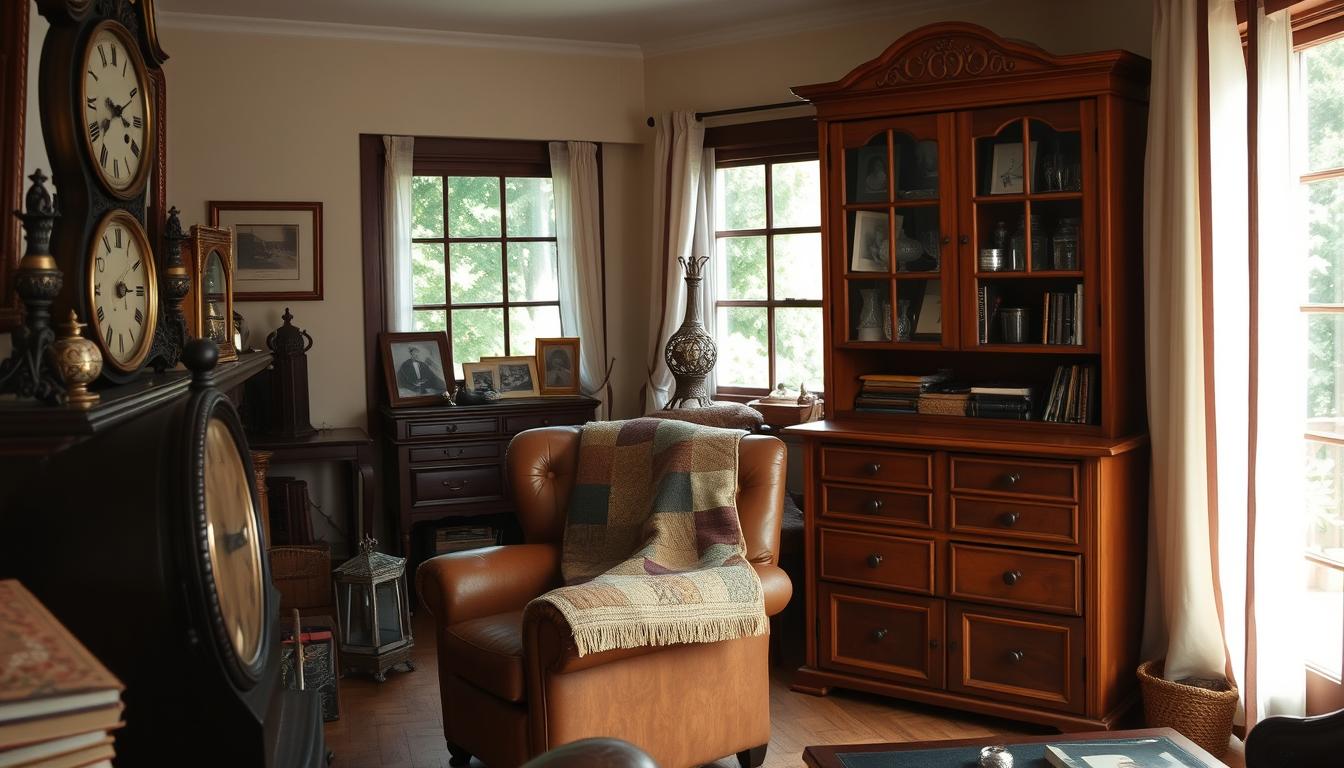
Interior designers like Kathy Kuo suggest starting small. Try placing a vintage clock on a minimalist shelf. Or layer heirloom textiles over modern sofas. Styling heirloomsas accents keeps spaces fresh while honoring history.
A 100-year-old bench reupholstered in bold fabric becomes a conversation piece in contemporary dining rooms. This shows thatmixing old and new furnitureworks well.
A key tip: anchor heirlooms in focal points like mantels or dining tables. Alexandra Denburg’s advice? Pair a weathered trunk with sleek lamps to balance rustic and modern. Over 55% of homeowners blend antique decor with modern pieces, creating spaces that feel both timeless and current.
Repurposing items like repainting a dresser or framing old letters addsvintage home decorcharm. Audrey Scheck suggests updating finishes—like gold leafing on an old mirror—tomodernizing family pieces. Mixing textures, like a leather chair beside a velvet heirloom sofa, avoids clashing styles.
Let heirlooms tell stories without crowding the room.
Small updates—reupholstering, repainting, or reimagining uses—help family treasures fit seamlessly. With 65% of homeowners feeling pride in displayed heirlooms, every piece deserves its moment to shine. Whether as subtle accents or bold statements, these items turn homes into narratives only you can create.
Finding Heirlooms in Unexpected Places
Discovering hidden heirlooms often starts in dusty, forgotten places. An attic might hold a 4-inch poem on notepaper, a father’s humor note in a Jacques Pépin cookbook. Or, a cast-iron stove piece, weathered but strong, could turn up after 60 years of marriage.
These attic treasures show us that history is hidden in plain sight. Thrift store finds or flea market heirlooms can tell deep stories. For example, a chair restored over eight years, or a tablecloth from China, can connect us to our past.
Even a potbellied stove’s side, saved from decay, tells of gold rush trails walked by ancestors. Heirlooms don’t always come from family. A Zimbabwean family’s 1970s move to Cleveland brought traditions. Wedding records from 1948 in Rhodes show cultural blending.
Adopting items like church window frames or sanding them with 220 grit paper can make outsiders into keepers of forgotten stories. Researching antique finds, like a chair’s Revolutionary War origins, honors past owners. A child’s yearly pick at grandparents’ homes keeps legacy alive.
These objects, found in storage or secondhand shops, connect our present to the past. Every crack, stain, or price tag adds to the story we keep telling.