






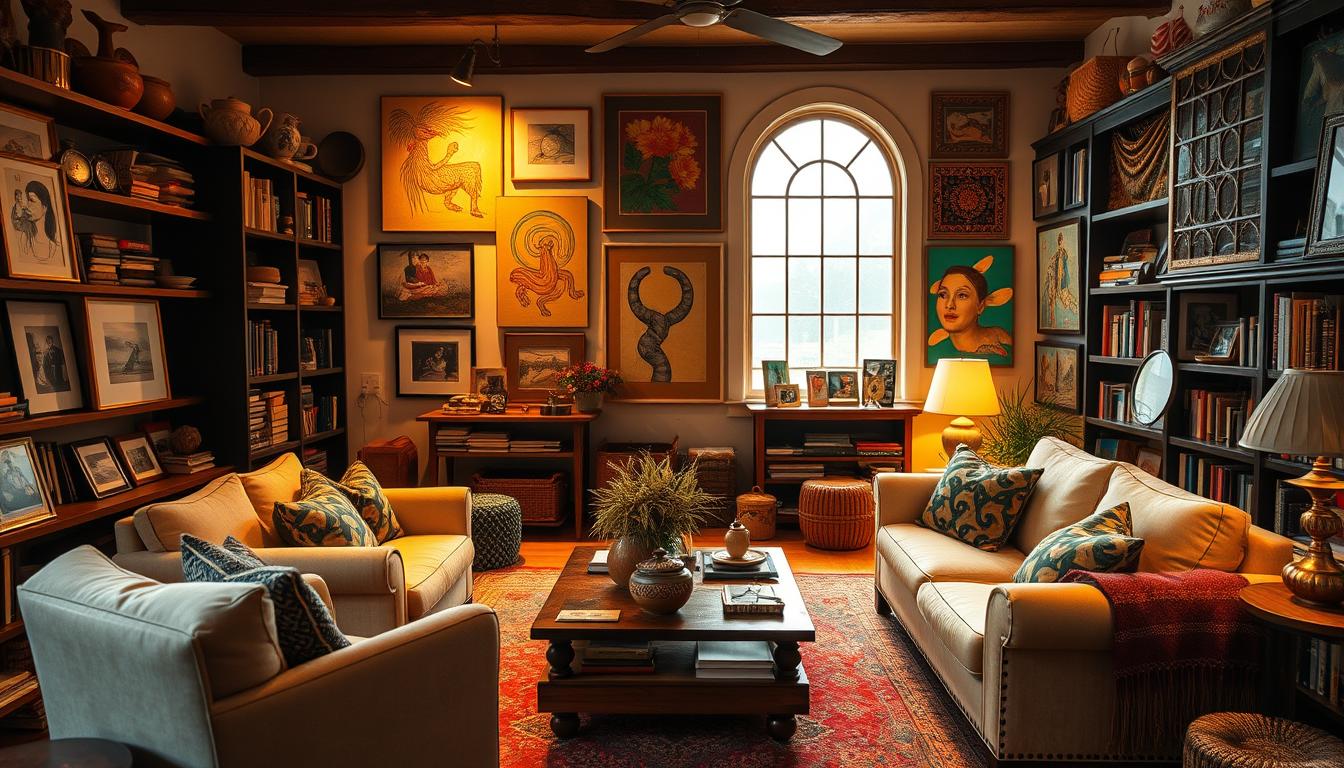
Our homes are more than just a place to live. They are a canvas for our personal style. Design thinker Ellen Lupton says spaces tell our stories through color, furniture, and layout. Every choice we make, from bold walls to cozy seating, shows our personality.
From open kitchens for hosting to shelves full of treasures, these details show our self-expression. Surveys show 70% of homeowners see their decor as a reflection of their tastes. Whether it’s plants, tech, or heirlooms, our homes reflect our unique choices.
The Connection Between Home and Identity
Our homes are more than just places to live. They are our personal art galleries. The home identity connection grows with every choice we make, from picking furniture to displaying family heirlooms. A meditation corner or a collection of travel photos can tell a lot about our values, like mindfulness or a love for adventure. This shows how we express ourselves through our homes.
Studies show that 58% of people believe their homes reflect their true selves. Women and homeowners are more likely to see this connection. This highlights the deep bond between our living spaces and our identities.
Storytelling creates a compelling narrative around the people we’re designing for.
Family photos and cultural artifacts serve as our personal histories. By mixing old traditions with new trends, we create a domestic identity that respects our past while embracing the future. Even small things, like hidden mementos, tell stories of our past.
The living space psychology behind these choices shapes how we see ourselves and how others see us. For example, an unused calendar might suggest our dreams, while carefully chosen books show our interests.
Research shows that 66% of people over 55 see their homes as a reflection of their identity. This bond grows stronger with time. Yet, 80% of people struggle with clutter or disorganization, showing the gap between our ideal and reality. By designing our homes to reflect our values, we make them dynamic mirrors of who we are and who we aspire to be.
Color Choices and Their Meanings
Every color in your home tells a story. Color psychology in homes shows that personality color choices reflect our inner emotions and values. A 2020 global study found that 68% link red to love, while 52% see yellow as joy. These preferences aren’t random—they shape the emotional impact of colors in spaces we inhabit.
Red boosts energy but can be too much. Blue calms, lowering heart rates, while yellow energizes the mind. Yet home color meaning also varies culturally. In China, red symbolizes prosperity, but in South Africa, it marks mourning. Even brands use colors strategically: luxury cars choose black for power, while calming greens dominate spa designs.
When you design with empathy, the story you present to your users will also help drive its success.
Bold red kitchens might signal passion, while serene blues in bedrooms encourage rest. Neutral grays in offices boost focus. Your palette choices aren’t just aesthetic—they’re a silent language of your personality. Whether through vibrant yellows for optimism or earthy browns for reliability, colors craft the emotional atmosphere of living spaces. Let your walls whisper what words can’t.
Furniture and Decor as Personal Statements
Furniture choices are more than just practical—they show who we are. A 2023 study found 70% of homeowners think their furniture choices reflect their identity. Designers say, “Design that delights, surprises, and prompts action” creates spaces that deeply connect with our values.
Design that delights, surprises, and prompts action.
Mid-century modern fans love simplicity and innovation. Those who mix styles show their creativity. Over 45% of homeowners mix styles to make unique spaces, showing furniture style psychology impacts room feel.
Even small details, like a handwoven rug or vintage clock, add decor meaning. Travel souvenirs or family heirlooms tell stories of our lives. Interior designer Clara Bennett says, “That antique vase isn’t just decoration—it’s a conversation starter about heritage.”
How we arrange furniture matters too. Open layouts with central seating encourage conversation, showing we value being social. Cozy reading nooks suggest we enjoy quiet time. Modernists prefer sleek lines for efficiency, while maximalists layer textures to bring joy.
Over 60% of homeowners now look for pieces that do more than one thing. This balance of practicality and self-expression makes every choice, from a bold sofa to a gallery wall, a personal statement home decor element. As our homes change, so do the stories they tell—showing our homes are living portraits of who we are.
Space Utilization and Personal Style

How you arrange your living spaces reveals a lot about your personality. Open-concept layouts are perfect for those who love to mix activities like cooking, eating, and socializing. On the other hand, some prefer personal space arrangement with separate rooms for focused tasks. This shows a preference for organized thinking.
Interior designers say 60% of homeowners create distinct zones. This shows how our spatial preferences shape our daily lives.
Storage choices also show your home organization style. Hidden cabinets are great for those who like tidy surfaces. Open shelves, on the other hand, appeal to visual thinkers who find inspiration in what they see. Even “organized chaos” can boost creativity for some.
Designers see this process as solving a puzzle. It’s about blending function with personal flair.
Mixing styles like mid-century and rustic shows adaptability. In fact, 75% of homeowners blend different aesthetics. They prioritize comfort and practicality over trends, making their spaces timeless. Small changes, like swapping light fixtures, can update a room to match changing tastes.
The goal is to create a home that reflects your unique way of thinking and thriving.
Architectural Styles: A Reflection of Taste
Choosing a home’s architectural style is more than just looks. It’s a way to show your architectural style personality and values. Traditionalists like Victorian or Tudor homes value history and skill.
These styles, with their fancy details like steep roofs or woodwork, show a deep connection to the past. On the other hand, modern homes with simple designs and open spaces attract those who love new ideas. Over 45% of buyers choose modern homes because they like the efficiency and simplicity.
Mixing styles, like combining Craftsman features with modern windows, shows a home design preferences that love both old and new. This mix is like how people balance their love for the past with their desire for the future. For example, 60% of Craftsman homeowners add built-ins, showing they value both function and beauty.
Rustic designs, with their use of stone and wood, connect people to nature. This choice is made by 50% of rural homeowners to match their outdoor lifestyle.
Understanding architectural styles is not just about how a house looks. It’s about creating a space that reflects who you are. From the balanced look of Colonial homes to the natural feel of modernist designs, every choice tells a story. Whether you prefer Tudor’s medieval charm or a minimalist’s clean lines, your architectural identity shapes how others see you and how you live at home.
Home Technology and Personality Indicators
The technology we choose for our homes shows who we are. It’s not just about being convenient. It’s about how we see innovation. Whether you love new gadgets or prefer simple systems, your choices shape your home and mind.
When learning about your characters, consider what users want to achieve or overcome.

People who love new gadgets often enjoy change. They like trying out new things. On the other hand, those who prefer simple systems value ease over complexity. These choices can show in other parts of their lives, like work or social life.
Our smart home choices also show our values. For example, someone with top-notch security might value safety. Another person might choose smart kitchen gadgets for efficiency. These choices show how we balance control, creativity, and connection.
Research shows that tech lovers are open to new experiences. Those who limit screen time might seek calm. These habits show a balance between progress and calm. By understanding these patterns, we can create spaces that reflect who we are. Whether it’s for productivity, peace, or curiosity.
Outdoor Spaces as Extensions of Personality
Your outdoor space personality really comes alive in your garden or yard design. More than 70% of people say their yard personality reflection is truest here. A study on garden style psychology found that formal gardens show a love for order. On the other hand, wildflower meadows suggest a preference for the unexpected.
Even the materials you choose have meaning. Teak furniture and battery-powered lamps show a mix of elegance and practicality.
About 65% of homeowners add a playful touch to their outdoor living character with patterned cushions or jute decor. A symmetrical rose garden might suggest a traditionalist. But a vegetable patch with herbs and Aloe vera shows a love for the environment.
Front yards are like first impressions. Teak benches or sleek concrete pathways show your design style right away.
“Outdoor spaces are like living diaries. Every plant choice, path, or seating area is a clue to how you view the world.”
Gardens grow with us—85% of designers say they change with their owners. Whether you like easy-to-care-for gravel paths or colorful flower beds, your garden style psychology is clear. Let your yard tell your story, one feature at a time.
Personalization Through DIY Projects
DIY projects turn regular spaces into unique parts of who we are. Building a $15 cubby cabinet or painting thrifted frames shows both practicality and personal touch. Every choice, from using 1-inch painter’s tape to upcycling jars, shows our preferences and values.

“experiences are created when designers shift the emphasis from the object to the action.”
DIY psychology shows how different people approach projects. A detail-oriented builder might value order, while a free-spirited painter loves trying new things. Even small projects, like a 45-minute wood plant stand, show our personality. It’s not just about the end result, but the journey of self-discovery.
Upcycling old items into art, like turning a door into a headboard, shows we care about the environment. Hand-painted floors or gallery walls tell our stories. Studies show these projects can reduce stress and improve our well-being. A $15 project or a weekend of crafting becomes a mindful ritual.
Begin with something simple, like sponge-painted walls or a Command-hook gallery. Every step adds to your DIY personality reflection. Share your projects online. DIY is about making lasting statements in our homes.
How Home Layout Influences Interaction
The way rooms connect—or don’t—tells us a lot about how we interact. Home layout psychology shows that open kitchens or shared seating areas encourage conversation. Closed-off rooms might signal a preference for privacy.
Think of social space design as a silent language. Expansive living zones with seating arranged in circles foster collaboration. Rows of chairs facing a TV might prioritize passive relaxation.
“Spaces that adapt to people, not the other way around, create harmony.” — Dr. Sergio Altomonte
Paths through a house reveal interaction patterns home. A hallway directing guests straight to a living area says “entertain freely.” Routes passing through personal spaces might blur public and private boundaries.
Spatial flow personality also matters. Winding paths with pauses for seating can slow social exchanges, deepening connections. Straight routes might prioritize efficiency over lingering.
Research shows open layouts boost teamwork in offices, but homes follow similar rules. A kitchen island with seating turns cooking into a shared activity. A dining table near the door signals hospitality.
Even lighting choices play a role. Bright, welcoming entryways contrast with dim reading nooks, shaping how spaces feel and function.
Every corner tells a story. By aligning social space design with daily rhythms, homeowners can create environments that support their values. Whether fostering connection or nurturing solitude, small adjustments can turn a house into a space that truly reflects who you are.
The Influence of Hobbies on Home Design
Imagine a home where every room tells a story of its owner’s passions. Hobby spaces home design turns personal interests into functional and inspiring areas. From woodshops to gaming corners, 70% of homeowners say hobbies drive their decor choices. These passion project rooms reflect what matters most—whether a sunlit painting nook or a high-tech music studio.

“A well-designed hobby space isn’t just a room—it’s a declaration of who you are,” says interior designer Clara Nguyen. “It’s where people show what fuels their creativity.”
Displaying collections becomes its own art form through collection display psychology. A curated wall of travel mugs or a library of sci-fi novels arranges memories into decor. How items are shown—whether framed prominently or tucked into shelves—hints at whether hobbies are shared joys or private escapes. Over 60% of homeowners feel closer to their homes when these spaces reflect their true selves.
Interest-based design also boosts daily joy. A 2023 study found 65% of people with hobby-centric rooms feel more relaxed and productive. Whether repurposing a garage into a pottery studio or hanging fishing lures as wall art, these choices create a personalized sanctuary. As social media trends inspire more homeowners, 50% now seek DIY solutions to blend hobbies into their living spaces. The result? Homes that don’t just house activities—they celebrate them.
Sustainability and Personal Values
Choosing eco-friendly options like solar panels or rainwater systems shows our commitment to sustainability. Using materials like bamboo flooring or recycled steel in construction shows we care about the environment. These choices are not just practical; they reflect our values.
Values-based design combines beauty with responsibility. Some homeowners proudly show off their solar panels, while others keep them hidden. Both ways show how our ethics shape our homes without losing style. The Seventh Generation Principle guides us to protect resources for the future, driving choices towards renewable energy or zero-waste systems.
Brands like Patagonia or BCorp-certified companies lead in using ethical materials. This proves that being green and stylish can go hand in hand. Research shows 45% of consumers now look for eco-friendly materials like reclaimed wood. Every choice we make, from smart thermostats to gardens with native plants, makes our home reflect who we are today and who we hope to be tomorrow.