






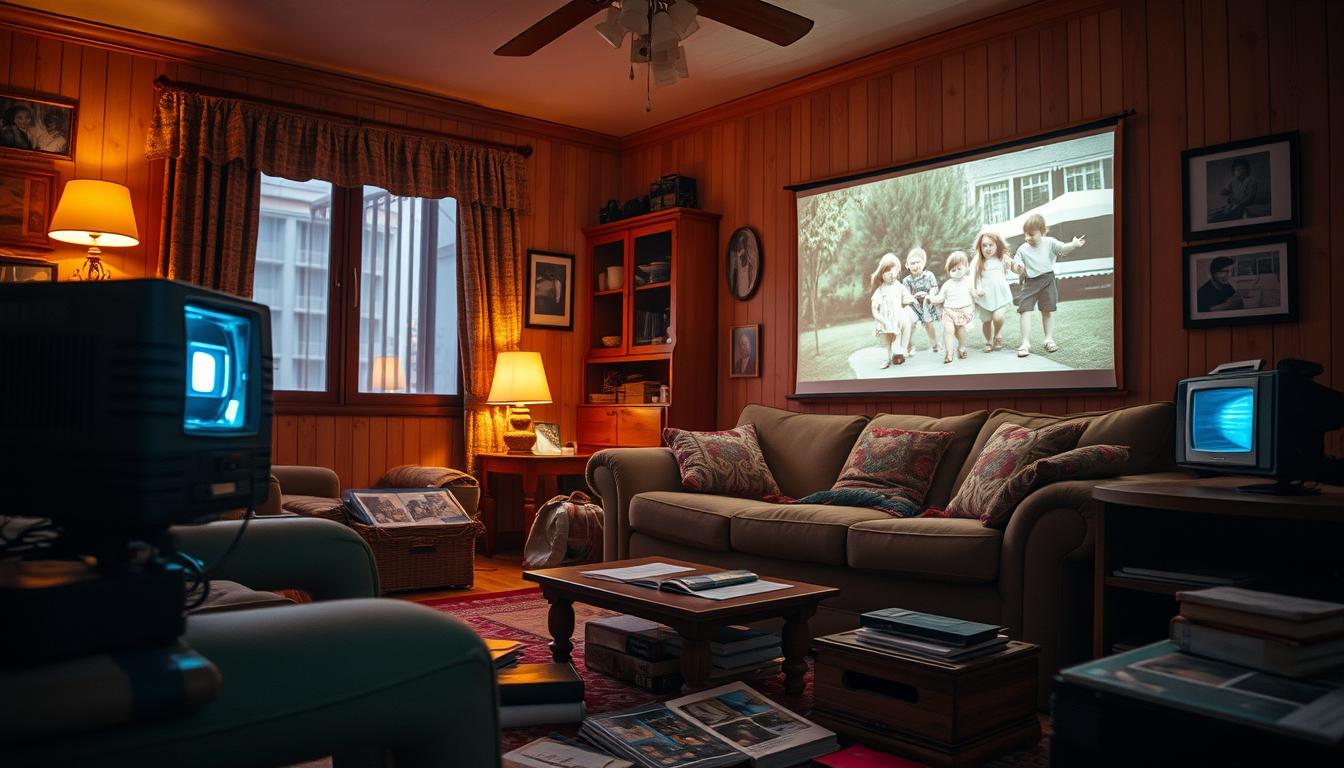
Watching family videos is more than just a trip down memory lane. It’s a journey back to moments that shape who we are today. These home movie memories, like snapshots of laughter and milestones, can stir emotions we didn’t know we had. Why does this happen? Because these recordings capture fragments of our identity, preserving parts of ourselves we might’ve forgotten.
Old home videos are like emotional time machines. They remind us of the joy in small victories or the comfort of familiar faces. The emotional impact of home videos often surprises us, hitting harder than we expect. These clips aren’t just footage—they’re proof of our journey, showing how far we’ve come and who we once were.
Watching family videos can feel like reconnecting with a past self. Scenes of childhood birthdays or holiday gatherings act as anchors, grounding us in memories that define our story. It’s no wonder these moments linger so deeply—they’re the threads stitching together the fabric of our lives.
The Emotional Impact of Nostalgia
Emotional nostalgia is more than just happiness. It’s a mix of joy and longing. Watching time capsule videos brings up bittersweet memories, making us feel warm and wistful. This blend of emotions, rooted in nostalgia psychology, shapes our view of the past and present.
Scientists have found that our brains react to nostalgia in a special way. Brain scans show areas that light up with both pleasure and sadness. A 2023 study in Current Opinion in Psychology found that videos can bring back vivid memories, blending our past and present selves. These moments remind us of relationships and milestones we’ve grown out of.
Researchers in a 2020 Frontiers study found that home videos have a unique power. Time capsule videos capture voices, gestures, and settings that photos can’t. This sensory depth makes home videos powerful tools for emotional healing.
Studies show that nostalgic reflection can make us feel more optimistic and connected. By revisiting these moments, we strengthen our sense of self-continuity. Even painful memories can take on a softer glow, helping us grow from past struggles. As researchers note, this process boosts creativity and resilience.
Modern research confirms that nostalgia is a tool for mental wellness. Time capsule videos, with their multisensory power, help us reconnect with ourselves. They offer a way to revisit the parts of ourselves we’ve left behind.
The Power of Visual Memory
Home videos have a special power compared to photos. The choice between video vs photos affects how memories stay alive. Videos capture movement, laughter, and voices, making authentic moments on film feel real.
Scientists like Harvard’s Daniel Schacter say videos can change or preserve memories. His research shows that watching videos soon after an event changes how we remember. Dr. Siegel notes this change can happen in just 30 minutes, making the video’s version stick in our minds.
Depending on the elements reactivated, original memories can be changed.
Old home videos show life’s true moments. A child’s birthday party from the 80s captures more than just the cake. It shows the guests’ faces and the room’s look. These authentic moments on film give context that photos can’t.
The brain keeps these sensory details, creating strong pathways. Unlike old times when people relied on memory, today’s videos offer a peek into the past. They show the quirks and spontaneity of real life. This makes the visual memories impact of home videos a bridge between past and present.
Reliving Cherished Moments
Home videos are like a time machine, letting us go back in time. Watching old footage feels like stepping into time machine memories. It brings back sights and sounds we’d forgotten.
These videos remind us of big events and small details. Like a sibling’s laugh or a holiday decoration. Details we’d forgotten suddenly come alive.
Forgotten moments on film often reveal hidden gems. A childhood dance or a parent’s expression during a game. Details we’d long overlooked suddenly come alive.
This rediscovery sparks joy, reconnecting us with forgotten feelings. Studies show 80% of people find comfort in revisiting happy memories. Videos make this process vivid.
Seeing these scenes again lets us experience moments from a new angle. A toddler’s first steps filmed years ago might now highlight their growth. Or a family trip’s background details might now carry deeper meaning.
Reliving memories through video isn’t just about the past. It’s a chance to see our history in fresh ways. It turns forgotten memories into cherished treasures. The clarity of rediscovery feels like finding a hidden chapter of your life.
The Connection to Personal Identity
Home videos mirror our past self vs present self. Watching old footage, we see how we’ve grown. They show our interests and how life has shaped us. Psychologist Erik Erikson said adolescence is key for forming identity, something home videos can show.

Looking at old videos makes us curious about our past. A study in the International Journal of Development Research found that personality traits don’t fully explain identity struggles. External factors, like videos, play a big role. Teens today document their lives digitally, but old tapes show real, unfiltered moments.
“Identity is a process, not a state.”
These archives show personal growth in home movies by comparing past and present. A child’s laughter at a picnic versus an adult’s reflection on those memories shows growth. While social media shows perfect moments, home videos remind us of our true selves. Looking back at these records is more than nostalgia; it’s a way to understand our journey, embracing both change and continuity.
Understanding Family Dynamics Over Time
Old home videos tell stories without words, showing family dynamics in videos that shape us. They capture generational interactions through laughter, arguments, and quiet moments. A study in Canada found that early caregiving styles shape adult relationships.
Watching grandparents teach or siblings fight gives us clues about relationship changes over time. Firstborns often lead, showing high parental expectations. Middle children try to stand out, reflecting lifelong identity struggles.
Small moments, like a parent’s apology, build resilience. Home videos preserve these moments, allowing us to see how tensions were handled. This helps us understand why we act like our grandparents or parents.
By looking at these videos, families can strengthen their bonds. Seeing patterns of conflict or warmth in family dynamics in videos encourages empathy. It’s more than just looking back—it’s a way to build stronger family ties across generations.
The Role of Home Videos in Storytelling
Home videos are more than just footage—they’re living family storytelling through video that shapes our shared identity. They capture real moments like a toddler’s first steps or a holiday gathering. These moments create a visual family history that scripted films can’t match. Every frame is a chapter in a story only your family can tell.

“When we remember and celebrate who we are, we also begin to reconnect to what we really value.”
Preserving family narratives through home video helps future generations understand their roots. Studies show that emotional stories boost oxytocin, a hormone linked to empathy. People who felt this connection gave 56% more to causes they cared about, showing how deeply these stories touch us.
Larry Irving said digital tools now let families share milestones instantly, like birthday parties or graduation speeches. These videos reveal small details: a parent’s laughter during a chaotic picnic or a grandparent’s hands crafting a holiday meal. These details become heirlooms, connecting past and present.
Every video has untold layers—a whispered joke, a hidden struggle, or a moment edited out. These silent stories remind us that home videos are not just records—they’re bridges to our collective memory. By sharing these visual archives, families pass down values, traditions, and the quiet magic of ordinary life turned timeless.
The Influence of Video Quality on Emotion
The grain of film or the static of VHS tapes isn’t just a flaw—it’s what makes vintage video formats unforgettable. Imperfections like color fading or tracking lines remind us of the past. These quirks, once flaws, now spark VHS nostalgia by linking visuals to specific times.
The blur of an old home movie isn’t a distraction. It’s a bridge to the past.
Film quality emotions depend on the medium. Super 8’s warm tones or VHS’s shadows evoke feelings modern HD can’t match. Analog tapes meant families recorded only key moments—birthdays, holidays.
These moments feel more precious because of it. Every frame was a curated memory, making analog video memories more special.
Today’s digital recordings lack the charm of a rewound VHS. The static, flicker, and reels are more than storage. They’re emotional time capsules. Even flaws like date stamps or grain remind us of technology’s role in memory.
The grit of analog makes moments feel real, human, and uniquely ours.
Reflecting on Past Challenges
“The past can hurt. But the way I see it, you can either run from it or learn from it.”—A participant’s reflection in a Malmö University study on aging and memory
Old home videos often show life’s tough moments. They capture frowns during failures and quiet times after losses. These difficult memories on film might feel heavy at first. But, they also show resilience in home videos.
Take Paula, 72, for example. She looked at videos of her life after her husband died. She saw herself learning to cook alone, a small step that showed her overcoming past challenges. Seeing her younger self struggle and adapt gave her a new perspective on struggles.

Researchers at Malmö University found something special. Older adults who watched old films saw strengths they’d forgotten. Douglas, 86, saw his efforts to fix the family home after his wife died. He thought it was “hopeless” back then. But the footage showed patience and skill he hadn’t seen.
Watching these moments isn’t about forgetting hard times. It’s about seeing how time changes us. Videos turn private struggles into visible journeys. They show that even broken stories can have happy endings.
The Healing Power of Old Memories
Home movies are more than just old footage. They are tools for healing. Healing through memories starts when we watch old videos to face unresolved feelings. A 2020 study found that nostalgia helped 70% of people cope with isolation during the pandemic.
Emotional closure from videos comes when fragmented memories match what’s on film. Seeing our past struggles and victories in real time can clear up distorted memories. Therapists often use this processing past through film to help clients see painful events in a new light.
Think of the 36-year-old who remembers their first love’s exact words. Videos help turn vague memories into clear ones. Over 50% of people use nostalgic media to boost their mood, and home videos do the same. Watching home movies together can spark conversations that heal family rifts or clarify family histories.
Research shows 75% of people feel mixed emotions when thinking of past loves. But videos can turn sadness into growth. By looking back, we see our younger selves’ strength, which boosts our current resilience. For those avoiding ex-partners, this visual therapy can reduce self-blame. Home movies are not just for keeping memories alive. They are paths to emotional healing, showing how our stories shape us.
Bridging Generational Gaps
Old home videos connect grandparents and grandchildren through shared history. Generational connections through video make elders relatable to younger family members. These video time capsules show how family traditions evolve over time.

A 2023 Pew study found 78% of grandparents use video calls weekly. Platforms like Zoom or FaceTime help families bond. Even tech differences, like a 3-year-old outsmarting a 50-year-old on an iPad, spark curiosity.
Younger generations teach older relatives new apps. Elders share life lessons through family history preservation. This exchange builds mutual respect, says Dr. Emily Carter, a cultural anthropologist.
“Millennials bridge gaps by introducing apps, while seniors share wisdom—this exchange builds mutual respect,” says Dr. Emily Carter, cultural anthropologist.
Family movie nights with old videos spark conversations about cultural changes. A Singapore-based initiative gives seniors affordable data for digital video time capsules. Cooking together or volunteering as a family strengthens these bonds.
These shared moments create empathy, turning “grandma’s old stories” into living histories. When tech and tradition meet, families rediscover their roots—and each other.
Making New Memories through Revival
Digitizing old videos brings forgotten stories back to life. Families can share these home films online or at gatherings. This creates moments that feel both nostalgic and new.
Platforms like YouTube or dedicated apps help preserve family films in ways Grandpa might’ve never imagined. These digital copies connect past to present through video, resonating across generations.
The Blu-ray release of Oppenheimer selling out shows the power of physical media. Even as DVD sales dropped 86% from 2006, 4K UHD Blu-rays grew 20% in 2022. This mix of old and new mirrors how families blend analog and digital.
Scanning VHS tapes into tablets and sharing clips on TikTok is common. The result? Old home movies evolve into fresh memories, enjoyed in living rooms or streamed globally.
Preserving family films isn’t just about saving history. It’s about sparking conversations. At reunions, digitized videos become icebreakers.
Grandparents laugh at old clips, while kids ask questions about “the way things used to be.” Sharing family footage this way builds bonds, turning stored memories into shared experiences. Even as streaming grows, 25% of 25-39-year-olds watch DVDs, proving physical media’s emotional pull.
Connecting past to present through video happens when we revive old moments. Digitizing home reels, compiling them into slideshows, or simply watching them together creates new traditions.
Like vinyl’s comeback or the Oppenheimer Blu-ray frenzy, these acts remind us: memories aren’t static. They’re alive, evolving as we rediscover them. Every restored video becomes a new story, linking hands across time and space.