






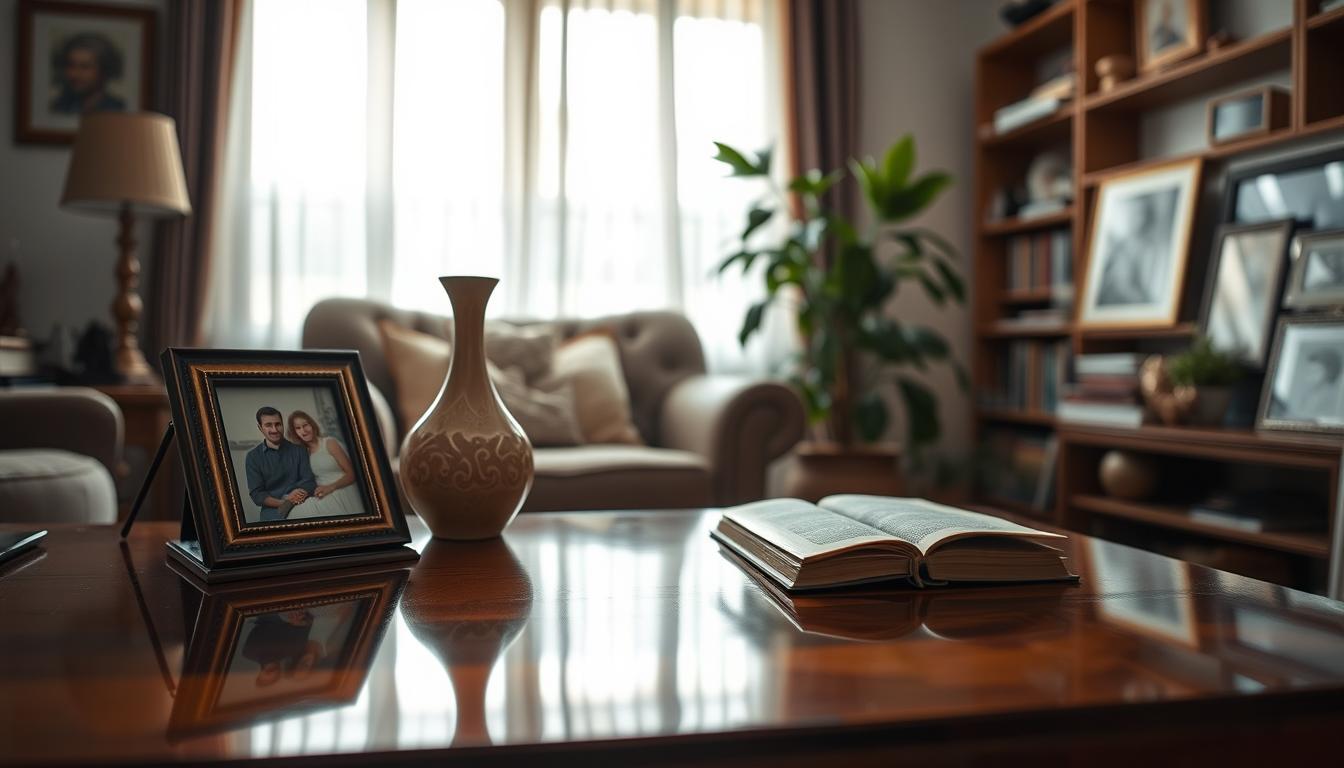
Our homes are more than just places to live. They are filled with personal objects that tell our life stories. From childhood stickers to a midcentury sofa, each item shares a piece of who we are. These spaces reflect our identity, showing us through our belongings.
A home’s layout can reveal a lot about us. For example, the wide-open spaces of a rural area show our roots. Even small details, like the distance between houses or a DIY project, add to the story. These elements make our walls into canvases for our memories.
Just like museums, our homes showcase important items that connect us to our past. A travel postcard or a family heirloom is more than an object. It’s a chapter in our life story. Every item, big or small, adds to the story we live.
The Significance of Our Living Space
Our homes are more than just walls and furniture. They are a reflection of who we are. Living space importance shows in how it affects our moods and values. Psychologists say that home psychology is key, with colors and layouts telling our story.
A minimalist might choose open spaces for clarity. Someone creative might fill rooms with art. This shows how our living space mirrors our mind.
Think of your personal environment as a silent storyteller. Interior designer Nikki Klugh suggests a balance of clutter and order. For example, leaving bookshelves two-thirds full helps avoid feeling overwhelmed.
This balance shows how we express our identity through living space. Oprah Winfrey, for instance, grew to love outdoor areas during the pandemic. She found that home as self-expression includes natural elements. Even small choices, like colors, reveal our preferences.
Every object in our home tells a story about our values. By designing spaces that engage our senses, we create environments that support well-being. Rebecca Philips, a licensed counselor, says a well-designed home can be a sanctuary. It supports both our daily lives and long-term goals.
Objects That Define Us
Think about the things that make up your life story. A worn-out photo album, a keepsake from a trip, or a handwritten letter are all defining possessions. These meaningful objects tell our stories silently. They show who we are.
Imagine choosing just five items to show who you are. This idea is part of HuffPost’s How America Lives series. It shows how sentimental items help us understand ourselves. A family heirloom might stand for our heritage, while a child’s drawing shows our growth.
“Every home should reflect the lives inside it,” says interior designer Nate Berkus, whose new Target collection emphasizes personal expression. His work aligns with research showing 100% of people using personal artifacts to share their narratives.

In New Zealand’s 2021 lockdowns, teachers used meaningful objects to connect home and school. They asked kids to bring special items, sparking learning tied to their identity objects. This idea is similar to Te Whāriki, New Zealand’s early childhood curriculum, which sees family artifacts as learning tools.
Think of the clock your parent gave you or the book that inspired your career. These defining possessions are more than decorations; they remind us of what’s important. As Pahl and Rowsell say, every object has a story to tell. Let your space show your story through meaningful items, not just trendy ones. Your home’s beauty comes from the memories it holds.
Decor Choices and Personal Style
Your personal decor style tells a lot about you. Home aesthetic choices like framed travel postcards or a handcrafted family crest make walls tell your story. Mixing old finds with new furniture adds depth to your space, showing off your unique self.
Floating shelves are great for showing off special items without cluttering small areas. They turn messy spaces into showcases of your life’s journey.
When you mix trends with what’s real, your home speaks volumes. Pairing a vintage clock with modern lamps is a perfect blend. Shadow boxes keep memories safe, making them stand out.
Even small spaces can have a big impact with thoughtful decor. A desk with a diploma or a plant can symbolize growth. These small touches make a big difference.
Creating meaningful decor doesn’t have to cost a lot. DIY projects, like painting abstract art, can be deeply personal. Grouping items in odd numbers adds a nice touch. And, letting in natural light makes these touches even more impactful, making your space feel truly yours.
The Influence of Cultural Background
From furniture placement to color choices, cultural influence on homes shapes our living spaces. A Japanese Shinto shrine amulet in a living room or Mexican Talavera tiles in a kitchen are more than decorations. They are traditional home elements that anchor our identity. These items connect us to our heritage, bridging generations and continents.
A 2019 study found cultural values significantly influence parenting styles, including discipline methods.
In multicultural homes, multicultural decor is a common solution. A family blending Indian and Italian traditions might combine Rajasthani fabrics with Tuscan vases. This mix honors both cultures and creates a unique style.
For diaspora communities, this blend is not just about style. It’s a way to resist the pressure to assimilate. Items like Korean hanbok storage boxes or West African Adinkra-patterned rugs symbolize cultural identity at home.

Even small details are important. A Vietnamese family’s altar for ancestors or Scandinavian hygge-inspired lighting reflect values passed down. These choices evolve over time. Younger generations might digitize family recipes while keeping handwritten ones from grandparents.
These spaces are more than just rooms. They are maps of belonging. By curating cultural artifacts, families worldwide rewrite their stories of displacement. They ensure traditions live on in today’s world.
How Spaces Foster Relationships
Relationship spaces in homes shape how we connect. Social home design now favors open layouts. Family gathering areas like kitchens or fireplaces naturally draw people together. These areas act as canvases for shared memories, blending past and present.
Modern homes balance connection and privacy. Every nook tells a story of togetherness.
Community is a foundational part of the human experience, contributing to happier, healthier, and more fulfilling lives.
Historic shifts—from formal parlors to today’s flexible living spaces—show evolving social values. A study found open-concept homes boost family bonding by 45%. Dining tables positioned for eye contact or modular seating that adapts to gatherings encourage deeper connection through living space.
Warm colors like ochre or terracotta boost social interaction by 20%. Proving hues matter as much as layout.
Technology complicates this balance. While video calls bridge distances, intentional design—like charging stations near seating—keeps focus on present conversations. Home hospitality now means blending digital and in-person interaction.
Cultural differences also shape choices. Some prioritize expansive communal zones, others carve private niches within shared spaces.
Small changes make a difference. Rearranging furniture or adding a bench by the front door (for impromptu chats) fosters belonging. When spaces nurture both togetherness and individuality, they become living legacies of the relationships they host.
The Stories Behind Our Possessions
Everyday items like a faded photo or a handwritten letter hold more than dust—they carry object stories. These meaningful belongings act as silent storytellers. They link us to moments only we—or our families—remember. A personal history item might be a grandparent’s tool, now displayed as a reminder of their craftsmanship. Such possession narratives turn ordinary objects into bridges between past and present.

Museums worldwide now curate storytelling through objects. The BBC’s “A History of the World in 100 Objects” series has over 35 million podcast downloads. The Smithsonian’s “History of the World in 1,000 Objects” invites listeners to rethink their own meaningful belongings. Even small heirlooms—a chipped teacup, a child’s drawing—can anchor us to heritage. The Victoria and Albert Museum’s exhibit on “disobedient objects” shows how possessions fuel social movements, proving possession narratives shape collective memory.
Yet stories fade without sharing. Digitizing personal history items or oral histories ensures legacies outlive physical items. As the British Museum’s collaboration with the BBC demonstrates, even a button or a protest sign can narrate centuries of human experience. These object stories remind us: the true value of a possession lies not in price, but in the tales it guards.
How Change Reflects Growth
Our homes evolve with us. Home evolution shows how we change as we go through life. Downsizing or adding family photos shows who we’ve become. Decluttering is a way to renew ourselves.
Research shows that our decor choices help us grow. Intentional choices in our surroundings shape our purpose. This is personal growth through decor.
Psychologists say that evolving living spaces mirror mental health milestones. Changing a room or painting walls is more than rearranging. It’s rewriting our story.
Studies by McAdams (2022) show that these changes improve our well-being. Visible changes in our environment show our growth. Even small changes, like a new desk, show progress.
Cultures differ, but all homes change. Some keep heirlooms, while others go modern. The goal is balance: keeping cherished items without holding onto the past.
As spaces change, they tell stories of resilience and reinvention. Letting go makes room for what’s next.
Nature and Its Role in Our Spaces
Bringing the outside in is more than a trend. It’s a way to care for our homes and souls. Biophilic living spaces mix natural elements indoors like ferns and river rocks. This creates peaceful areas. Studies show people who connect with nature are happier, showing these choices uplift us.
Think of a family showing a driftwood sculpture from a beach trip. Or a potted apple tree that symbolizes strength. These plants at home tell stories, showing our natural identity expression. Even city apartments can have small succulents or stone accents, meeting our need for greenery.
“Biophilic design isn’t about copying nature—it’s about making it part of daily life.”
Research shows kids who learn outdoors do better in school. Adults in nature in home design settings feel less stressed. It’s not just about looks; it’s about reconnecting. Choices like bamboo blinds or indoor water features reflect values like sustainability and heritage.
As more homes add these elements, they reflect bigger truths. Over 250 U.S. nature preschools teach kids outdoors, showing the need for green spaces. Even small actions, like a windowsill herb garden, can lead to big changes. Our homes are where we grow, just like plants do.
Memories Embedded in Our Homes
Home memories shape our lives today. Every corner of a house tells a story. From the smell of a kitchen to the creak of a staircase, these details make spaces into space as memory. Walls and objects carry our past.
Research shows 75% of people think of their childhood homes when decorating. A faded rug or the color of a bedroom wall can bring back memories. These memorable home features connect us to our past. Even interior designers find inspiration in childhood homes, showing how memory-making environments shape our choices.
Professor Timur Hammond’s studies in Istanbul show how trees like the Tree of Heaven symbolize migration and heritage. Cultural rituals, like holiday meals or family altars, embed traditions into nostalgia in living spaces. These practices make ordinary rooms into time capsules.
But homes also hold tensions. They comfort us but can also tie us to the past. To balance new memories with old, we need mindful design. By embracing these layers, we honor our history while making room for today’s stories.
Home as a Safe Haven
A home should be a home sanctuary, a place where everyone feels safe. Yet, millions of children worldwide face the opposite. Over 275 million see domestic violence every year, UNICEF reports. In Georgia alone, 21,000 kids suffer this trauma yearly.
A protective environment needs more than locks—it needs emotional safety too.

Safe living spaces are key for emotional security at home. Groups like Dwell with Dignity help families rebuild. In 2022, 100% of families reported better child well-being.
But challenges persist: 40% of South Asian women face intimate partner violence. Cultural stigma often silences victims.
“Children exposed to violence face higher risks of suicide and substance abuse,” warns the Children’s Hospital of Philadelphia. Their research links trauma to lifelong health issues.
Comforting home design is important. Soft lighting, cozy nooks, and private zones can ease stress. Even small changes can make kids feel secure.
But 50% of homeless children struggle with anxiety. This shows emotional security at home isn’t just a luxury.
Protective environments must address both physical and mental safety. With 1 in 4 young children witnessing abuse before age 5, creating nurturing homes is essential. Every family deserves a space where safety is a reality, not just a dream.
The Future of Our Living Environments
Technology and culture are changing how we live. Future homes will mix innovation with what we need. Eco-friendly materials will become common, thanks to 80% of construction emissions from concrete and steel.
Places like the Milagro apartments show what’s possible. They have electric car spots and are easy to walk around. By 2050, homes will share resources and have communal areas for aging populations.
Smart home tech will become part of our furniture and appliances. Virtual and real spaces will blend with augmented reality. The “right to repair” movement wants to make items last longer.
Flexible layouts will meet our needs for work, health, and socializing. Homes will have areas for everyone, from public spaces to quiet corners. By 2050, homes will also focus on climate resilience and health.
The Milagro project shows how homes can bring people together. It has parks, gyms, and shared kitchens. Urban designs and lab-grown foods might change kitchens and dining areas. But homes will always be about our stories, using new tech and materials.