






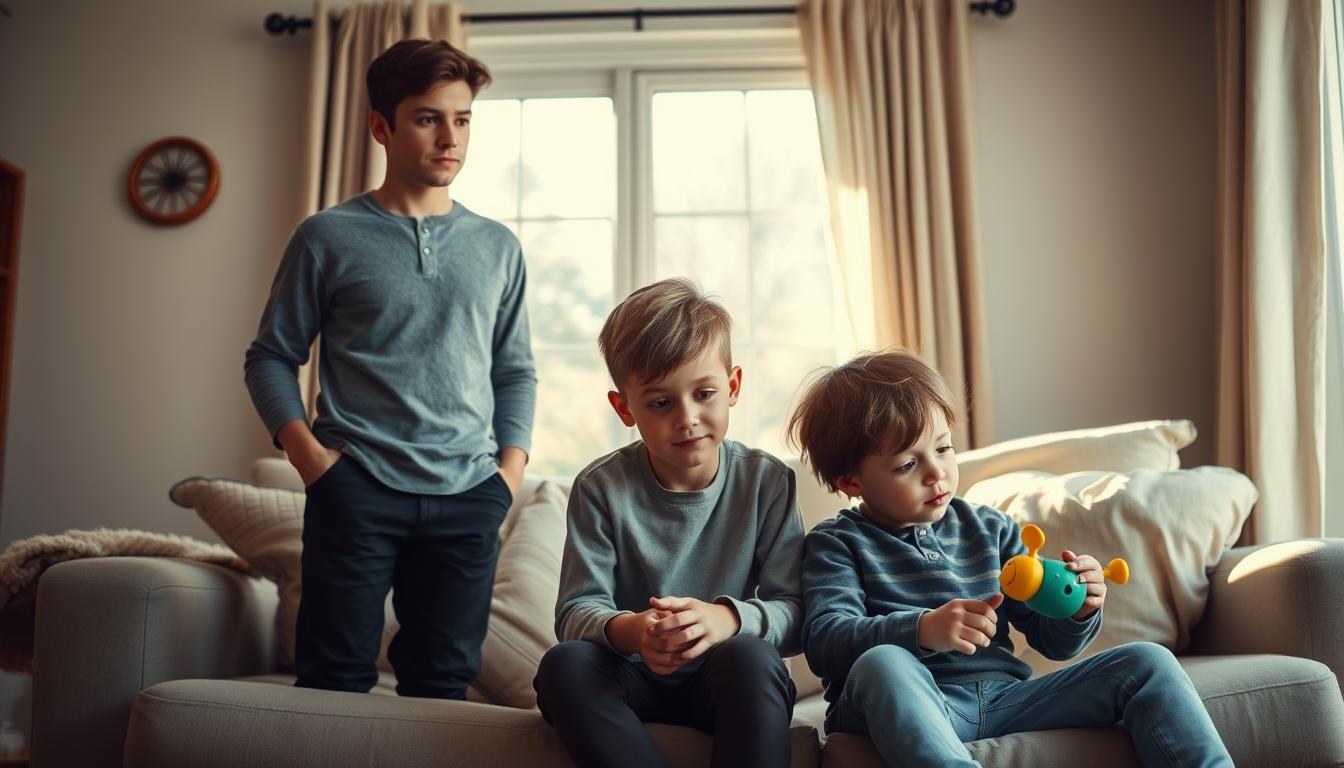
Ever notice how firstborns often take charge while youngest siblings crave the spotlight? Birth order psychology shows how our family position shapes us. Whether you’re a CEO or an entrepreneur, your birth order influences your choices and habits.
This article explores how these patterns form. It also shows how understanding them can strengthen relationships.
A study of 10,700 U.S. children found firstborns have early language and leadership edges. Middle kids become mediators, and youngest siblings develop quick social skills. Even small IQ differences add up over time.
With 25% of families having only children, birth order effects are real. They vary by income and race. Let’s look at how birth order psychology impacts family and career.
The Concept of Birth Order and Its Impact
Alfred Adler’s birth order theory came out in the early 1900s. It changed how we see family relationships. Adler believed that where you were born in the family shapes your personality. This can make you the “responsible firstborn” or the “rebellious youngest.”
This theory says siblings grow up with traits based on their birth order. Firstborns often want to take charge, while later-borns look for attention.
Today, research backs some of Adler’s ideas but also shows it’s complex. For instance, firstborns might do better on IQ tests. But, genetics and how parents raise them also matter a lot.
Birth order’s effects aren’t set in stone. Family size, cultural background, and whether you have brothers or sisters all play parts. A 2015 study found little proof that birth order affects personality or smarts.
“Smaller age gaps between siblings may reduce birth order differences,” noted a 2018 review. This shows family dynamics change how birth order affects behavior. Middle children often try to find a balance, while the youngest might be more creative to stand out.
Birth order’s effects last into adulthood. Firstborns might aim for leadership roles, while middle children are good at working together. But, things like what parents expect and the family’s resources also matter a lot. Knowing these patterns helps us understand behaviors without labeling people.
Firstborns: The Natural Leaders
“Birth order profoundly influences personality and behavior, shaping how children navigate their roles in the family and beyond.”
Firstborns often show confidence and a sense of responsibility. They get more time with parents, which helps them learn to lead. Studies show they do better in school, scoring higher on tests.
But being a firstborn comes with its own set of challenges. They might feel the need to be perfect, a sign of oldest child syndrome. When siblings come along, they might feel left out. Yet, this can push them to work harder and achieve more.

Kevin Leman, a psychologist, says firstborns are shaped by their early role. They become the family’s trailblazer. This role builds their resilience. Knowing this helps parents and siblings understand and support firstborns better.
Middle Children: The Peacemakers
Middle children often face life with quiet determination. Their unique spot in the family shapes them. Middle child syndrome makes them seek recognition through middle child diplomacy.
Their middle born traits like fairness and adaptability come from sharing attention. Studies show they develop middle child personality traits such as independence and strong social bonds.
A 1998 review revealed middle children were least likely to feel close to their mothers, pushing them to build external networks.
Research shows middle children’s middle child diplomacy shines in careers needing mediation. Abraham Lincoln and John F. Kennedy, both middle children, show leadership skills. Their middle born traits—cooperation and empathy—lead to roles in politics or teamwork.
A 2016 study noted middle children form deeper friendships. This makes up for less family focus. Despite challenges, they thrive by valuing collaboration over competition.
While some studies link middle birth order to higher risks of depression, their adaptability turns obstacles into strengths. The middle child personality thrives outside traditional family structures. They become natural connectors. Their journey from overlooked to peacemakers proves birth order shapes but doesn’t limit their future.
Youngest Children: The Charmers
Youngest child traits often show in creativity and charm. As the baby of the family, they learn to stand out. Parents are more relaxed by the time they arrive, leading to bold humor and social confidence.
Research shows youngest siblings are more agreeable and open to risks. They might try extreme sports or unusual careers. This isn’t just luck; it’s a result of family dynamics.

“Birth order shapes personalities even among siblings with identical upbringing,” notes parenting expert Michael Grose. “The youngest learns early to adapt to stay seen.”
Last-born traits like persistence and innovation come from competing for attention. Youngest siblings often develop negotiation skills. They might charm parents into extra dessert or friends into helping with a project.
Studies show they tend to challenge rules, leading to new ideas or career risks. But, they also face challenges like struggling with responsibility. Yet, many turn dependency into teamwork, using humor and adaptability to succeed.
From entrepreneurs to entertainers, history’s youngest siblings often redefine success. They do it on their own terms.
Only Children: The Undivided Focus
Only children often thrive in environments where only child personality traits like creativity and independence flourish. Growing up without siblings, they develop singleton child traits such as strong focus on relationships and advanced problem-solving skills. Research shows these children frequently engage with adults early, gaining maturity and self-confidence that sets them apart.
Despite myths about only child syndrome, studies reveal most only children adapt well socially. While they may struggle initially in group settings, many overcome challenges through structured playdates and teamwork activities. Their only child development benefits from intentional social opportunities, balancing their natural focus on individual achievement with collaborative skills.
Recent studies show only children score higher in creativity but may exhibit less agreeableness compared to those with siblings, according to Yang et al. (2017).
Parents can nurture social growth by encouraging group activities, sports, or clubs. Schools and communities play a role too, providing spaces for sharing and negotiation. Overprotection should be avoided to prevent reliance on adult-led interactions. Fostering peer connections early helps build resilience and teamwork abilities.
Understanding only child personality strengths—like strong focus and creativity—helps families support healthy growth. By blending family attention with social exposure, only children develop into capable, well-rounded adults who leverage their unique strengths without falling into outdated stereotypes.
The Role of Parental Influence
Parenting different birth orders needs careful thought to ensure fairness. A study of 19,000 people showed younger siblings often get more favor from parents. This shapes how families work together.
Unconscious biases, like praising certain behaviors, can make some children feel like they have a special role. This can affect their mental health.
Being aware of how you treat your children is the first step. Recognizing when you compare them can help you change. It’s important to see each child as an individual, not just by their birth order.
For example, letting a middle child lead in family projects can help them grow beyond their usual role. This can be very empowering for them.
“Even subtle favoritism leaves lasting imprints on sibling relationships,” said researchers, noting 70% of study participants recalled childhood biases affecting their self-perception.
Good parenting means tailoring your approach to each child’s needs. Giving them equal attention and clear communication can help reduce rivalry. Small actions, like rotating chores or celebrating their unique traits, can help break stereotypes.
By using empathy and intentional strategies, parents can make sure every child feels valued, no matter their birth order.
Environmental Factors: Beyond Birth Order
Environmental factors shape how sibling roles unfold. Family size and cultural norms change expectations. Sibling spacing effects create unique challenges. These forces mix with birth order to affect career paths and health outcomes.
Family size changes traditional roles. In small families, firstborns often lead. But in big families, roles get diluted. Sibling spacing also matters.
Wide age gaps allow older kids to mentor. Close spacing creates peer-like bonds. This makes birth order traits less clear-cut. For example, a 10-year age gap can make a second child act like a firstborn.
Cultural differences in birth order highlight global variations. In some places, firstborns get family businesses or caregiving duties. Others focus on equal treatment. Socioeconomic status also plays a role.
Research shows firstborns tend to do better in school and earn more. But this gap narrows in smaller families. A Norwegian study found firstborns outperform later siblings in school, even when IQ and income are similar.
Sibling Rivalry and Its Long-term Effects
Understanding sibling rivalry psychology shows how early competition affects us later. Up to 80% of Americans have siblings, making sibling rivalry common. Firstborns often feel the need to outdo their younger siblings. Middle children might feel ignored.

These early conflicts can last into adulthood. Studies find that unresolved sibling issues can cause anxiety or strained family ties. For instance, firstborns might hold onto their childhood responsibilities, while younger siblings might rebel without realizing it.
Healing sibling conflicts begins with empathy. Talking openly about childhood roles can help dissolve old resentments. Therapists recommend revisiting childhood to untangle feelings of comparison. Small steps, like regular check-ins or celebrating each other’s successes, can help rebuild trust.
Sibling bonds teach us our first social lessons. By addressing past hurts, adults can turn rivalry into support. Small actions today can mend lifelong rifts, turning competition into collaboration.
Gender and Birth Order Interaction
Gender and birth order shape unique identities in families. Studies reveal differences in personality traits between males and females based on birth order. For instance, firstborn daughters often take on birth order gender roles like responsibility. Firstborn sons, on the other hand, may face pressure to excel academically.
Research with 121 participants found firstborns scored higher in conscientiousness than younger siblings. But gender plays a role in how these roles evolve.
“Birth order effects on personality differences persist across gender lines,” noted Eckstein (1998). This shows how siblings adapt roles based on their gender and position. A Chilean study of 946 youths found males reported better math performance. This highlights how birth order gender roles can vary by subject.
Same-sex siblings often face stronger competition, altering sibling gender dynamics. Parents may unconsciously assign chores or responsibilities differently. For example, they might expect firstborn daughters to care for younger siblings more than firstborn sons.
Male female birth order differences also shape social behaviors. In the 121-participant study, 31% of firstborn females prioritized family roles over career goals. This is compared to 18% of firstborn males. These patterns reflect societal norms influencing how birth order and gender intersect.
Understanding these interactions helps explain why oldest sisters might become protectors. Youngest brothers, on the other hand, might act more rebellious.
Implications for Adult Relationships
Adult birth order effects shape how people form connections beyond childhood. Romantic partnerships often reflect early family dynamics. Firstborns may prioritize structure, while youngest siblings might seek spontaneity. Birth order compatibility hinges on recognizing these ingrained tendencies.
“Sibling social support declined in early adulthood but stabilized later,” noted White (2001), highlighting shifts in relational priorities over time.

Birth order workplace dynamics also matter. Teams may see firstborns taking charge, middle children mediating disagreements, and youngest members brainstorming creative solutions. These patterns mirror childhood roles but adapt to professional settings.
Research shows firstborns report secure attachments at 32%, while middle children and youngest siblings have lower secure rates (33% and 37% respectively). These differences affect conflict resolution styles in relationships. For instance, firstborns might prefer direct communication, while middle siblings navigate tensions through compromise.
Birth order relationships extend to parenting and friendships. Studies reveal 40% of firstborns feel responsible for family harmony, influencing how they nurture their own children. While 35% of youngest adults rely on siblings for emotional support, showing lasting ties to early family bonds.
Understanding these patterns doesn’t predict outcomes—it offers tools for growth. Recognizing that birth order compatibility isn’t destiny helps couples and colleagues adapt, fostering empathy over assumptions.
Personal Growth and Self-Perception
Understanding how birth order affects behavior starts with birth order self-awareness. Recognizing patterns lets you reshape your birth order identity through intentional choices. Awareness helps break old habits, creating space for goals beyond childhood roles.
“Growth begins when you see your story, not just live it.”
Overcoming birth order traits starts with small steps. Firstborns might ease perfectionism by celebrating progress, not just perfection. Middle children can practice saying “no” to set boundaries. Youngest siblings can take charge of tasks to build accountability. Only children can join group projects to boost teamwork skills.
Journaling or feedback from friends highlights where birth order influences decisions-making. Workshops or counseling offer tools to balance inherited traits with personal goals. The goal isn’t to erase your past—it’s to choose how it shapes you.
Birth order personal development means turning awareness into action. By focusing on strengths and addressing challenges, you craft an identity driven by your values, not just family dynamics. Your journey begins with seeing yourself clearly—and taking the next step.
Conclusion: Embracing Our Roles
Research on birth order shows patterns in behavior, but it doesn’t limit our future. Studies like Tomás Lejarraga’s 2019 work show that traits like risk-taking don’t always separate firstborns from later siblings. Birth order psychology teaches us that these roles are guides, not limits.
They explain why firstborns lead, middle siblings mediate, and youngest kids often push boundaries. But remember, individuality always comes first.
Overcoming birth order effects starts with balanced family dynamics. Parents can foster equality by spending quality time with each child and encouraging open communication. Research shows even small steps, like weekly family meetings, can reduce rivalry.
While birth order influences up to 15% of personality traits, genetics and environment shape the rest. This means we’re free to grow beyond our birth position.
Understanding these dynamics can foster compassion. Recognizing how birth order shaped us lets us adjust outdated roles. Firstborns might share leadership, middle siblings voice their needs, and youngest family members seek stability.
The goal isn’t to erase these patterns but to create space for everyone’s strengths. This awareness builds connection. Birth order is a lens, not a cage.
By embracing its lessons while prioritizing individuality, we build stronger bonds. And let every child thrive without labels.