






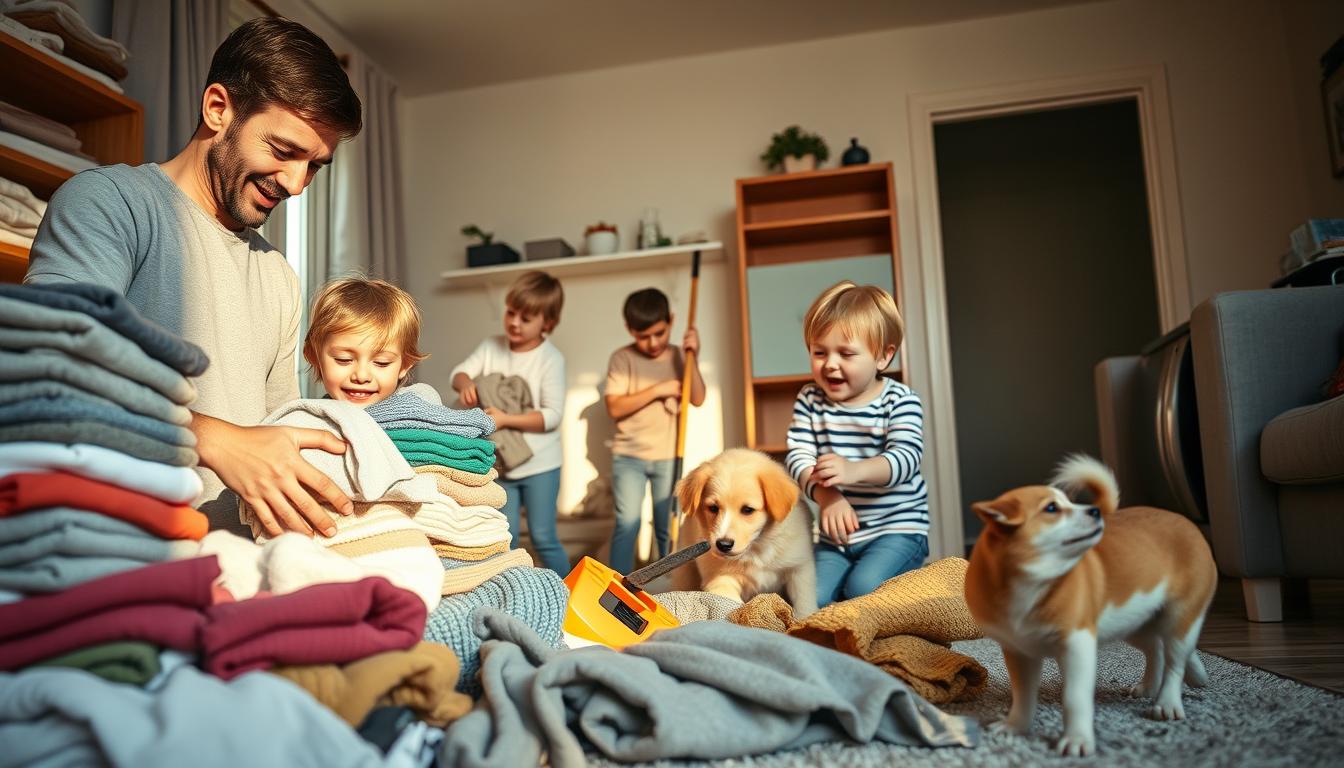
Household chores and teamwork go hand in hand in raising kids who do well in groups. Young kids love to help, making preschool a great time to start working together as a family. Simple tasks like putting away toys or sorting laundry teach the value of teamwork at home.
Studies show that 70% of parents believe chores help kids become responsible. Also, 60% say chores improve family communication. These everyday tasks teach kids about trust and supporting each other.
Working together on chores strengthens family bonds and teaches kids to take responsibility. Activities like helping with meals or yard work show kids how teamwork helps achieve goals.
More than 75% of kids feel happier when they help out with the whole family. And 90% of families say they feel closer when they work together. These moments lay the groundwork for teamwork in school, work, and friendships later on.
The Importance of Teamwork at Home
Family teamwork starts with a collaborative home environment where everyone pitches in. When kids see chores as team efforts, they understand their value. Studies reveal 60% of cooperative families experience less conflict and more unity.
Picture a kitchen where siblings work together to set the table or take turns walking the dog. These small actions teach important skills for life.
Ownership fosters responsibility. When our children know they’re in control of an item or area, they take more pride in what they’re doing.
Cooperation in the home is more than just dividing tasks—it’s about valuing each role. For instance, 2–4-year-olds can help unload silverware, while older kids prep meals. This helps build confidence.
Research shows kids who start with chores early are 30% more likely to develop strong work ethics. Using tools like chore charts or weekly meetings turns chores into team goals. When parents thank kids for their help, it boosts their motivation, making teamwork rewarding.
Cooperation also teaches empathy. A child struggling with cleaning might ask for help from siblings, showing real-world teamwork. By age 8, kids can handle tasks like walking the dog, learning how their actions affect the family.
These experiences help in school projects and future jobs, where teamwork is essential. A collaborative home environment doesn’t just clean—it builds a strong foundation for success.
Chores as a Team-Building Exercise
Family chore systems turn daily tasks into chances for growth. By seeing chores as team efforts, parents make cleaning, cooking, or yard work fun. A simple chore chart helps everyone understand their part in the team.
“Make them responsible for maintaining their own space,” advises a parenting guide. This approach boosts independence and trust.

Picture a Saturday morning where siblings work together to clean the living room. Older kids help younger ones, teaching teamwork and communication. Research shows kids who do chores feel more connected to their family, with 85% feeling this way.
Even small tasks like sorting socks or setting tables help preschoolers learn important skills. Teenagers can take on bigger tasks like meal prep or car maintenance, improving their leadership skills.
When families clean up together, it becomes a team effort. Positive feedback, like praising teamwork, motivates everyone. Studies show kids who do chores are 50% more likely to become leaders later.
Chores aren’t just about cleaning. They teach kids to rely on each other. When everyone works together, homes become places of problem-solving and respect.
Fostering Responsibility Through Chores
Teaching kids responsibility starts with small steps. Chores and accountability are linked, showing kids how their actions help the family. For example, a child who clears the dinner table keeps the kitchen clean for everyone. This teaches them how their work benefits everyone.
“Instilling responsibility in children is an ongoing process that requires patience, consistency, and guidance. … others depend on their contributions, much like in sports teams or work environments.”
Tasks like feeding pets or folding laundry help kids learn responsibility without feeling overwhelmed. When they forget to water plants, the plants wilt, showing cause and effect. But when they remember, it’s a chance to celebrate their contribution to the family.
Simple tasks like setting the table or walking the dog teach empathy. Kids learn their actions impact others, fostering respect for shared spaces. Research shows this responsibility development leads to better school performance and confidence. Begin with small tasks, stay consistent, and watch them grow.
Developing Problem-Solving Skills
Chores are like classrooms for problem-solving through chores. When a sink overflows or laundry gets mixed up, kids learn to think fast. Thomas Edison’s approach of trying, failing, and trying again is a good guide for parents.
Letting kids try things out, even if they mess up, helps them grow strong. They learn that mistakes are part of growing, not failing.

“Edison ‘found 2,000 ways not to make a lightbulb’ before he found the one that worked.”
Household problems also teach collaborative household solutions. Family meetings where kids suggest changes, like a “mess-free snack zone,” show teamwork. Research from the Australian Occupational Therapy Journal shows this involvement boosts school success.
When a child’s idea works, they feel more confident. If it doesn’t, they learn to adapt. This is like solving problems in school or at work.
Negotiation skills grow when kids divide tasks. Younger kids might swap jobs weekly, while teens might trade lawn work for more screen time. These deals teach kids to balance their wants with what’s best for everyone. Harvard’s study on success shows these skills are key to lasting well-being.
Encourage kids to ask, “What if we tried this?” or “Can I swap chores with you?” to practice compromise.
Games like “timer challenges” or “efficiency races” make solving problems fun. A 10-minute cleanup sprint or a closet redesign lets kids be creative. These activities help build critical thinking, preparing them for future challenges.
Encouraging Mutual Respect
Chores help build mutual respect in families when everyone’s work is recognized. Kids see how family members handle tasks in their own way. For example, one might fold laundry carefully, while another does it quickly. Both methods are important.
Asking questions like “What worked well for you?” helps focus on growth. Constructive feedback for children is key. It makes 85% of family members feel valued, improving teamwork.
When parents show gratitude, like thanking for setting the table, kids follow suit. This creates a respectful atmosphere at home.
Ask kids what they like about their chores. A study shows 70% of kids feel more confident when they help choose tasks. If there are disagreements, focus on actions, not personalities. Saying “The dishes dried better this time” praises effort without criticism.
By doing this, we celebrate everyone’s strengths, not just compare them. This builds a positive home culture.
The Benefits of Shared Experiences
Doing chores together can make them special. Families who clean or mow lawns together often make jokes and start traditions. For example, cleaning the kitchen to music can turn it into a fun dance party.
More than 50,000 people gave Amenify’s cleaning services five stars. This shows how much families value working together to keep their homes clean. Over 2 million homes have joined in these efforts.

“Celebrating small victories is as simple as praising a sparkling countertop, making children feel valued.”
Working together early on shapes how we see teamwork later. A Harvard study found kids who help with chores do better in team settings. A 2022 study from La Trobe University showed these activities improve problem-solving and school grades.
Assigning tasks like dishwasher or laundry sorter helps kids feel important. Even simple tasks like folding clothes together can start good conversations. This strengthens family bonds.
Getting kids involved in big projects teaches them to be resilient. Tackling tasks like cleaning together shows them the value of teamwork. Adding fun to chores, like racing to clean a room, helps build lasting habits.
The most important thing is to celebrate the effort, not just the outcome. This helps kids feel confident and happy about working together.
Chores and Time Management
Learning time management skills begins with daily chores. Assigning tasks based on age helps kids manage without feeling overwhelmed. For example, a 6-year-old can unload silverware, while a 12-year-old does laundry.
Tools like chore wheels or apps make schedule coordination easier. They help track progress and deadlines.
Teaching kids to prioritize makes them more efficient. A simple “When/Then” system, like “when the dishes are done, then we can play,” teaches discipline. Kids can time themselves vacuuming, improving each week.
This skill helps with school projects, sports, and work later on.
“Children who practice time management at home perform 30% better in academic time-sensitive tasks,” notes a 2023 study from the American Psychological Association.
It’s important to balance speed with quality. A 9-year-old might try to fold laundry in 10 minutes but then checks for wrinkles. Teach kids to be flexible, like rearranging chores on a busy day.
These habits help kids handle many tasks in adulthood.
Learning Adaptability
Adaptability starts with flexible family roles. When kids take turns with tasks like cooking, gardening, or cleaning, they learn to handle different jobs. For example, one week a child might cook, and the next, they might organize laundry.
This approach is similar to how people work in the real world. They often work on different projects.
“We never called them chores—our kids see their tasks as building our family’s strength together,” says a parent who uses rotating roles to teach adaptability.

Handling unexpected changes is important. If a teenager has a soccer game, younger siblings might help with feeding pets or unloading groceries. These moments teach kids to prioritize and work together under pressure.
Mission Grit’s training programs use similar scenarios to build resilience in kids. They learn to adapt through role substitution.
Practical exercises like “swap days” help build confidence. Families might also practice solving problems together, like during a sudden storm. These activities turn unexpected events into learning opportunities. They prepare kids for life’s changes.
Adaptability is more than just surviving. It’s about thriving in changing environments.
Instilling a Sense of Accomplishment
Team achievement celebrations help kids feel proud of their efforts. A simple high-five for making the bed or a family shout-out for cleaning the garage matters. It shows them their work impacts the household.
“Children who receive honest praise for completing chores are more likely to be motivated to take on additional responsibilities.”—Family Dynamics Study
Tracking progress in chores helps families grow together. 95% of parents use chore charts to see their kids’ growth. Apps like Mydoh’s weekly Pay Day feature turn efforts into rewards, but the real win is the pride in a job well done.
Celebrate milestones like mastering laundry or organizing a closet. These moments teach that teamwork creates visible results. It’s not just about the end result but the journey together.
Balance praise between the group and the individual. A family meeting to share wins lets everyone’s role shine. Even young kids can grasp this: 85% of children who regularly do chores report feeling more capable.
Over time, these small victories build habits of accountability and mutual support. The goal isn’t perfection—it’s nurturing the joy of contributing together.
The Role of Leadership in Chores
Leadership starts with everyday tasks at home. Kids learn to manage when they organize a family cleanup or sort out a messy room. They gain confidence by leading small projects, like planning meals or pet care.
“A leader is best when people barely know they exist,” said Lao Tzu. This wisdom applies to kids learning to guide siblings without bossing them around.
Begin with simple tasks. A 6-year-old can sort laundry, while teens can plan meals for a week. Switching roles helps everyone learn to follow and lead.
When disagreements happen, like who sweeps or mops, parents can guide problem-solving. This teaches kids to adapt and empathize, key traits for leaders.
Household chores become leadership training when parents step back. For example, a child managing a family garden project learns to balance goals with teamwork. Even young kids learn by choosing how to tidy their room, seeing the impact of their actions.
These experiences are similar to adult workplaces. By age 12, kids can handle complex tasks like budgeting for a family event. Leadership is about inspiring others, a lesson learned through hands-on practice at home.
Practical Tips for Effective Teamwork in Chores
Effective family communication starts with clear expectations. Use weekly family meetings to assign chores and review progress. Visual tools like chore charts help kids grasp tasks quickly, leveraging their strong visual processing abilities. Charts also track progress, making responsibilities tangible. Younger children benefit from picture-based lists, while teens can handle written or app-based systems.
Conflict resolution at home begins with listening. Teach kids to state their feelings calmly using “I” statements like “I feel frustrated when dishes aren’t done.” Guide them to brainstorm solutions together, like rotating tasks they dislike. Written agreements outlining rules and rewards can prevent future disagreements, reinforcing mutual respect.
Overcoming household challenges requires adaptability. Start with small tasks and gradually increase responsibility as kids grow. Offer choices—let them pick which chores to tackle first—to boost buy-in. Praise effort, not just results, to build confidence. Consistent routines reduce resistance, making teamwork a natural part of daily life.
These strategies build skills that extend beyond chores. Clear communication, problem-solving, and accountability prepare kids for school, friendships, and future jobs. Small adjustments today create habits that foster teamwork, resilience, and respect. With patience, chores become a foundation for lifelong collaboration and personal growth.