






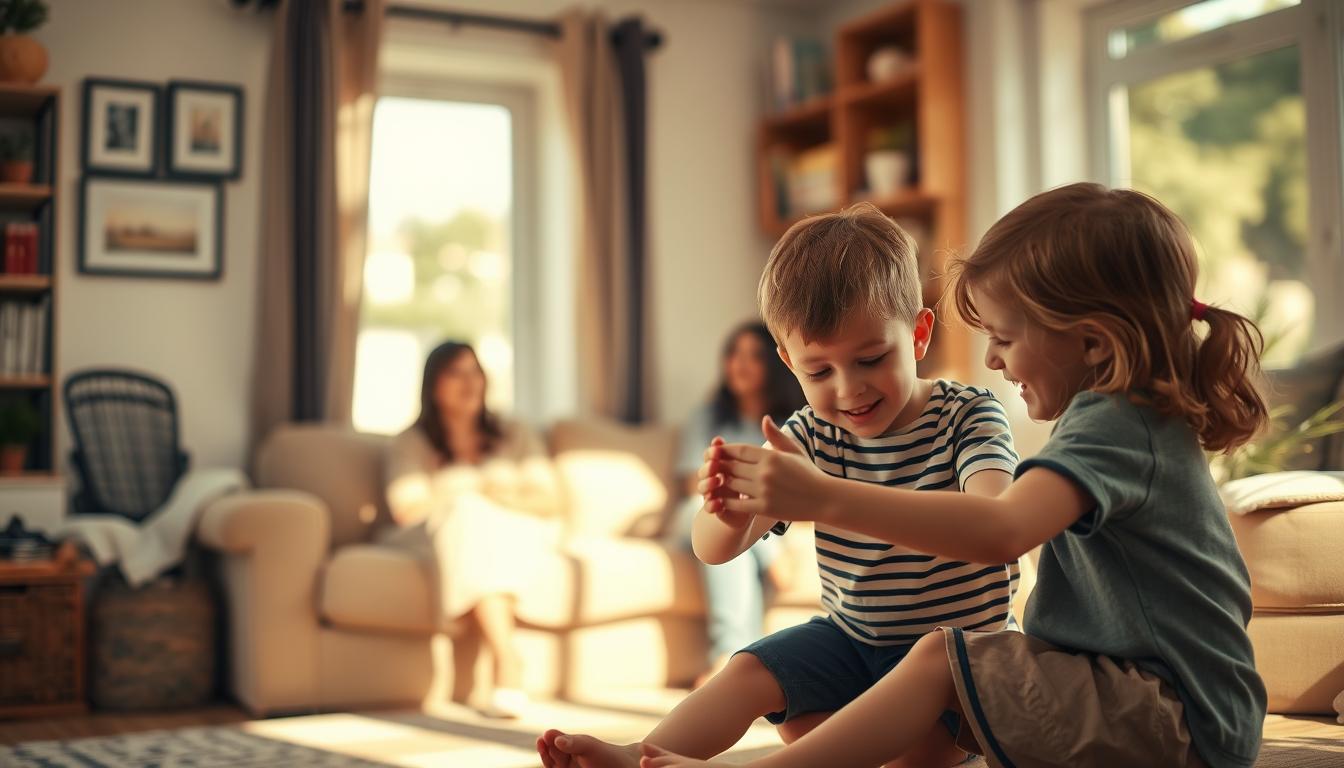
Sibling relationships are a hidden but powerful force in childhood. In the U.S., 80% of people grow up with a brother or sister. These bonds are key to family life, yet only 3% of research looks into them.
From fighting over toys to being lifelong friends, siblings reflect our best and worst qualities. A 2019 study found that adults in their 60s with good sibling ties feel less lonely and anxious. This shows these bonds last a lifetime.
Experts say siblings teach us important social skills. They help us learn to share, solve problems, and deal with rivalry. A study from Brigham Young University found that loving sibling bonds boost empathy in teens. But hostile sibling relationships can lead to depression.
Younger siblings are more likely to try drugs if their older siblings do. This shows how sibling influence affects our choices and mental health.
Family dynamics between siblings shape our expectations for life. Sisters often share deep emotional bonds, while brothers may bond through sports or hobbies. Studies show that having more siblings can lower the risk of divorce by 2%.
Even challenges like feeling favored by parents can leave marks. Adults who felt their parents favored one child have weaker sibling ties. This shows siblings are more than just playmates. They help shape our identities and how we see ourselves and others.
The Unique Role of Siblings in Our Lives
Sibling relationships are the foundation of sibling bonds that shape our understanding of family structure. Unlike friendships or parent-child ties, siblings share a lifelong connection. They learn together, teaching conflict resolution, empathy, and cooperation.
For many, siblings are the first peers who challenge and support us through every stage of life.
“Growing up in a big family impacts our development because the immediate family serves as the first and primary group we are part of.”

Research shows sibling relationships are the longest human bonds most people maintain. A study tracking over 85,000 individuals found that sibling interactions shape traits like patience and trust more than birth order or gender. Even small conflicts, like competing for parental attention, teach negotiation skills critical for adult relationships.
The way siblings navigate these dynamics shapes their sibling roles within the family—whether mediator, protector, or innovator.
Data from a Swedish analysis found that losing a sibling increases heart attack mortality risk, highlighting their profound emotional significance. Yet sibling rivalry isn’t all negative: it prepares us to handle workplace competition and collaborate in teams. These roles aren’t fixed—sibling pairs adapt their interactions over decades, creating a dynamic template for future social networks.
The Emotional Impact of Growing Up Together
Everyday fights and laughter between siblings help kids learn to handle their feelings. Sibling rivalry and sibling conflicts teach them to manage anger, negotiate, and find common ground. These moments, whether about toys or apologies, are key to learning empathy and patience.

Studies show that kids who deal with sibling conflicts become more resilient. A study found, “Children often develop thicker skin, becoming adept at managing stress and coping with setbacks.” But how parents handle these disputes is critical. Harsh discipline can make things worse, while calm mediation helps.
Families with a supportive family emotional climate raise kids better prepared for life’s challenges.
“Sibling relationships are microcosms of future social interactions,” note researchers, highlighting how these dynamics mirror real-world conflicts and alliances.
Even in tough times, siblings teach each other emotional balance. A positive family emotional climate turns fights into lessons. This helps kids learn to express their feelings without causing lasting harm. Over time, these exchanges build the emotional intelligence needed to succeed in a complex world.
Siblings as Our First Friends
Siblings become our first friends long before we start school. Playing with brothers or sisters teaches us important social skills. We learn to share and solve problems together.
These early moments lay the foundation for sibling companionship. They help us understand trust and loyalty. In big families, working together on tasks like cooking or planning events strengthens our communication and negotiation skills.

Studies show that kids with siblings grow up to be more empathetic. A 2014 study found they care for others better than only children. Siblings provide a safety net, helping us feel less lonely.
Unlike school friends who may leave, sibling bonds last a lifetime. They mix rivalry with loyalty in a unique way.
These relationships teach us about fairness and compromise. Whether it’s building with blocks or choosing a TV show, playtime builds our emotional intelligence. Sibling companionship is not just fun—it’s a way to learn life’s most valuable lessons.
Lessons in Competition and Cooperation
Sibling rivalry and competition are normal parts of growing up. Kids often fight over toys or mom’s attention. These fights teach them how to deal with disagreements.
Studies show kids learn to share and find compromises. These moments help them handle conflicts later in life.
“Children have to learn to share, compromise, and negotiate with multiple siblings for resources, time, and space, which can help them develop strong conflict resolution skills.”

Healthy family teamwork comes from siblings showing empathy in fights. Research by Teti & Ablard shows securely attached siblings solve problems faster. Even rivalry can push kids to do better in school or sports.
But too much competition can harm their bond. Finding a balance is key to building resilience.
Family teamwork also teaches important skills for later life. Siblings who work together on chores or projects learn to support each other. These early lessons help them work well in teams as adults.
Managing sibling competition teaches patience and fairness. These skills are essential for emotional intelligence in teams. Whether it’s about homework or planning a trip, sibling lessons shape their teamwork skills for life.
Identity Formation through Sibling Influence
Identity starts early as siblings figure out their place in the family. They find their own spots through hobbies, talents, or how they act. A younger sibling might be creative to stand out, while an older one might lead.
These choices help shape who they are by showing how they are different or alike. This process is key in forming their personalities.
By adolescence, family roles become clear. Firstborns often take on more responsibility, while middle children help solve problems. These roles can last into adulthood.
Studies show that birth order affects personality. Firstborns tend to be more responsible, and youngest siblings more innovative. This is seen in research by Updegraff and Harvard collaborators.
Good sibling relationships build confidence. But rivalry can make us doubt ourselves. When parents value each child’s strengths, it helps with identity growth.
On the other hand, favoritism can make some feel less worthy. They might look for approval outside the family. Yet, even fights can teach us about what we value and what we avoid in ourselves.
Every moment, from laughing together to arguing, shapes our view of the world. Sibling bonds are a lifelong learning experience. They help us understand our family roles and who we are becoming.
The Power of Shared Experiences
Childhood adventures and shared memories are key to sibling bonds. Building forts, going on camping trips, or celebrating holidays together creates a special language. These moments make shared childhood memories that tell a family’s unique story.
As siblings grow, these family experiences grow into strong bonds. These bonds last even when time and distance separate them.
“Big families often experience deep, lifelong bonds and a strong sense of support and belonging.”
Family rituals, like baking pies at Thanksgiving or taking annual road trips, shape sibling bonding. Studies show that keeping traditions boosts cultural identity and emotional strength. When siblings face challenges together, like a parent’s illness or money problems, their childhood adventures in overcoming these become shared strengths.
These experiences teach empathy and problem-solving. They make siblings more emotionally adaptable by 30% as adults.
Even small moments are important: a shared laugh over a childhood mishap or remembering a stormy car ride to grandma’s. These stories create a deep connection. Siblings who look back at these memories through photos or talks strengthen their bond. Whether through fun or challenges, these shared moments are what keep siblings together for life.
The Impact of Age Gaps between Siblings
Birth spacing shapes sibling relationships in deep ways. A big age gap can make older kids mentors, and younger ones want to be independent. Studies show 24% of younger siblings see older siblings as parental figures. This shows how big age gaps change traditional roles.
Close siblings often have playful rivalry. But those with big age gaps have fewer peer-like interactions. For example, a 6.2-year gap between half-siblings changes how they connect. Frank J. Sulloway found that siblings six or more years apart might feel lonelier than only children, with 30% saying they felt lonely as kids.
But these gaps also create special bonds. Older siblings often teach younger ones life skills: 60% of younger siblings say they learned from older siblings. Also, 55% of those with big age gaps say emotional support is a big plus. As adults, 50% of older siblings find they have shared interests again, turning childhood hierarchies into partnerships.
Birth spacing also changes family dynamics. Parents with big age gaps might find it hard to balance attention. But closer spacing means more shared activities. Yet, 45% of younger siblings say they grew up faster because of older siblings. The key is being flexible—whether siblings are three or ten years apart, their bond grows uniquely, blending challenges and strengths over time.
Sibling Support during Life Transitions
Adult siblings often become a vital emotional support network during big life changes. They use their shared family history to offer unique insights. This is very helpful during family transitions, like moving out or starting a career.
Research shows that even though siblings may not talk as much in early adulthood, their emotional bond grows stronger. A 2001 study found that by middle age, sibling bonds become a strong support during tough times. For example, the GI Bill’s 2009 reforms helped ease financial stress, which can strain sibling relationships.
“Apply a curious mind and a loving heart to your relationship, and you cannot go wrong.”
Even if siblings move apart, their bond remains strong. It’s built on years of shared memories. This makes them great at supporting each other through life’s ups and downs, like marriage or becoming a parent.
Siblings are a constant source of support in adulthood. They celebrate milestones and help through tough times. Their role in family transitions shows that some bonds remain unbreakable, no matter what life throws your way.
Lifelong Connections and Shared Memories
Lifelong sibling bonds grow stronger over time, becoming a key source of emotional support. Adult siblings rely on their shared history, turning childhood memories into a strong foundation. Even when life takes them apart, their connection remains strong.
Libby Powell and her brother Benjamin are a great example. Despite Benjamin working abroad, they keep their bond alive through shared hobbies like coffee roasting. Their story shows how 70% of adults lean on their siblings for emotional support during big life changes.
Today, technology makes it easier to stay connected. Video calls and social media help siblings keep their bond strong. Shared traditions, like holiday gatherings or childhood jokes, are essential in keeping these connections alive. Over 50% of adults say these rituals strengthen their ties.
Childhood conflicts may fade, but the lessons learned stay with us. Learning to negotiate with siblings helps 75% of adults in their careers. Family history, passed down through stories and heirlooms, creates a shared identity. For Libby, Benjamin’s presence after her foster brother left and her mother passed away deepened their bond. Their story shows how these bonds help us become resilient.
As we get older, sibling connections often turn into cherished friendships. Taking care of these relationships means more than just keeping memories alive. It’s about preserving a legacy of support. Whether through annual reunions or simple calls, investing in sibling bonds honors the past and strengthens our future well-being.