






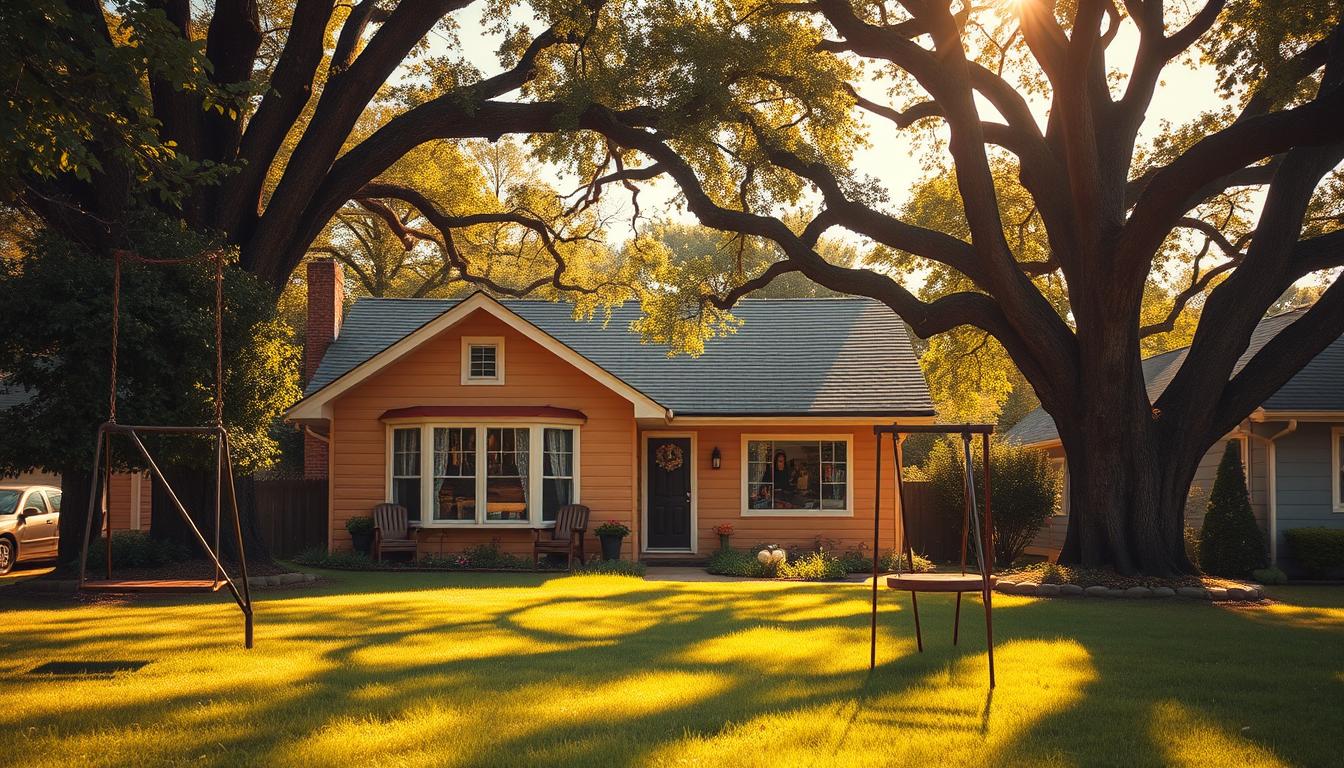
Childhood home memories shape who we become, starting with the earliest experiences. The home is where first steps and first words happen. These moments, as Jessi Kirby writes, “swirl and dance on the invisible currents” of early childhood.
A home’s walls echo with milestones that define us. From learning to tie shoes to sharing bedtime stories, these moments build our identity. The home environment isn’t just physical—it’s where trust, safety, and belonging start.
These early experiences leave lasting imprints. Every corner of a childhood home teaches us resilience, empathy, and self-awareness. It’s here that the groundwork for social skills and emotional growth begins, shaping our future selves.
The Influence of Home on Childhood Development
A child’s early years are deeply influenced by their home. Studies show that homes with secure attachment through consistent care help with child psychology. A study of 7,326 rural children found that 32.4% lacked access to activities like book-reading, affecting developmental milestones.
Children without parental engagement in reading were 1.56 times more likely to lag behind in cognitive growth.
Secure attachment is not just emotional; it impacts brain development. When parents tell stories or sing, it strengthens brain connections. The study found that children without these interactions were twice as likely to struggle with emotional wellbeing.
Even mild stunting or underweight status lowered their chances of reaching developmental goals.
Educational resources are also key. Mothers with higher education improved their child’s odds by 1.87 times. But it’s not just about income: middle-class families saw a 1.24 boost in cognitive scores. A stable home fosters resilience, letting kids explore while knowing they’re safe.
These foundations shape how children handle stress and form relationships later in life.
The Role of Space in Childhood Exploration
Every corner of a home can become a classroom for childhood exploration. Children thrive when given personal space for children to rearrange furniture, draw on walls, or transform corners into forts. A study found that kids with private gardens do better in spatial cognition tasks. This shows that having space helps kids solve problems.

“Urban teens use spatial awareness to navigate neighborhoods, with 70% employing ‘street literacy’ strategies,” noted Cahill (2000). This mirrors how kids learn by interacting with their environments. Building blanket forts or redesigning rooms isn’t just play—it’s creative development in action. When children move objects or negotiate space with siblings, they practice negotiation, physics, and creativity.
Environmental learning happens even in small spaces. A child’s desk-turned-ship or closet-turned-cave teaches them to see possibilities. Yet, 25% of urban children spend over 2.5 hours daily on screens, limiting hands-on exploration. Parents can balance safety with curiosity by designating safe zones for exploration—like a corner with art supplies or a backyard obstacle course. Research shows such setups boost environmental learning, helping kids adapt to future challenges.
Spaces that evolve with a child’s age—from toddler nooks to teen art walls—support lifelong spatial confidence. Even small adjustments, like a dedicated craft area, turn homes into labs for growth. As they grow, these early explorations shape how they approach new environments, proving that every room holds lessons waiting to be discovered.
Family Traditions That Shape Us
Family rituals like bedtime stories or weekly dinners create emotional anchors for children. For generations, practices like these have passed down family values through actions as much as words. Consider Raffaele Runca’s childhood in rural Italy, where holiday traditions—like preparing Easter meals despite scarcity—taught resilience and gratitude. These moments, rooted in cultural identity, become blueprints for belonging.
“My mother’s voice sharing tales by candlelight is my earliest memory,” recalls Raffaele, whose family’s modest celebrations emphasized togetherness over wealth. Generational practices like his family’s shared harvest rituals, split equally with their landlord, modeled fairness even in hardship.
Holiday traditions often become sensory memories: the scent of Grandma’s baking, the glow of holiday lights in a specific window. The Pardoe family’s New Hampshire farm, owned for 179 years, hosts annual harvest gatherings. There, children learn about land stewardship—a living lesson in heritage. The O’Neill clan’s biannual reunions, with 235 relatives, show even large families can unite through planned events.
Family values thrive in small acts too. The Lincoln and Therese Filene Foundation, active across five generations, shows how traditions evolve while honoring origins. Whether baking cookies or debating at the table, these moments teach empathy and shared history. Even in migration, like Raffaele’s journey to Argentina and Canada, traditions adapt but endure—keeping cultural identity alive across borders.
The Power of Shared Experiences
Doing things together, like cooking or fixing up the house, makes childhood memories that last. It also helps families bond. These activities teach kids to talk clearly and listen well, improving their communication skills.
When kids disagree about chores or games, they learn to solve problems peacefully. Simple tasks, like gardening or planning a trip, teach teamwork and patience.

Mealtime talks and weekend outings are more than fun. They’re lessons for life. Studies show they help kids feel their emotions and deal with others better.
Even small projects, like cleaning a closet or decorating, build trust and respect. These moments show that disagreements can help families grow closer.
By making time for each other, families create strong bonds. These shared moments don’t just pass the time. They build empathy and understanding that lasts forever.
The Impact of Decor and Environment
Color choices in children’s room design really matter. Warm colors like red or orange spark creativity. On the other hand, cool colors like blue and green help kids focus better.
Studies show these colors can make learning 20% better in tidy spaces. In the U.S., over 40% of homes have messy rooms. This mess can stress kids out a lot.
A 2021 study found kids in neat spaces did 15% better on tests. Letting kids pick out their own decor helps them express themselves. A 2023 study showed that developmental design can boost kids’ scores by up to 34%.
Even small changes, like labeled bins or vertical storage, can make a big difference. Good lighting and air flow are key too. Rooms with bad air flow saw 22% more restlessness in studies.
Bright but adjustable lighting helps with both play and homework. Home aesthetics are important, but they should change as kids grow. Think about furniture that grows with your child.
Research from 12 global studies found that good decor can lower stress hormones by 18%. Adding plants or themed wall art can be fun and affordable. Keeping things organized while letting kids be creative helps them learn to organize better.
The Kitchen: A Hub for Learning
The kitchen becomes a classroom where kids learn math, science, and culture. Cooking with them teaches practical skills like measuring and counting. It shows chemistry in action, like when batter rises.

Even simple tasks like washing greens or setting the table teach responsibility. Older kids learn about sugar caramelizing and spice origins. Tools like Smelling Bottles help with sensory development.
Tasks that focus on safety are great for all. Tactile labels and braille make appliances accessible. Simple jobs like kneading dough or arranging napkins help kids feel independent. Grocery shopping teaches math, like comparing prices.
Every recipe shared is a lesson in heritage and science.
Family recipes spark curiosity about where they come from. They teach about grandma’s rosemary and rice’s importance. These moments help kids develop healthy eating habits and cultural pride. Even mistakes, like burnt cookies, teach patience and precision.
Technology’s Place in the Family Home
Today, families often spend a lot of time looking at screens. This includes phones and smart speakers. Parents need to teach kids how to use technology wisely.
The American Academy of Pediatrics says kids under two should not watch too much screen time. They should play with their hands instead. For older kids, there are educational apps like PBS Learning Media and DreamBox. These apps help with math and reading, teaching kids to use technology well.
Families need to find a good balance with technology. Too much screen time can take away from playing freely. A study from 2013 showed more kids under eight are using tablets or smartphones now.
Setting rules for screen time is important. For example, not using devices during meals. Doing things together online, like making videos, can also bring families closer.
Playing with technology can teach kids important skills. They can solve problems in Minecraft or tell stories with apps. But, too much screen time can stop them from exploring outside. Tools like Storyline Online mix reading with technology, showing screens can be good for learning.
The National Association for the Education of Young Children suggests choosing the right devices for kids. This means finding tablets that are tough for preschoolers. Finding a balance between technology and real life helps kids grow strong in today’s world. Families do best when technology fits with their values and daily life.
Outdoor Spaces and Their Benefits
Outdoor play is more than fun—it’s key for healthy kids. Backyards with gardens or open areas help kids grow physically. Even tiny spots, like balcony planters, help kids connect with nature.
Studies show kids who play outside are more focused and calm. Green spaces help kids with ADHD stay focused. This is because playing outside improves their attention.

Creating a backyard doesn’t need to be complicated. Simple things like a mud kitchen or a climbing tree make yards educational. These spaces teach kids about nature as they watch seeds grow or see insects.
Unstructured play lets kids try new things safely. They can balance on logs or jump in puddles. This builds their confidence and resilience.
“Children who spend time outdoors show better social skills and emotional regulation,” notes a 2022 study. “Even brief exposure to nature reduces stress hormones.”
Urban families can connect with nature through local parks or window gardens. Schools and communities can make playgrounds more inclusive. These small steps teach kids about caring for the environment.
Every visit to a yard, balcony, or park is an opportunity to spark curiosity. Whether it’s a garden or a walk at sunset, outdoor time is good for kids. It helps them grow physically and mentally, and fosters a love for the planet. Let’s make space for wonder, wherever we are.
The Home as a Learning Environment
A child’s home is where learning starts. Simple actions like bedtime stories or counting games create a strong home learning environment. This environment helps with academic success.
Even without expensive educational resources, parents can make learning a part of daily life. Reading to children under three boosts their language skills. Many families make this a priority.
Studies show that parental involvement in these activities helps kids get ready for school.
Programs like the Early Years Special Initiative (EYSI) in London use early literacy tools for families in need. Activities from Peeple and resources from Speech and Language UK offer support. The “Calendar of Firsts” encourages families to mark milestones, like a child’s first book, as learning moments.
Research shows that parental engagement is key, not income. A supportive home where kids see adults learning sends a strong message. Small steps, like keeping books within reach or discussing math at meals, build important skills.
These practices match findings that frequent interactions with caregivers boost social-emotional growth more than wealth.
Creating this environment doesn’t need to be perfect. Small, consistent efforts can turn homes into places where curiosity grows. This sets the stage for lifelong learning and academic success.
Transitioning Homes and Its Effects
For kids, moving with children can shake up their routines and safe spaces. Studies reveal that kids face relocation stress during childhood transitions. This stress is more common with frequent housing changes.
The Early Childhood Longitudinal Study followed 19,162 children. It found that those who moved often had more social-emotional problems. For instance, moving in elementary school linked to lower scores by fifth grade. But, some kids adapt fast, showing great resilience.
“We’re going on an adventure!” Seeing moves as family adaptation chances helps kids. Letting them help with packing, like a “comfort box,” can ease worries. Keeping bedtime stories or mealtime traditions in the new home helps too.
Urban Institute research points out a lack of housing counseling for families facing school disruptions. Even small steps, like visiting the new neighborhood, can help. Schools often see a drop in grades after a move, but this usually gets better by middle school. Emotional healing takes time, as kids need to rebuild friendships and adjust to new places.
Keeping one room organized first in the new home can help. Data shows 1 in 4 kids experience 5+ moves before eighth grade. While each move can make social skills worse, the right approach can turn it into a chance for growth. Talking openly about feelings and celebrating small wins, like unpacking a bedroom, helps kids feel secure again. Every move is a chance to grow closer as a family.
Reflecting on the Home as a Lifelong Influence
Childhood home memories shape who we become long after we leave. The home atmosphere we grow up in becomes a blueprint for emotional development. It guides how we handle joy, conflict, and connection. Jessi Kirby’s words linger: those early years leave an imprint that outlasts changing rooms and forgotten routines.
Research shows intergenerational influence is powerful. Parents often mirror—or actively avoid—their own upbringing. Many recreate cherished moments, like weekend hikes or nightly dinners, while others consciously skip harsh discipline or rigid rules. These choices highlight how family legacy is built through intentionality, not perfection. A 2023 review of 112 studies found that even household chaos, when managed mindfully, doesn’t erase the emotional development.
Think about your own childhood home memories. What did they teach you about love, resilience, or belonging? These lessons ripple outward, shaping how you parent, love, and build spaces that feel like home. The goal isn’t to craft a flawless environment but to prioritize moments that matter—a shared laugh, a quiet ritual, or a value lived aloud.
As decades pass, it’s the warmth of those interactions, not the square footage, that stays. Let your home’s story grow from what you cherish most. After all, every family’s legacy begins with small, deliberate choices today.