






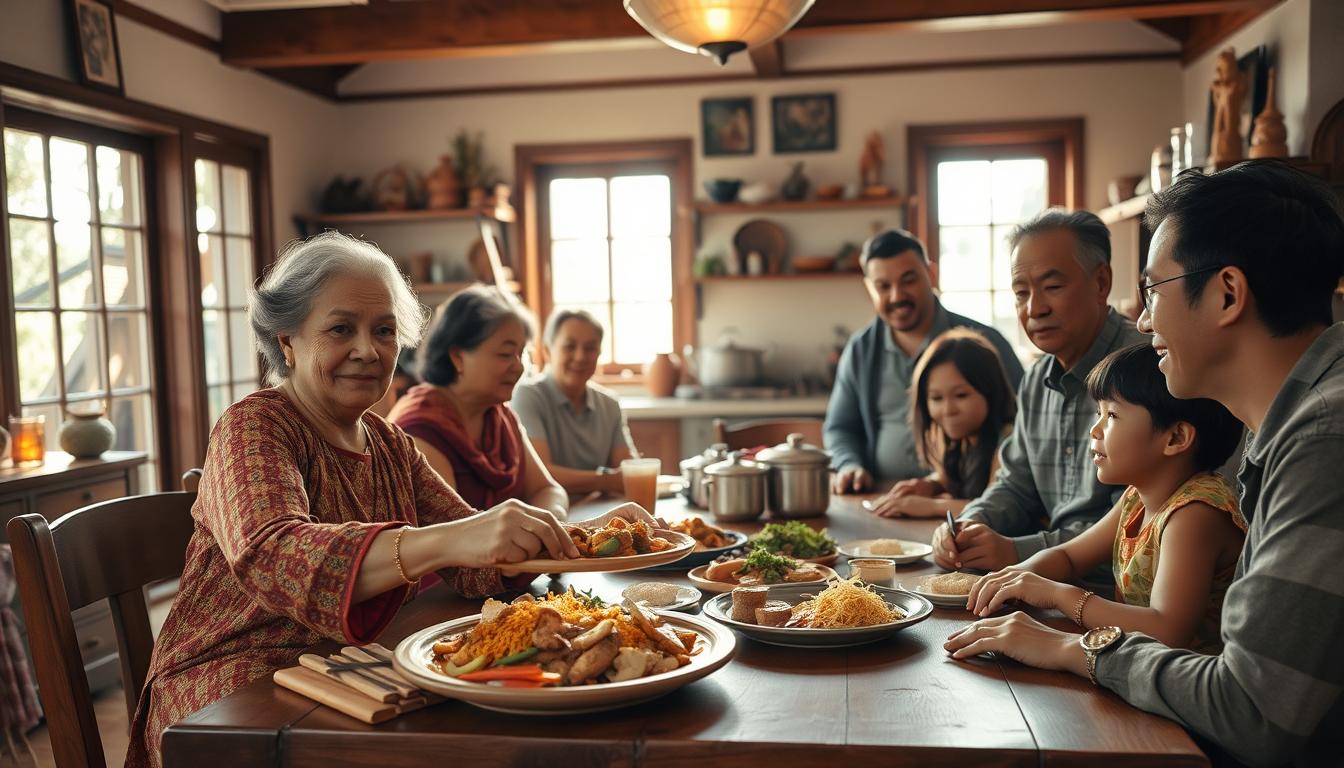
Family traditions are key to who we are, shaping our views on family and culture. They include everything from how we eat to how we celebrate holidays. These customs connect us to our past and help us feel part of a community.
Cultures around the world have different ways of living together. In some places, families live with grandparents and other relatives. In others, families focus more on just the parents and kids. These choices affect how families make decisions and solve problems.
Family traditions also shape how we feel about each other. For instance, in some Asian and African families, living together with grandparents is common. This strengthens family ties. In contrast, Western families often value being independent. These differences show how culture influences our daily lives and values.
As the world gets smaller, families are finding a balance between old traditions and new ways of living. Learning about these traditions helps us see how our cultural roots shape our relationships and our future.
Understanding Family Dynamics Across Cultures
Cultural family systems shape how families worldwide define their roles and values. In cross-cultural family patterns, nuclear households are no longer the only option. Now, we see blended, extended, and chosen families too.
The Filene family’s five-generation governance of their foundation shows how traditions adapt over time. The Pardoe farm—operated for over 200 years—reflects enduring heritage ties.
Diverse family structures thrive in modern societies. The O’Neill clan’s 235 members gather annually, blending old rituals with new generational input. Immigrant families navigate global family dynamics, balancing heritage practices with mainstream norms.
Research shows how adolescents often adopt dominant culture values faster than parents. This creates gaps in cultural orientation.
“Cultural gaps arise when family members adapt at different paces,” noted a 2023 study on Latino and Asian American households. These disparities affect communication and conflict resolution, shaping everything from holiday traditions to career choices.
Family systems like the Debley Foundation, founded with 10% of Charles Demeré’s wealth, embed cultural values into governance. Even small shifts—like the Jacobs Foundation’s board including three daughters and two sons-in-law—reflect evolving norms. By embracing these differences, families build bridges between past and present, honoring both roots and change.
Traditional Family Roles and Responsibilities
Family structures around the world show deep traditions. These traditions decide who does tasks like cooking, caring for children, and managing money. In many places, men are seen as the breadwinners, and women as homemakers. But today, things are changing.
In the U.S., 62% of people see marriage as a partnership. They believe in sharing family duties, from work to taking care of kids.

How family duties are passed down also varies. In some cultures, older family members live with their relatives. They help raise the kids and handle the money. Different cultures have different ways of raising children too.
In some places, like Scandinavia, kids are encouraged to be independent. In other cultures, children are taught to respect their elders a lot.
Looking back, the 1950s were different. Back then, most U.S. families followed the “male-breadwinner” model. Now, 40% of kids live in non-traditional families. Yet, 90% of Americans get married and have kids, blending old and new values.
Think about how your family balances old traditions with new ideas. From who takes care of the kids to how we care for our elders, we’re seeing changes that reflect both our past and our progress.
Communication Styles Within Families
Cultural communication patterns shape how families connect. In some cultures, direct speech is the norm, while others value subtlety. Western households often prioritize open dialogue, while Asian or Middle Eastern families might use indirect cues to convey needs. These differences can create misunderstandings but also opportunities for learning.

Family conversation norms around expressing emotions in families vary widely. In expressive cultures, sharing feelings strengthens bonds. Others see emotional restraint as a sign of respect. For instance, 55% of families avoid tough topics to keep peace, reflecting “Peacekeeper” styles. On the other hand, “Achievers” face more conflicts, with 70% of interactions marked by disagreements.
Cultural conflict resolution hinges on understanding these differences. A Builders approach—where families collaborate—boosts problem-solving by 50%. Technology adds another layer: video calls bridge distances but may dilute traditional communication rituals.
“Therapy helps families navigate differences by honoring each member’s cultural voice,” says a recent study on multicultural households. Families using mixed styles report 20% better conflict resolution.
Open dialogue increases family satisfaction by 25%. Even small changes, like regular check-ins, can boost emotional support by 30%. Embracing these nuances turns cultural differences into bridges, not barriers.
Celebration of Traditions and Rituals
Cultural family celebrations like quinceañeras, bar mitzvahs, and Lunar New Year gatherings are special. They connect us to our roots through traditional family rituals. These rituals help keep our cultural heritage alive by sharing stories and practices.
Even in today’s digital world, families find ways to keep traditions alive. From virtual Diwali gatherings to Zoom Hanukkah candle-lighting, they adapt to stay connected.
“Tradition is the living faith of the dead,” connecting past and present through shared joy. During holidays, 94 million U.S. households deck halls with trees, while others light menorahs or prepare festive foods that carry generations of memory.

Family dinners, holiday crafts, or seasonal volunteering strengthen family bonds. Studies show kids in these traditions feel 40% more secure and show 30% stronger empathy. These moments teach valuable lessons.
Cooking grandma’s recipe or sharing ancestral tales boosts problem-solving skills by 20%. It turns everyday moments into lasting legacies.
Even small acts, like weekly game nights or sunrise prayers, anchor families. Using tech to bridge distances makes families 25% happier. This shows that traditions can adapt and stay meaningful.
As 85% of children link rituals to cultural pride, these practices protect our heritage. Whether it’s lighting candles, decorating doors with rangoli, or gathering for Thanksgiving, these moments are more than fun. They are lifelines to our heritage.
The Impact of Religion on Family Dynamics
Religious values are key in many homes around the world. Practices like nightly prayers or weekly worship unite families. For instance, Jewish families feel closer during the Sabbath with rituals like lighting candles.

Studies show that faith makes families happier. Parents with strong beliefs are less stressed and have better marriages. Kids in these homes also have better mental health.
One study found 90% of teens from religious families feel closer to their parents. But, debates on gender roles or corporal punishment can cause tension.
“Spiritual family traditions aren’t just rituals—they’re lifelines,” says Dr. Emily Carter of the Family Dynamics Institute. “They provide identity and purpose.”
Programs like the UNODC’s Strong Families initiative help families in war zones. Muslim Syrian refugees used prayer to deal with trauma. But strict religious rules can also cause conflict, like when teens are shunned for leaving their faith.
Finding a balance between tradition and modern values is key. This shows that religious influence can both strengthen and evolve within families.
The Influence of Language and Expression
Language and cultural identity are closely linked in families. Multilingual families can connect or divide generations. Parents often teach children to respect their heritage through different languages.
But, children may prefer the dominant language, which can weaken ties to their ancestors. These choices affect how families keep or lose their unique voices over time.
Family storytelling traditions are kept alive through shared tales. Elders share history at dinner, passing down values. These moments help preserve traditions, whether through scrapbooks or simple talks.
Even small rituals, like a yearly photo day, help weave stories into family DNA.
Technology helps preserve family stories, from apps translating rare languages to digital archives. But, mistakes like Pepsi’s failed Taiwanese slogan show the importance of words. Even small phrases, like the British “thank you” meaning “yes,” show how language shapes culture.
Studies show that conversational styles vary greatly. High-context cultures value indirect cues, while low-context ones prefer clear messages. Misunderstandings can happen when families ignore these differences.
Language is more than just words; it’s how families view the world. By nurturing storytelling and mindful communication, families keep their cultural identity alive. Every shared tale connects the past to the future.
Modern Challenges to Family Dynamics
Globalization changes how families keep up with cultural family challenges. It’s about finding a balance between changing family cultures and modern family adaptation. This means looking at traditions in new ways.
From families living across borders to those using technology a lot, keeping evolving family traditions alive is a creative challenge.
Technology is the ultimate distraction and barrier to connection. While you may be tempted to photograph every moment of a family celebration, try to be present and capture the moment mentally.
Too much screen time can take away from quality time together. A 2023 study by the Family Dynamics Institute found 68% of households say devices cut into family time. To fix this, families can plan tech-free hours during get-togethers.
They can also make traditions simpler, like using digital photo albums and telling stories together. This way, they can connect old and new traditions.
Time blocking helps families focus on traditions without feeling overwhelmed. For example, a Mexican-American family might have bilingual holiday meals. This blends recipes and customs.
Being flexible is key: 72% of therapists say making traditions adaptable helps keep them alive. Even small changes, like virtual reunions, can keep families close while respecting their heritage.
Adapting traditions doesn’t mean forgetting where you come from. By focusing on what’s important, families can change while staying true to their roots. The secret? Finding a balance between technology and being present, between old and new.
Intercultural Marriages and Families
Intercultural marriages in the U.S. have grown a lot, with 17% of couples in 2015 being from different cultures. This is up from just 3% in the 1960s. These marriages face challenges like different parenting styles and in-law expectations. But, they can succeed with the right approach to intercultural family adjustment.
Research shows that 60% of intercultural families feel closer when they talk openly. This shows that communication can really help bridge cultural gaps.
When families mix their cultural traditions, they can create something special. A 2022 study found that 70% of intercultural parents celebrate both their cultures together. This can include holidays like Lunar New Year and Thanksgiving.
But, there are also challenges. 45% of mixed-heritage teens feel caught between their cultures. Yet, 35% of them find a way to blend both cultures smoothly.
“We cook my wife’s Korean recipes and teach our kids Russian folk tales—it’s our family’s unique glue,” shares a San Francisco couple. Their approach mirrors findings that 65% of intercultural families actively preserve cultural practices, creating cohesive blended households.
More and more families are embracing cross-cultural relationships. 50% of Latino families with immigrant roots and 29% of Asian Americans are part of this trend. Even though these couples face a 10% higher risk of separation, those who learn from each other often do well.
By seeing their differences as strengths, these families build strong and adaptable homes. In these homes, tradition and innovation go hand in hand.
Cultivating Cultural Awareness and Respect
Raising culturally aware kids starts at home. Families can share stories, foods, and traditions. This helps kids celebrate their roots and respect others’ backgrounds.
Open talks about history and values build pride and curiosity. It’s a great way to learn about the world.
Respecting family diversity means listening without judgment. Learning from differences, like attending festivals, strengthens relationships. Over 75% of multicultural families agree.
Schools can help by using culturally responsive teaching. The Intercultural Development Research Association suggests multilingual materials and staff training. This honors diverse backgrounds.
Offering interpreters and trauma-informed programs makes families feel heard. It’s a way to show they are valued.
Empathy starts with small steps. Asking questions, sharing meals, or learning phrases in another language helps. With 80% of families agreeing, even small efforts create trust.
Flexibility and patience are key. Adjusting holiday traditions or supporting family rituals builds lasting connections. When families nurture cultural awareness, they create communities where everyone belongs.
By embracing heritage education and bridge-building, homes and schools become places of strength. These efforts turn curiosity into understanding and respect into lasting bonds.