



Everyday talks with neighbors shape our lives in ways we often miss. Social bonds in local relationships are key, even when we’re too busy to notice. Urban planner Sean Garrett says, “You don’t know anything about community until you start a community…” This shows how much our well-being depends on the networks around us.
Shared parks and local shops have a big impact on us. Demographics like age and household size mix into our daily lives. And things like clean streets and reliable transit support our routines quietly. Yet, our stories of belonging are as unique as the people in our communities.
Communities grow when everyone has a say, whether through faith groups or advocacy. But what if these systems don’t agree? The Mafia example shows that communities can also cause harm. This series encourages you to think: How do your choices affect the invisible ties that connect us?
How Neighbors Influence Our Well-Being
Strong relationships with our neighbors greatly impact our lives. Studies show that close-knit communities enjoy better mental and physical health. This is because emotional support is as important as any medicine.
These bonds lead to many benefits, like less stress and longer lives. They make our communities healthier and happier.
“Socially cohesive neighborhoods improve health outcomes,” studies confirm. Such bonds help people weather life’s challenges, providing practical help and emotional support.
A decade-long study of 1,071 adults found that good neighborly bonds are key. Those with strong social connections had fewer health problems and were happier. Even small actions, like sharing tools or childcare tips, can make a big difference.
These actions reduce loneliness and its negative effects. Emotional support from neighbors protects us from feeling isolated. When neighbors work together on projects, like cleaner parks or safer streets, trust grows. This improves everyone’s life quality.
These interactions are more than just friendly. They are essential for our mental and physical strength.
The Impact of Daily Interactions
Small gestures like waving, smiling, or lending tools weave our communities together. These daily interactions might seem small, but they’re key to building a community. Studies show that positive moments release oxytocin, a hormone that builds trust and connection.
Over time, these interactions turn strangers into friends. They strengthen the social bonds that keep neighborhoods united.

In Canada, half of the people don’t know their neighbors. This lack of connection can weaken our communities. But, simple actions like hosting block parties or helping with mail can change this.
A study in Australia found that events like Neighborhood Day improve community ties. Community expert Sean Garrett says, “Strong relationships are the base of a thriving neighborhood.”
These interactions are vital during tough times. During the pandemic, neighbors helped each other by delivering groceries or checking on the elderly. Research shows that older adults who got neighbor support felt better mentally than those who only relied on family.
Regular contact also lowers the risk of loneliness. This is linked to better health, like lower blood pressure and longer life. Every greeting or conversation adds to the community’s strength.
Community Events: Breaking Down Barriers
Neighborhood events like block parties and cultural festivals make strangers into neighbors. The University of Louisville is a great example of how universities and cities work together. They help build stronger local ties through these events.
These gatherings help people come together. They work on projects like planting trees and making art. This way, everyone has a common goal.
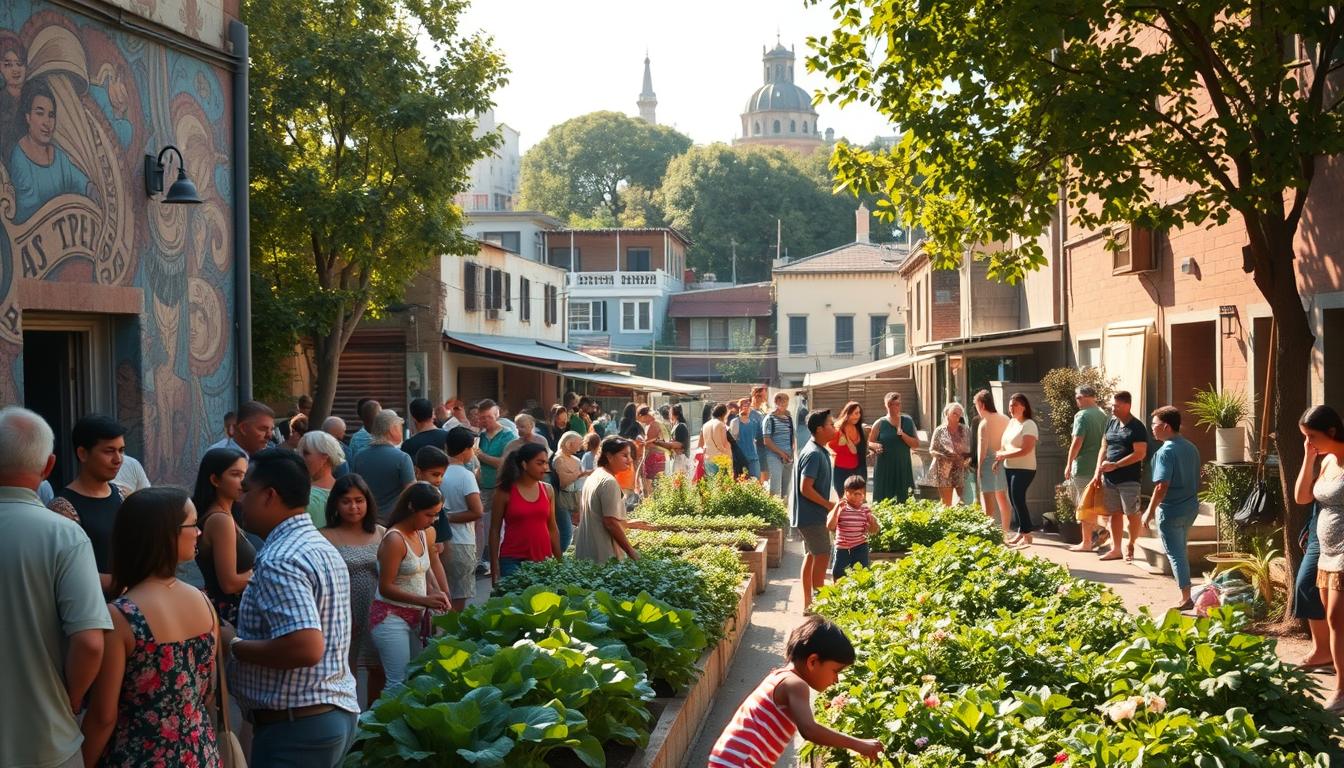
Places like South Parkdale’s communal gardens bring neighbors together. Over 40 kids learned at Summer Day Camp. Volunteers at Dunn Indigenous Garden help the environment and people’s health.
Studies show these events can make people feel less lonely. They can also improve mental health by 20%.
Inclusive activities help bridge gaps. The Humana Foundation helps immigrants with healthcare. When events meet local needs, more people volunteer.
“Participation in community celebrations strengthens trust,” says a NIH report. It notes how grants now focus on neighborly collaboration. Simple acts like sharing meals or cleaning up neighborhoods make 70% of residents feel connected.
“Strong community events reduce isolation and build resilience,” emphasized a Brookings analysis. It talks about how programs like the Newcomer Youth Initiative help people talk about important issues. With 51 families housed, shared activities are key to a stronger community.
From town halls to seasonal fairs, these events make everyone feel welcome. When neighbors share stories, barriers disappear. And neighborhoods become stronger.
The Neighborhood as a Safety Net
“The death of our community after moving four hours away… The systems to make friends and community are not there for those in our fifties the way they were in our twenties.”
Neighbor support systems act as a hidden shield for those in need. In emergencies, local help often begins with a neighbor’s knock on the door. They help in many ways, like delivering medicine or checking on the elderly.
Small acts make a big difference. Sharing meals during outages, babysitting, or shoveling snow are just a few examples. These actions show the power of a strong community.
Studies show that 74% of seniors in close-knit areas feel less lonely, even if they live alone. Those in disadvantaged areas face higher risks, but strong neighborhoods help them stay healthy. Programs like Boston’s “Block Captain Network” train residents to help in emergencies.

When official help is slow, neighbors step up. In Hartford, retirees swapped food during a snowstorm. In Miami, Little Havana provided childcare during a hurricane. These stories show how neighbors can be lifesavers.
Building these networks is essential for survival. Communities grow stronger when everyone sees themselves as part of a shared lifeline.
Research backs this up: areas with strong local ties have 25% fewer hospitalizations for isolation. Strengthening these bonds is a public health strategy. The real question is how fast we can act when crisis strikes. The answer is always next door.
Strengthening Local Economy and Support
Choosing local matters. Every dollar spent at a neighborhood business helps the local economy more than big chains. Programs like the Oswego Renaissance Association’s grants and Jumpstart Germantown’s training help small businesses grow. High-opportunity areas have 9.6% poverty rates—half the national average—showing the power of
Atlanta’s Office of Neighborhoods focuses on keeping resources local. This builds neighborhood economic resilience. When 23% of homes are vacant, cooperatives and skill-sharing networks help rebuild neighborhoods. These efforts lower unemployment and improve education, showing the strength of supporting local businesses.
Every $1 in grants or loans can lead to $100 in returns. This proves that working together can change lives. Supporting local isn’t just good for Main Street—it’s the key to thriving communities.
Shared Spaces: Parks and Recreation
Community parks and shared neighborhood spaces are key for building connections and staying healthy. But, only about half of Americans live close to a park. This means many don’t have easy access to green areas.
Places like playgrounds and trails can help reduce stress and boost mental health. But, there are big gaps in access, with lower-income areas often having smaller, less used parks.

In cities like Los Angeles, the OurCounty Sustainability Plan focuses on making parks accessible to all. These areas help fight climate change by absorbing carbon and cooling cities. For example, Santa Fe is using health data to plan park expansions.
In Wenatchee, Kiwanis Methow Park was updated to honor the community’s Latino heritage. This shows how community gardens and parks can celebrate culture and bring people together.
“Parks in our community aren’t just grass and swings—they’re where neighbors become friends.”
Baltimore’s 35-mile trail network shows how shared spaces can help local businesses. For instance, a street closure in Wichita boosted sales. But, safety is key: people who feel safe in parks are more likely to visit.
The L.A. plan wants parks within a 10-minute walk to improve health. In West Long Beach, better parks could help address air quality issues and the life expectancy gap.
Every park is a step towards fairness. When designed well, they help everyone—kids, seniors, and families—thrive. By focusing on community gardens and trails, cities can turn unused land into places of health and belonging.
The Power of Local Advocacy
When neighbors come together, small issues can lead to big changes. Neighborhood advocacy begins with people demanding better streets, cleaner air, and safer places. In Detroit’s McDougall-Hunt neighborhood, resident mobilization turned empty lots into gardens and playgrounds. By 2020, the Bailey Park Neighborhood Development Corporation (BPNDC) hired local teams to improve parks, showing how collective action can change neighborhoods.
Successful community organizing needs partnerships. In Wisconsin, WAJ members work with school boards and city councils. Their efforts with Safe & Sound Inc. and Discovery World show how advocacy connects residents with officials. Even small actions, like speaking at hearings or joining committees, help build momentum.
“We’ve been urging the South Coast air district for years to adopt stricter pollution rules,” said an advocate, highlighting how persistent neighborhood advocacy drives systemic change.
Advocacy isn’t just about protests—it’s about showing up. In Milwaukee’s Bailey Park, residents used grants to start a Grounds Crew, showing resident mobilization creates jobs and pride. Challenges exist, like ensuring all voices are heard. Programs like the Community Hub in Detroit help by hosting forums where families can share needs for childcare, jobs, and safety.
Everyday actions count. Attend a town hall, join a housing committee, or share info about zoning laws. When neighbors act together, they don’t just solve problems—they build stronger, healthier communities for everyone.
Cultural Exchange in Our Communities
Walking through a multicultural neighborhood, you smell global foods and hear many languages. These multicultural neighborhoods teach us about different cultures every day. Neighbors share traditions, foods, and stories, making our community stronger.
Slow Food USA’s workshops show how cooking classes or food festivals teach us about dishes like Mexican mole or Thai curries. These lessons help us understand our differences and turn them into something we can all enjoy.
Platforms like Couchsurfing and Tandem connect neighbors worldwide, blending language learning with cultural immersion. Even small actions, like sharing a recipe or attending a Lunar New Year parade, help create inclusive neighborhoods. Challenges like language barriers exist, but programs like Worldpackers’ volunteering opportunities help bridge them through hands-on work.
These interactions, whether at a local farmers market or a cultural fair, help reduce prejudices by showing us the human side of traditions.

Learning about cultural norms, like dining etiquette or holiday customs, builds empathy. For example, understanding why Japanese business practices differ from U.S. norms helps us respect each other more. Organizations like Slow Food USA say that cross-cultural exchange is not just social—it’s also economic.
Diverse teams innovate better, with inclusive companies making better decisions and reaching more markets. By embracing these exchanges, we turn diversity into a shared asset, making sure everyone feels included.
The Digital Age and Neighborly Connections
Technology has changed how we connect with our neighbors, creating digital neighborhoods where support flows. Apps like Nextdoor and Facebook groups serve as virtual front porches. Here, people share tools, warn of dangers, and plan cleanups.
Sean Garrett’s comm(s)unity project, started during the pandemic, shows the power of online community platforms. It connects people in ways that neighborhood social media groups can’t always do. Yet, there are challenges. A Pew study found 57% of Americans don’t know many of their neighbors, showing tech’s role in building trust.
“The majority of social issues could be solved by better neighborly relationships.” – Denver leaders at a 2009 community meeting
Denver’s Art of Neighboring program shows old-fashioned efforts can work too. It found that when neighbors help each other, fewer ask for help with snow. But, there are gaps. Older adults feel safer sharing keys than younger ones, and money can affect who gets together.
So, technology and community must find ways to bridge these gaps. Now, programs offer free Wi-Fi and training. This way, everyone can join digital neighborhoods.
Good online community platforms mix virtual and real-life interactions. Block parties planned on apps or neighbor check-ins by text build strong bonds. This means even those who rarely meet face-to-face can support each other.
As communities grow, finding a balance between screens and smiles is key. This ensures no one is left out in the digital age.
Education and Family Support Networks
Neighborhood schools are more than just classrooms. They are centers of community education that connect families. Programs like shared homework clubs and toy libraries turn streets and parks into places where parents work together. This helps ease the challenges of raising children.
These parent support networks do more than help with homework. They build trust and help neighbors support each other. This strengthens the community as a whole.
Intergenerational learning brings together people of all ages. Older folks teach younger ones about gardening or history. At the same time, younger families help seniors with technology. This exchange builds respect and a shared sense of purpose.
It creates a cycle of knowledge that benefits everyone. For families facing tough times or new to the country, these connections are vital.
“We made it a point to work as if we had all the resources… overcoming impossible odds.”
Research shows that educational community ties are good for health. Kids in programs like Head Start have lower risks of chronic illness. When schools and families work together, they create safety nets for single parents and immigrants.
This ensures no child is left behind. These networks teach more than just math. They teach resilience.
Creating these systems is hard, but the benefits are clear. When neighbors share resources and knowledge, they build a stronger future. Schools become beacons of hope, where every family’s strength helps the whole neighborhood.
Environmental Impacts of Local Living
Looking at neighborhood sustainability through the lens of environmental justice is key. In Los Angeles, community gardens and repair cafes are turning empty lots into green spaces. These areas help reduce waste and bring people together.
“This isn’t just about plants—it’s about fighting for clean air,” says Beatriz Reyes. She talks about her family’s long fight against pollution in West Long Beach.
Community efforts like these tackle pollution and promote green areas. Studies show kids in poor areas face more lead exposure than richer ones. In New Orleans, a child’s life can be shortened by 25 years because of their birthplace.
These facts show the big gaps in environmental justice.
When neighborhoods lack parks or supermarkets, health suffers. Low-income areas often bear the brunt of pollution and limited access to fresh food.
Car-sharing programs and urban farms cut emissions and improve air quality. In Chicago, safer, walkable neighborhoods are linked to lower BMI rates. By pushing for fair policies, communities can fight environmental racism and make spaces healthier for everyone.
Looking to the Future: A Vision for Community
Building the future of neighborhoods means embracing change while keeping what makes them strong. Intentional communities, like cohousing or pocket neighborhoods, are changing neighborhood design. They focus on walkability and shared resources, inspired by Jonathan Rose’s work.
Dr. Prabhjot Singh’s research shows neighborhoods impact health. Leaders should focus on sustainable models that address housing, healthcare, and parks equally.
Community resilience starts with people. The VMOSA planning process shows involving residents in vision and mission statements fosters ownership. When neighbors work together, they turn challenges into shared missions.
New York City’s 2050 climate target is a start. But cities must also focus on health, like expanding park access. Even small steps, like community gardens or repair cafés, build networks that withstand crises.
Adapting requires seeing loss as part of growth. Acknowledging changes, like fading local businesses or shifting demographics, allows communities to innovate. Elinor Ostrom’s studies on shared resources show collective action sustains neighborhoods.
By blending old and new, like preserving historic Main Streets with solar-powered housing, we create thriving spaces. The future isn’t a distant dream; it’s built daily through conversations, small acts, and a shared belief that our neighborhoods deserve care.