






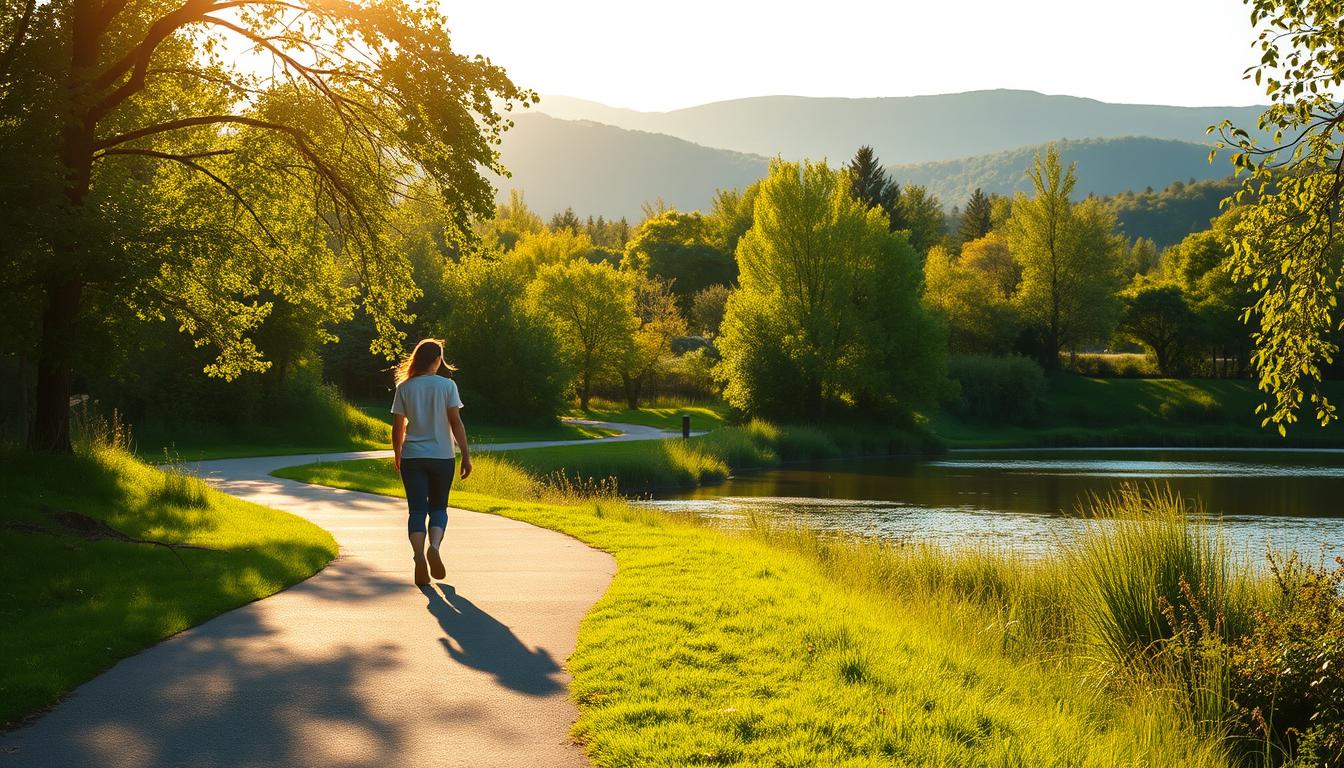
A daily walk is more than just steps. Americans have walked about 730 miles on average during the pandemic. Walking just 2 miles a day can lead to big health benefits of walking.
This simple act strengthens your heart, bones, and mind. It’s a low-impact way to boost your wellness. You don’t need a gym or trainer to do it.
Walking can be part of your morning exercise routine or a way to run errands. Many started walking 20–40 minutes a day during lockdowns to stay healthy. Every step counts, whether it’s commuting or a walking for wellness habit.
Walking can help manage your weight, lower blood pressure, and improve sleep quality. Over time, this routine makes a big difference.
Some walk out of necessity, like taking kids to school or running errands. Choosing to walk more turns daily tasks into self-care. A safe neighborhood and time allow this privilege.
Yet, small choices add up, creating healthier communities. They inspire better public spaces for everyone.
The Physical Benefits of Walking
Walking is more than just getting from one place to another. It’s packed with walking health benefits. Every step you take makes your heart stronger, improves blood flow, and increases your energy. Walking for 30 minutes a day can lower your blood pressure and reduce the risk of chronic diseases by improving your heart’s function.
The American Diabetes Association says walking helps control blood sugar levels. This makes it a key part of preventing and managing diabetes.
Walking is a low-impact exercise, great for those starting out with fitness. It’s easy on your joints but helps build muscle in your legs and core. Studies show that just 10 minutes of walking can start improving your heart health. Walking for 150 minutes a week meets the activity guidelines set by the federal government.
A 2022 study found that brisk walking (3.5–4.5 mph) can increase bone density in premenopausal women. This shows walking is good for people of all ages.
Every 1,000 steps reduces systolic blood pressure by 0.45 points—so 10,000 steps daily can drop it by 2.25 points compared to 5,000 steps.
Walking helps fight obesity and aids in weight loss by burning calories without putting too much strain on your body. Even 7,000 steps a day can lower your risk of death, which is good news for older adults. Begin with five minutes of walking each day and gradually increase the time each week. Every step you take is a step towards a stronger, healthier body, ready to face life’s challenges.
Mental Health Perks
Walking is not just for your body; it’s also a mood-booster. The #StupidWalkChallenge on social media shows millions embracing walking as a stress relief. It lowers stress hormones and releases happy chemicals.
Studies show short walks in green spaces are beneficial. A 2019 study found that 20 minutes outdoors reduced anxiety. Walking in nature also lowers depression rates, as seen in a Nurses’ Health Study.
Begin with a 5-minute walk each day to build resilience. Add mindful breathing for deeper stress relief. Walking with friends adds social benefits. Even small walks in cities or neighborhoods help. Walking is a free way to fight stress and improve mental health. Start walking today for better mental health.
Creating a Routine
Starting a daily walking habit means having a consistent exercise routine. Create a walking schedule that fits your energy levels. Walk when you feel most awake or relaxed.
Start with short walks. Research shows adding two minutes each week helps keep you going. Walking after meals helps control blood sugar, as found in Diabetes Care studies. Small steps lead to big changes.
Use apps or journals to track your walks. Studies say 7,000 steps a day is key for heart health. Reach for 1,000 extra steps a week to cut down mortality risk by 15%. Don’t let rain stop you—try indoor routes or use Nordic walking poles.
Get ready the night before by laying out your shoes and packing a water bottle. Join walking groups or online communities for support. Every slip-up is a chance to improve, not give up. Focus on staying consistent, not being perfect.
Walking for Creativity
Walking is more than just a way to stay fit—it’s a creativity boosting activity that science supports. It can increase creative output by 60%. This sparks problem-solving techniques and brings new ideas. Even short walks, lasting 5–16 minutes, can help your mind wander in a good way.

Historical figures like poet William Wordsworth walked over 180,000 miles. He believed movement was key to his creativity. Today, research shows walking enhances divergent thinking, where people come up with more unique ideas.
In one study, walkers came up with 4–6 more novel ideas than those sitting. Being in nature makes a big difference. Students who walked through green spaces like arboretums did better on creative tests than those in cities. This shows nature inspiration is important.
When I began my day with my thoughts and feelings only, my mind was peaceful—walking created space for clarity.
Walking increases blood flow to the brain, making it more flexible. If you’re stuck on a problem, just step outside. A walk can turn a blocked mind into a brainstorming machine. Let your feet move while your ideas flow.
Social Connections
Walking isn’t just for one person—it’s a way to connect with others. Joining social walking groups or walking with friends can make every step a chance for conversation. This can strengthen friendships and even help with mental health.
A quick text to a friend can brighten a day, but a walk together deepens that community connection. Shared trails become spaces where trust grows.
Starting a local group or inviting neighbors for a walk can spark new friendships. Studies show older adults with close friends tend to live longer. This proves that relationship building through walks is important.
Even short walks can lead to conversations with neighbors. This can turn strangers into friends.
Walking together helps during hard times. It builds resilience through supportive talks. Plus, it’s easier to share thoughts when looking at the path, not each other. Choose walks over screens for better heart health and friendships.
The Environmental Impact
Walking is not just good for your health—it’s also eco-friendly. Every time you choose to walk instead of drive, you help reduce carbon emissions. Small actions like walking for errands can lead to cleaner air and quieter streets.

In British Columbia, transportation emissions have risen by 42% from 1990 to now. Road vehicles are the main cause, making up 60% of emissions. Even short trips contribute a lot to emissions. Walking instead can help reduce fossil fuel use and slow climate change.
Choosing to walk to work or school can make a big difference. It’s a simple way to help the environment.
Walking through parks or trails can deepen our connection with nature. It turns simple walks into lessons about protecting our environment. Seeing seasonal changes or wildlife can spark a desire to protect these spaces.
Noise from traffic harms both wildlife and human health. It disrupts sleep and increases stress. Fewer cars mean quieter neighborhoods, where you can hear birds singing and feel the breeze.
Walking also makes communities safer. It encourages more people to explore outside. Every step we take is a step towards a healthier planet and better personal well-being.
Walking is a quiet revolution. It’s about making small changes, one block at a time, one mindful stride at a time.
Mindful Walking Techniques
Make your next walk a mindful walking practice by matching your breath with each step. Try the three-minute breath cycle: inhale for four counts, hold, then exhale for four. This simple walking meditation helps you stay in the present moment awareness. Studies show it can reduce stress by up to 30%.
Use your senses to focus more. Pay attention to the crunch of leaves, the scent of rain, or sunlight filtering through trees. Research shows this mindfulness sharpens attention by 40%. Even 20 minutes of this practice can ease anxiety and lift your mood, as found in 2021 studies.
Walking meditation isn’t just for quiet paths. Urban settings work too—focus on the rhythm of your steps or the hum of traffic. A 2023 study found this boosts sleep quality by 15% and cuts negative self-talk by half. Try a gratitude walk: pause to name three things you see, hear, or feel. Over time, this mindfulness technique builds resilience to stress and enhances well-being by 25%.
Combine this with “forest bathing,” the Japanese practice of immersing in nature. Even brief outdoor mindful walks improve balance in older adults and reduce pain for those with chronic conditions. Let every step remind you: mindfulness isn’t about perfection, just presence. Start small—a 10-minute stroll with intention—and feel the shift.
Walking in Different Seasons
Seasonal walking tips can make the weather work for you, not against you. Walking outside all year is easier when you adjust to the seasons. It’s not just about what you wear—it’s about when and how you walk.

In winter, wear layers to stay warm and move freely. Use traction devices like microspikes on icy paths. Walk during the day to stay safe in the shorter light.
Walking in cooler weather can help you burn more calories. A 150-pound person burns 140 calories in 30 minutes of brisk walking. This number goes up to 230 with a faster pace. Plus, layers help keep you warm, even on chilly mornings.
Summer means walking early or late to avoid the heat. Always carry water and wear sunscreen. The sun’s rays are good for vitamin D, but sunscreen is essential.
Fall’s cool air and colorful leaves are great for new trails. Spring’s longer days let you walk more without feeling rushed. This way, you can reach your step goals easily.
Planning your outdoor activities is key when the seasons change. WeWard’s app helps track your progress and suggests walks based on the weather. Changing your route for rain or snow keeps you motivated. Walking just 30 minutes a day, five days a week, meets the Physical Activity Guidelines for Americans. This keeps your heart healthy all year.
Benefits of Technology in Walking
Walking apps and fitness trackers make every walk a fun adventure. They track your progress and set goals for you. Apps like Fitbit or Apple Health log your daily steps. Podcasts turn walks into learning or entertainment sessions.
Virtual fitness communities offer support, making walks feel like achievements. Join groups for step challenges or share routes. Studies show these communities keep people motivated, helping them stick to routines.
A Stanford study found walking boosts creative thinking by 60%, making it a perfect time to brainstorm or reflect.
Technology does more than track numbers. It reminds you to move and keeps you accountable. Try walking in the morning with a podcast. It makes exercise feel less like a chore. Use tech to make walks enjoyable, not distracting.
Overcoming Barriers to Walking
Busy schedules and low energy don’t have to stop you. Start small—exercise motivation grows when you fit walking into what’s already happening. Try 10-minute bursts: a lunchtime stroll or a walk-and-talk meeting. Time-efficient workouts add up fast.
Lack of gear? Sneakers by the door cut excuses. Even a 30-minute walk five days a week boosts health. The American Heart Association’s free 10-minute Home Workout guides busy days. Walking poles help with balance; local parks cost nothing.

“Small steps matter. Even grocery runs count toward daily activity,” says the Walking for Wellbeing Project, now in its second year.
Share goals with friends—research shows social support boosts success. Schedule walks like appointments. Rain? Try indoor stair climbs. The key? Pick what fits your life. Accessible physical activity isn’t about perfection—it’s about showing up, one step at a time.
Setting Walking Goals
Setting walking goals doesn’t have to be hard. Start with small steps and grow gradually. The US Department of Health and Human Services recommends 150 minutes of moderate activity each week. This can be easily done with daily walks.
Even 10-15 minutes a day can help you start moving forward. Use a fitness tracker or phone app to track your steps. This lets you see how far you’ve come.
SMART goals are the best kind. They are specific, measurable, attainable, relevant, and have a time limit. For example, aim to walk 3,000 extra steps each week. Or, add 1,000 steps every two weeks.
Reaching fitness milestones like walking 30 days straight or completing a 5K walk boosts your confidence. Walking challenges like charity walks or virtual races can also motivate you. Joining a group or sharing your goals with friends can make you more accountable. Studies show this can increase your success rate by 65%.
Start with a baseline. The average American walks 4,800 steps a day. Use this as your starting point. Gradually increase your walk time or speed.
A sample plan starts with 15 minutes a day. By week 8, aim for 30-60 minutes. Mix steady walks with intervals, like 30 seconds of brisk walking followed by two minutes of slower pace. Celebrate your small victories to stay motivated.
Adjust your goals as you get better. Whether you aim for 10,000 steps or a weekly walkathon, keep walking consistently. Walking with friends or online communities makes your steps feel like shared achievements. Every milestone, big or small, brings you closer to better health.
Commitment to Consistency
Walking isn’t about perfect steps—it’s about steady progress. Small daily efforts add up to a lifestyle change. Studies found walking 9,800 steps daily cuts dementia risk by half. Even 3,800 steps a day makes a difference, showing regular habits work well.
Building a routine takes time. It can take 66 days to form a habit like walking. Start with 10 minutes a day and increase it. After 90 days, walking becomes automatic, helping you reach long-term fitness goals.
Life changes like new jobs or family demands will come. Adjust your walk time or route, but keep moving. Celebrate streaks of 30 days or a week without missing a step. These milestones boost your confidence and change how you see yourself.
Walking isn’t a sprint; it’s a lifelong practice. Stick to your pace and let it become part of who you are. Your future self will thank you for today’s choices. Lace up, step out, and let consistency carry you forward—one day at a time.