





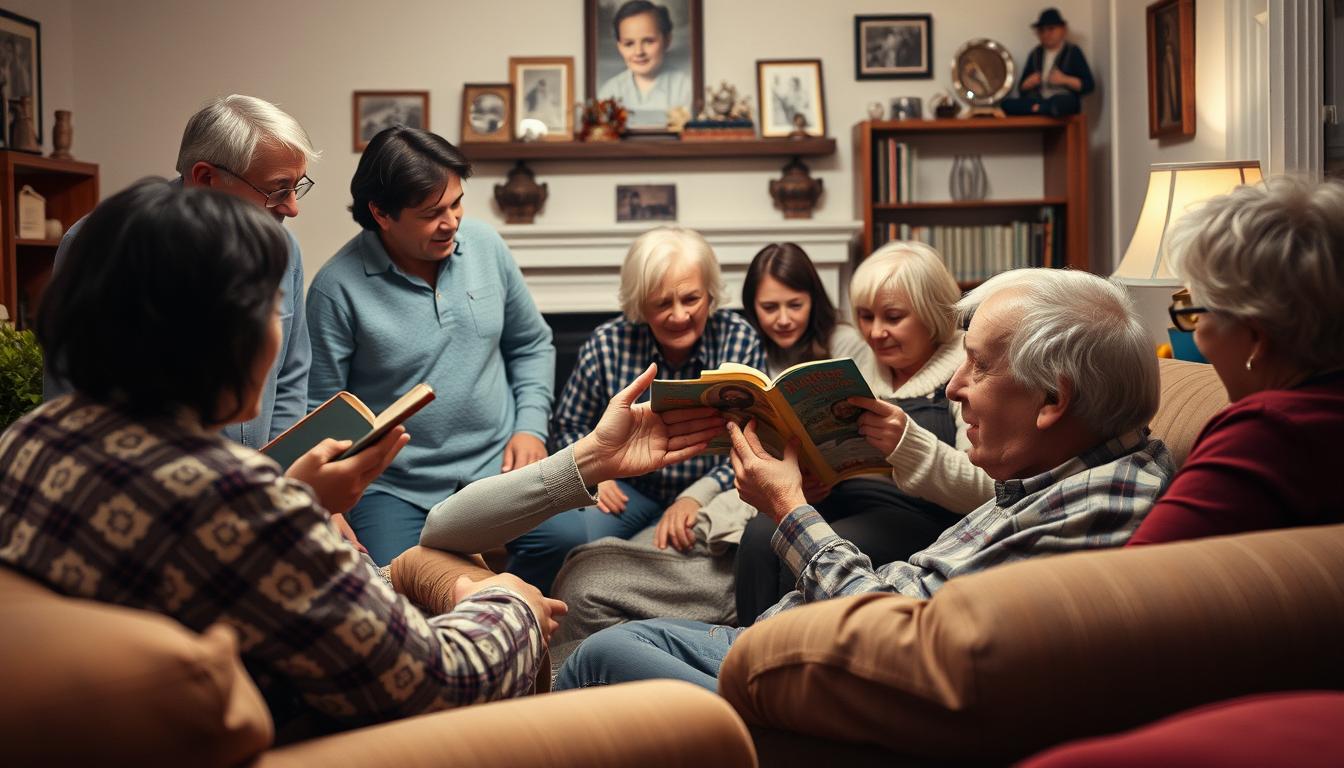
Shared stories are the threads that weave generational connections into the fabric of family bonds. For millennia, oral tradition has been how we pass down wisdom, resilience, and identity. Dr. Jim Leiker, a historian, once noted, “Imagine waking up with no memory of your past. Without history, we lose who we are. We need history for identity.” Through storytelling, families rediscover their roots, blending personal narratives with collective memory.
Today, 70% of young people learn life lessons from elders through shared stories. These narratives build resilience, as seen in Emory University studies showing kids with strong family story knowledge handle stress better. Yet modern life risks eroding these traditions—75% of baby boomers prefer face-to-face talks, while 80% of Gen Z favor digital chats. Despite differences, storytelling remains a bridge. It’s not just about the past; it’s how families today preserve cultural heritage, foster mutual respect, and create legacies that future generations can cherish.
The Power of Oral History
Oral history turns memories into living records. The Smithsonian says it’s about recording personal stories through interviews. This creates primary sources for future generations. They use the six R’s—research, rapport, restraint, retreat, review, and respect—to guide ethical storytelling.

Personal testimonies bring out details lost in official records. For example, the Niels Bohr Library & Archives has 1,500 interviews. But many focus on dominant groups. Now, efforts like Dr. K. Renee Horton’s story are being highlighted.
Her work with the National Society of Black Physicists shows how marginalized communities keep their culture alive through stories.
Winter counts, Native American pictorial records, blended art and oral narratives to document history. Elders acted as custodians, ensuring traditions endured across generations.
Dr. Jan Eldridge’s voice adds depth to historical narratives. As a nonbinary astrophysicist, their interviews bring new perspectives. Projects like Village Preservation’s 70+ interviews show the dedication needed to preserve these stories.
Preserving authentic voices is more important than ever. Indigenous communities face language loss, threatening their culture. Digital tools like online language “nests” help revitalize dialects. Schools use these stories to teach empathy and history, showing oral history’s power.
Bridging the Generation Gap
Storytelling has always brought generations together. Today, groups like Alpha Chi Omega unite Traditionalists with Gen Z through stories. They create family communication and find shared understanding across ages. Programs pair elders with the young, showing how intergenerational connection closes the generation gap.

“Stories are bridges, not barriers,” says David King Dunaway, highlighting how modern oral history adapts to link diverse ages.
Virtual and in-person talks let Boomers share elder wisdom and Gen Z introduce new tech. A Harvard study found these talks increase empathy by 60%. Schools like California’s StoryBridge Initiative pair students with seniors, turning divides into teamwork.
By valuing each era’s voice, communities grow stronger. When stories flow, the generation gap turns into a place of curiosity, not conflict. This shows that humanity’s oldest tradition can heal today’s divides.
Shared Stories as Cultural Heritage
Oral storytelling is vital for cultural heritage. It keeps traditions alive that books might miss. Stories from indigenous cultures, like African Griot’s tales or Hawaiian moʻolelo, share traditional knowledge and values. These tales, often left out of written history, are key to minority histories, keeping marginalized voices alive.
“Oral history is not only a tool or a method, it also is a theory of history which maintains that the common folk and the dispossessed have a history.”

In sub-Saharan Africa, people gather around fires to share stories. Native Hawaiian traditions mix song, dance, and oral history to pass down wisdom. The Choctaw’s creation stories, told in ceremonies, teach ethics and history. These practices, often led by women, fight against cultural loss from globalization and digital homogenization.
Today, digital archives and virtual museums help protect these stories. But, we must balance technology with respect for indigenous narratives. It’s important to protect cultural ownership and honor traditions. From Passover seder rituals to Irish seanchaí performers, storytelling keeps communities connected to their heritage. These living traditions are not just relics; they are bridges to our past, ensuring our heritage lives on.
Enhancing Family Bonds
Family storytelling is more than just talking. It’s a way to strengthen bonds across generations. Studies show kids who know their family history handle stress better and feel more confident. Sharing stories of grandparents’ adventures or family milestones creates a shared identity.

Storytelling helps keep family values and traditions alive. It includes lessons from past mistakes and stories of unity, like holiday meals. It also helps younger generations understand their cultural heritage. Dr. Robert Butler said:
“Life review helps aging individuals confront regrets and build resilience.”
His work shows how storytelling helps with emotional healing, mainly for older adults.
Writing down stories, like in journals or letters, creates lasting records. Studies at Emory show young adults connect deeply with their parents’ life stories. These conversations improve communication, reduce anxiety, and build trust. Simple actions, like talking about family history during meals or holidays, can strengthen bonds. By documenting stories, families keep their legacy alive, giving future generations wisdom and connection.
Storytelling in Education
Educational storytelling turns classrooms into places of discovery. Teachers use classroom oral history projects to help students learn through student interviews with family or elders. This makes history education real, turning facts into stories of people’s lives.
“Oral history in the classroom bridges the gap between curriculum and community.”
These methods match how we learn best. More than 80% of students learn more when ideas are shared through stories. For example, community-based learning lets students dive into local history by recording community tales.
Projects like “Math Storytellers” use stories to explain math. “Global Story Exchange” connects classrooms across the world, teaching empathy and cultural understanding.
Teachers say storytelling can improve learning by 50% compared to old methods. When students do interviews or create oral histories, they learn to think critically and work together. These activities also help different types of learners: visual learners through stories, and hands-on learners through projects like digital archives.
By adding educational storytelling to lessons, teachers make history come alive. Whether it’s through family migration stories or science myths, storytelling makes learning personal and memorable.
The Impact of Technology
Technology changes how we tell and share stories. Recording technologies like smartphones and apps make it easy for anyone to create digital storytelling projects. The Smithsonian suggests using tools like MP3 recorders or smartphones to save voices.
These tools help turn memories into multimedia narratives more easily than before.
Virtual archives now keep oral histories safe for the future. Sites like YouTube and social media let families share their stories. This connects grandparents and grandkids across distances.
But, there are challenges. Old formats might lose data, and not everyone is tech-savvy. Older adults might find digital tools hard to use, while younger people love TikTok or Instagram.
When sharing stories online, we must be careful. We need to protect sensitive information and follow ethical guidelines. Tools like StoryCorps or digital oral history kits help families keep their stories organized.
By choosing the right storage and teaching skills, we can preserve traditions. This way, we keep the human touch in our stories.
Promoting Mental Well-being
“The life review process is a natural part of aging, giving clarity and purpose.” — Robert Butler
Storytelling is more than sharing memories. It’s a way to heal emotionally. Narrative therapy turns struggles into stories of strength. For older adults, reminiscence therapy boosts self-esteem and fights depression.
Studies show that programs that bring different ages together improve mental health. People feel more connected and less alone.
There’s a big gap in mental health between different generations. Gen Z worries about social media, while older folks hide their struggles due to stigma. But, sharing memories can bridge this gap.
A 2020 review found that programs that bring generations together can fight loneliness. Loneliness is linked to heart disease and dementia, as the US Surgeon General warns. Even short stories can create empathy, helping all ages see their shared human experiences.
Employers can help mental health by encouraging story sharing. Digital tools can connect Gen Z with older colleagues, blending new tech with tradition. Whether at family dinners or work wellness programs, storytelling heals emotions. By valuing each generation’s stories, we build strong communities where mental health flourishes.
Challenges in Preserving Oral Histories
Oral histories give us a deep look into the past. But, capturing them is not easy. Historical accuracy relies on clear stories. Memories can fade, and memory limitations affect how we remember events.
Interviewers often ask more questions to get the story right. The Smithsonian suggests this to keep the story as accurate as possible.
There are also ethical issues to consider. Ethical interviewing means getting consent first. For instance, the Go For Broke National Education Center taught interviewers about legal rights before recording WWII stories from Nisei veterans. This builds trust, even when sharing hard memories.
Biases can also distort personal accounts. The A River of Memories project in New Mexico uses many interviews to check facts about climate change. Youth and elders work together, blending their views to create a richer story.
Efforts like CARE in Asian American communities help keep stories safe. Despite the challenges, these projects show the importance of listening. As one interviewer from the Collective Care project in Puerto Rico said, “Every voice adds a thread to the tapestry of history.”
Celebrating Shared Stories
Storytelling festivals and cultural events across the U.S. bring families together. They honor traditions and welcome new voices. In Kansas, Dr. Jim Leiker’s work shows how stories help societies change.
Events like the Smithsonian Folklife Festival make heritage accessible to everyone. They show how stories can bridge divides. This makes heritage a shared treasure for all.
Digital storytelling is now a big part of this. Platforms like One Third Stories connect grandparents and grandchildren. They use language learning to blend cultural exchange with modern tools.
Books like Tarah L. Gear’s Just Like Grandpa Jazz (2022) teach history through stories. They show how migration journeys shape identities. This makes intergenerational bonds strong, connecting past and future.
Future trends include hybrid events that mix in-person gatherings with digital archives. Imagine apps that preserve immigrant tales or AI tools for family history mapping. These innovations won’t replace face-to-face sharing but will make stories more accessible.
Your story matters. Sharing memories strengthens communities. As Gear’s work shows, challenges like discrimination or migration teach resilience when shared aloud. Let’s keep creating spaces where all voices thrive.