




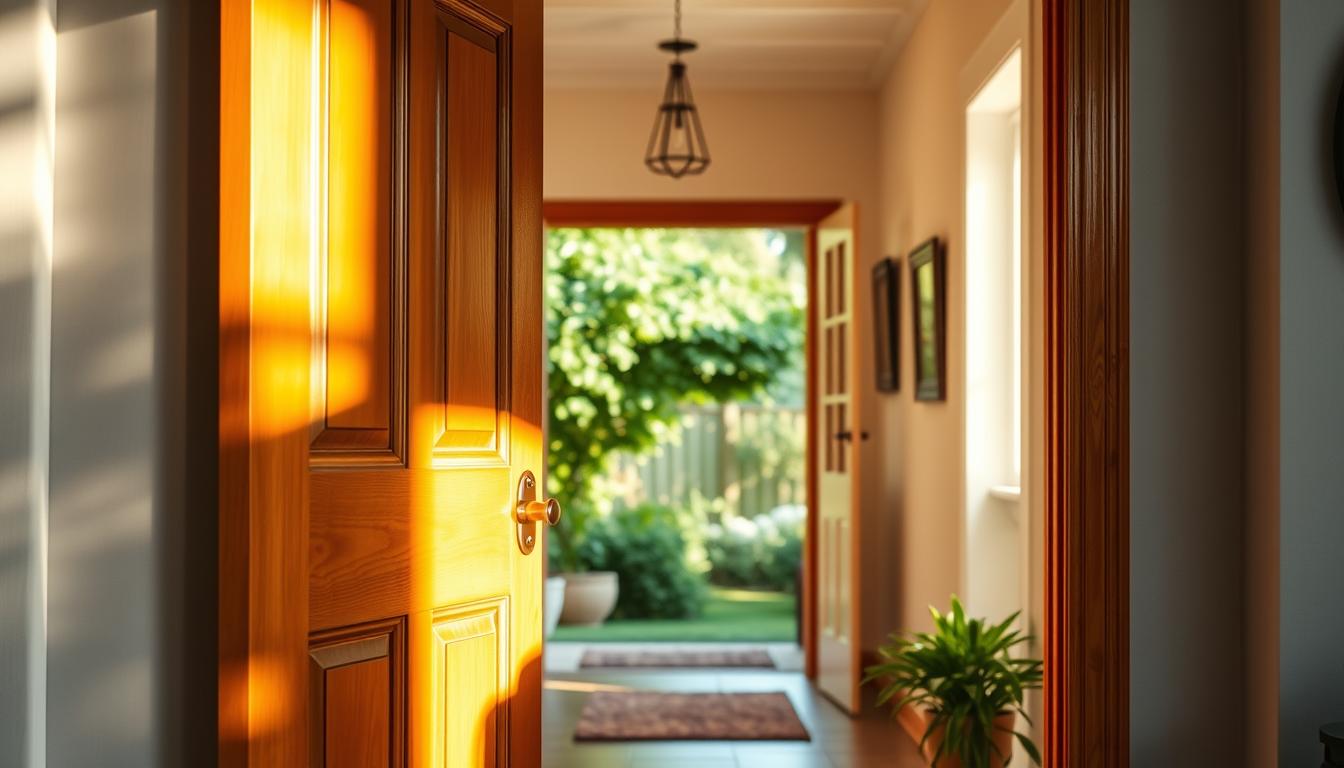
Doors are more than just entry points. They are key elements that affect safety, style, and our daily lives. They play a big role in security, energy use, and design. Every door, from the front door to closet panels, serves as a barrier and a statement of style.
Every home has many doors, but we often overlook their importance. Doors help block fires and keep our privacy safe. With new technologies, doors now combine beauty with function. A well-chosen door can even increase your home’s value and make it more comfortable.
From old wooden doors to modern steel ones, doors have changed a lot. Today, picking the right door means better safety, saving energy, and lasting satisfaction.
The Role of Doors in Home Design
Doors in interior design change spaces by mixing looks and use. They fit every style, from modern lofts to rustic cabins. A good door can set a room’s style or be a highlight, linking colors, textures, and materials.
Architectural door parts like glass panels or raised designs keep things in balance. For example, a simple kitchen might have smooth, frame-style doors with matte finishes. On the other hand, a craftsman home might have detailed wood moldings. Aesthetic door choices like frosted glass or textured finishes let in light while keeping things private.
Sliding barn doors save a lot of space, perfect for small homes. Solid core doors, with more material than hollow ones, block sound better. A modern front door can make a house look better—90% of visitors judge a home by its entrance.
Materials are key too. Glass brings in more light, while wood or metal add texture. The Door Visualizer Tool lets you see styles without samples. Choosing wisely for busy areas like kitchens balances beauty with durability, making every choice part of a unified design story.
Enhancing Privacy with Doors
Creating private spaces at home starts with the right door privacy features. Solid-core doors, like JELD-WEN’s ProCore™, block noise better than hollow options. They offer STC ratings that keep conversations private. For urban homes in busy areas like the Greater Toronto Area, these doors block outside sounds.
Installing weather stripping seals gaps, reducing drafts and sound leaks. This is key for soundproof door options.

Visual privacy is also important. Frosted glass or smart glass that changes opacity adds door privacy solutions without blocking light. Barn doors, popular in 70% of sales, pair well with privacy locks. 60% of users choose privacy locks, while 40% favor teardrop locks for bathrooms.
For existing hollow-core frames, upgrading may need adjustments. But the result is quieter spaces worth it.
“Privacy isn’t isolation—it’s freedom to recharge,” says interior design expert Sarah Lee.
Rooms like home offices or bedrooms need zones for focus. Solid wood Stile & Rail doors blend style and acoustics. They offer panel designs that match any decor.
Even in shared homes, these choices turn ordinary rooms into sanctuaries. Prioritizing private spaces at home means balancing aesthetics with function. Every door should work as both a divider and defender of personal space.
Security Features of Modern Doors
Today’s home doors combine advanced technology with strong materials to safeguard families. They are made from solid wood, steel, or fiberglass, making them resistant to kicks and tools. Multi-point locking systems, like those with three points, spread out the force, making it harder to break in.
The ERA Easi T5 lever deadlock has a 20mm bolt throw and meets police standards. This ensures doors stay locked even when pushed hard.
Reinforced strike plates and steel hinges can make doors even stronger. Vufold’s external doors, starting at £619, are durable and have triple-glazed panels. This makes them more secure than basic doors.
Smart locks offer keyless entry or biometric scans, connecting with home security systems. Night latches and deadbolts add extra security. Peepholes also help by alerting people inside.
“70% of break-ins target doors—upgrading locks cuts this risk by half.”
Features like pinch guards and high-position locks keep children safe. Homes with Grade 1 deadbolts can sell for up to 15% more, showing the value of door security. Adding a reinforced door jamb with a security strike plate costs under $50, improving safety without breaking the bank.
Modern doors balance looks and cost, ensuring your home is both safe and stylish. This gives you peace of mind every day.
Doors as Transition Spaces
Doors guide us silently between rooms. Doorway transitions like sliding panels or French doors create paths that merge spaces. A good transitional door design uses thresholds to mark changes, like from a busy kitchen to a quiet study.
The door threshold importance is in setting boundaries without blocking movement.

“A doorway is a portal, not a barrier,” says designer Clara Martinez. “It should invite while guiding.”
Magic French doors are perfect for connecting spaces with doors. They use a Hybrid Fusion Frame of U-PVC and steel for smooth indoor-outdoor connections. Options include a 50-foot-wide panel and 2-foot glass transoms for free light flow, making walls between rooms disappear.
These designs bring back 16th-century architectural ideas for today’s homes. They come with a 40-year warranty, ideal for busy areas.
Psychologists talk about the “doorway effect.” Stepping through a threshold resets our focus. This makes doorway transitions key for dividing living areas. Doors like 8-foot-tall models and transitional door designs with tempered glass panels balance privacy and openness.
A 5’-7½” wide door, for example, handles traffic well without losing intimacy.
Energy Efficiency and Insulation
Energy-efficient doors do more than keep drafts out—they help lower your energy bills. Insulated doors with high R-values keep heat in, easing the load on your HVAC. Brands like Therma-Tru and Pella make fiberglass or steel doors with foam cores, reaching U-values as low as 0.09. Traditional wood doors, with U-values around 0.65, let warmth escape quicker.
Weatherproof door options seal air leaks. Door sweeps or compression seals block drafts, making any entryway an energy-saving doors solution. The “dollar bill test” shows leaks: if a dollar slips under a door, sealing is needed to stop energy waste. Simple upgrades like these can cut heating costs by 5–30% each year.
Upgrading to insulated doors can reduce energy use by 20–50%, according to the U.S. Department of Energy.
Vinyl doors from brands like Andersen resist sunlight damage, while steel’s sandwich construction traps heat. Even small fixes, like caulking gaps, boost thermal door efficiency. Over time, these choices save money and shrink a home’s carbon footprint. With federal tax credits available, investing in better doors is a win for comfort and the planet.
Doors and Room Versatility
Changing a room’s purpose doesn’t need big changes. Versatile door types like sliding panels or folding systems make it easy. They can turn a home office into a guest room or divide an open space.
A well-designed door can adapt a room’s purpose as easily as opening and closing.

Space-saving doors like pocket systems or barn doors are perfect for small homes. They slide or fold away, saving floor space. Sliding flexible room dividers let you change layouts fast. For example, bi-fold doors can make a dining area into a sunroom with just a push.
Over 60% of small homes now use sliding or folding doors. They’re loved for their efficiency and style.
Adaptable door systems meet changing needs. Modular panels with glass let light in while keeping areas separate. A home office can become a nursery with the right hardware. These systems help with aging in place, making doorways wider for future needs.
With the interior door market growing 5.5% each year, these solutions are in high demand. They show the need for adaptable living spaces.
Choosing versatile door types means your rooms can grow with you. From space-saving doors to adaptable door systems, they turn walls into useful tools. The right doors don’t just open—they change how we use space.
Historical Significance of Doors
Doors have protected entrances and shared stories for thousands of years. The first historical door styles were found in Egyptian tombs around 2150 BC. Two ancient doors near Zürich show the skill of old craftsmen.
As time went on, antique door features changed a lot. The Balawat gates from 883 BC are a great example of early metalwork. Roman engineers also created new designs like sliding and folding doors.
The first automatic door was made by Heron of Alexandria in 1 AD. It combined smart design with practical use.
Today, we see traditional door designs that are just as famous. The bronze doors in Rome’s SS. Cosmas and Damiano are stunning. Aachen Cathedral’s 9th-century door and Florence’s 15th-century Baptistery doors also show great craftsmanship.
The oldest door in England, from 1050 AD, is in Westminster Abbey. It tells a story of history. Each design reflects its time, from medieval carvings to Renaissance sculptures.
Doors have special meanings in many cultures. In China, red doors bring luck. In the Mediterranean, blue doors keep evil away. Wedding rituals also celebrate the threshold as a special boundary.
For those who love old homes, restoring them is a big task. They look for original hardware or get help from experts. By keeping these historical door styles alive, we honor architectural history.
Innovative Door Designs
Modern door innovations are changing how doors work and look. Now, smart doors come with video screens for remote entry and voice-activated locks. Brands like JELD-WEN have introduced the 8500 series with thinner frames and Tri-Pane glass. This makes doors more energy-efficient and meets 2030 building codes.
These doors also work well with home automation systems. This makes tech integration smooth and seamless.

Sustainable door materials are becoming more popular. Bamboo and reclaimed wood from EcoTimber are better for the environment. Low-VOC finishes from Benjamin Moore also reduce toxins.
These materials show that style and sustainability can go hand in hand. They don’t have to compromise on durability.
Custom door designs let homeowners express their personal style. Therma-Tru uses digital printing for unique textures or art. Modular systems from Pella make it easy to upgrade parts.
Metal-glass combinations add an industrial touch. They mix modern looks with features that let in more light. Even painted finishes in matte or satin can add elegance without breaking the bank.
Today’s doors are more than just functional. They are a way to show off your individuality. From smart tech to artistic touches, every choice tells a story about your home.
Impact on Home Value
Choosing the right doors doesn’t just make your home more comfortable. It also increases its door ROI for homes. Entry doors, in particular, are key to entry door value. The 2023 Cost vs. Value Report shows that upgrading garage doors can return over 90% of costs. Replacing entry doors often brings back 75-100% of the investment. This highlights the value of door upgrades for resale when selling your home.
First impressions are everything. Real estate agents say 94% of buyers make up their minds in minutes. A modern entry door with sidelights or new hardware can make a house look inviting and well-kept. Energy-efficient doors also attract buyers looking to save money on bills, cutting costs by 12-25%. Brands like Therma-Tru and Masonite offer stylish options that save energy too.
“A new entry door can add thousands to a home’s value,” says a Chicago-based realtor. “Cracked or outdated doors signal neglect, while stylish upgrades signal care.”
Choose materials that last. Steel and fiberglass doors don’t warp or fade, keeping your home’s value up. When planning, focus on entry and garage doors first. They’re the first things buyers notice. Even small changes like fresh paint or new hardware can make your home stand out in a crowded market.
Maintenance and Care for Doors
Regular door care procedures keep entryways functional and safe. Wooden doors, for example, face risks like warping from moisture. Extending door lifespan starts with simple checks: inspect seals, lubricate hinges, and tighten hardware. Even small issues, like loose screws, can lead to costly repairs over time.
Follow these door maintenance tips to spot problems early. Look for peeling paint, drafts, or uneven closing. Over 70% of homeowners neglect hardware inspections, but monthly checks prevent squeaks and misalignment. Use silicone spray on hinges and wipe down frames with mild soap. For warped wood, sand lightly before refinishing.
Door repair guidance often starts with weatherstripping. Replace cracked seals every five years to block drafts. Wooden doors need a fresh protective coat every 3-5 years. If a door sticks when opening, tighten tracks or adjust hinges. Catching issues early avoids full replacements—60% of door problems stem from ignored maintenance.
Annual upkeep costs about $100 but saves on replacements. Keep a schedule: clean monthly, inspect weatherstripping twice a year, and lubricate hinges yearly. When finishes peel or frames warp, refinishing stops further damage. Small steps today mean fewer emergencies later.
The Future of Door Technology
Future door trends will change how we interact with our homes. Smart door innovations like self-healing surfaces and adaptive materials will make doors last longer. They will also blend well with their surroundings.
Companies like Marvin are at the forefront. They offer smart windows and doors that work with platforms like Crestron® Home. Their designs include rain sensors that close windows during storms, combining convenience with style.
Future door technology will also focus on accessibility. Automated opening systems and adjustable mechanisms will make doors accessible to everyone. Imagine doors that adjust height or resistance, making homes accessible without losing their look.
These accessible door designs could soon become common. They meet the growing need for age-friendly living spaces.
“Smart homes of tomorrow will treat doors as more than entry points—they’ll be guardians of safety and comfort.”
Smart door innovations like biometric locks and voice-controlled entry are already here. Biometric systems, such as fingerprint or facial recognition, offer secure keyless entry. Brands like Marvin now offer automated systems that work with Alexa and Google Assistant.
Users can control doors via voice or app. Smart sensors detect forced entry, humidity, or temperature, sending alerts to smartphones.
Hybrid systems combine traditional and modern tech for reliability. For example, Marvin’s steel-reinforced fiberglass doors offer classic durability with smart features like remote locking. While costs are a factor, prices for biometric locks are falling, making smart door tech more affordable.
Regular firmware updates will keep these systems safe from new threats.
As 2024 approaches, expect smart door innovations to focus on health monitoring and environmental adaptation. These changes will make doors smarter and more human-centric. They will balance cutting-edge tech with timeless usability.
Conclusion: The Heart of Your Home
Every door in your home does more than open and close. It shapes how you live, blending security, style, and comfort. Steel doors, for example, are strong and efficient. They resist break-ins and cut energy costs by up to 20%.
Fiberglass doors resist warping, and wood adds classic charm. When choosing doors, think about what matters most to you. Do you need weather resistance, low maintenance, or curb appeal?
Choosing the right doors means looking at options like ENERGY STAR-rated models for savings. A bold front door color or French doors can change a room’s feel. This shows function and form can work together.
Steel’s longevity and wood’s elegance mean you don’t have to choose between practicality and beauty. Even small details, like 36-inch widths or customizable glass styles, add personality. They do this without sacrificing performance.
Next time you walk through a doorway, think of its hidden power. The right door is more than a barrier. It’s a daily reminder of how choices like insulation ratings or locking systems shape your comfort and safety.
Every hinge, material, and design detail adds to the door’s impact on living. Whether updating one entryway or planning a full renovation, let these elements guide your decisions. They will make your home feel like home.