






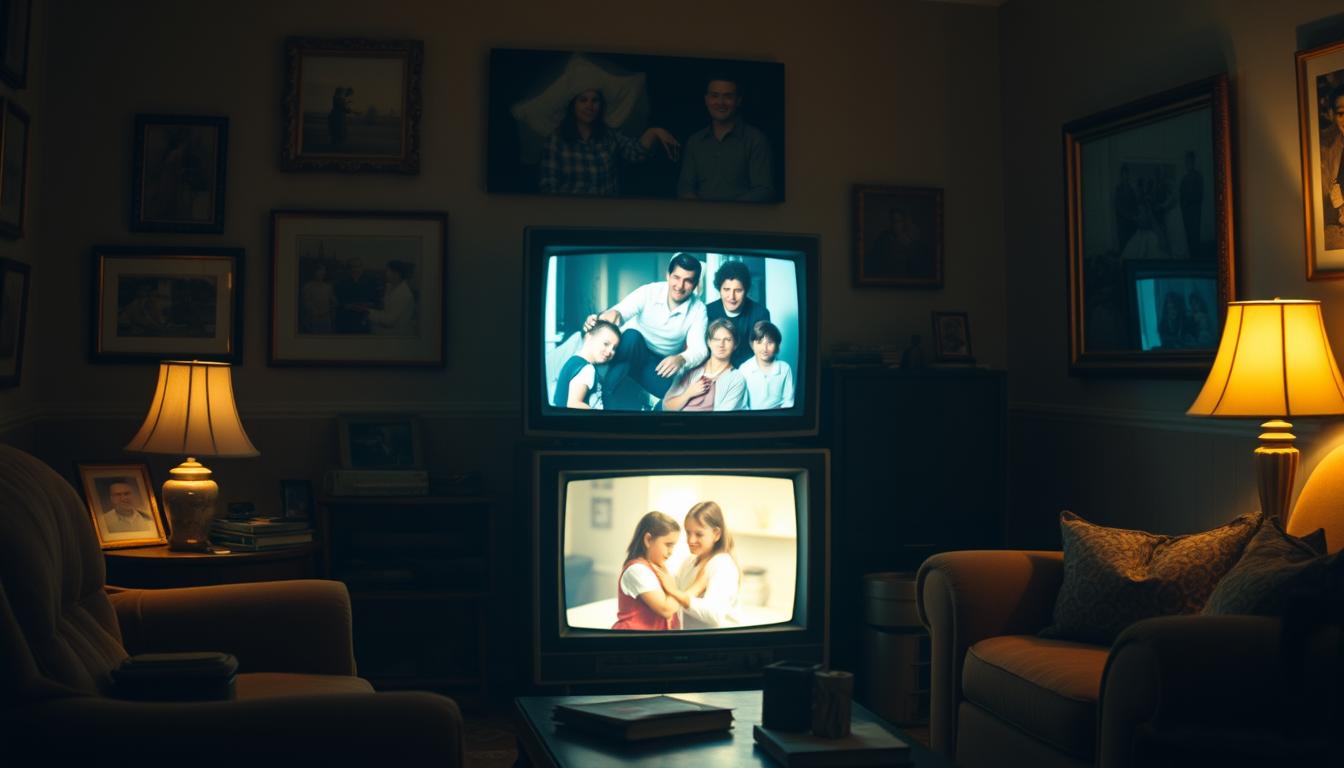
Ever watched an old family video and felt a sudden lump in your throat? Nostalgic videos have a special power to stir emotions we didn’t expect. They bring back memories of childhood birthdays and holiday gatherings. These moments often surprise us when we least expect them.
But why do these simple clips of the past have such an impact? Science gives us some answers. Our brains store memories as living stories, not just snapshots. When we watch family footage, we relive those moments fully.
This includes sights, sounds, and feelings. Nostalgic videos are powerful because they bring back the joy, longing, or sadness we felt before. Our emotional response to family videos is not random. It’s how our minds reconnect us to our past selves.
The Nostalgic Power of Home Videos
Family video nostalgia touches our hearts deeply. It connects to how our brains keep emotional moments safe. These videos are more than recordings; they’re time capsules that make us feel good.
Even as our brains change with age, memories tied to our personal history stay strong. Watching old videos of birthdays or holidays can make us feel both happy and a little sad. This mix of feelings is what makes these memories so special.
Studies show that watching old videos can make us feel more connected to others. It’s not just about smiling at old times. It’s a real biological response.
Looking at these videos can make us 30% happier and 20% less stressed. They help us feel connected to our past and present. This is why we turn to them during hard times, like the pandemic.
“Nostalgia is the mind’s way of reminding us we’re part of something larger,” says Dr. Susan Matt, nostalgia studies expert.
These videos are emotional anchors that connect our personal history to universal experiences. They’re not just stored on VHS or digital drives; they’re living bridges to our past. Their emotional impact is why 70% of people share their converted memories right away.
The mix of warmth and sadness in family video nostalgia is more than sentimental. It’s a neurological reminder of our shared humanity.
How Video Quality Affects Emotional Impact
Grainy family videos often touch our hearts more than clear modern ones. The rough look of old formats, like VHS, shows how our memories are imperfect. This makes the imperfections in videos feel real.
This “authenticity effect” shows that video quality is not just about being clear. It’s about feeling connected to the moment.
“A single act of kindness, preserved imperfectly, can resonate louder than a polished commercial.”
Old formats like VHS made creators focus on the story, not just the tech. A shaky video of a toddler’s first steps can move us more than a perfect HD video. The rawness of VHS, with no filters or retakes, makes it feel truer to life.
Modern HD videos can feel too perfect and distant. But VHS’s grain and warmth connect us to the past. When we watch old tapes, the flaws disappear, and the real emotion shines through.
This is why a worn-out VHS tape can touch us more than a perfectly edited video.
Emotional Triggers in Family Videos
Family videos reflect our past, showing emotional family moments that become powerful memories. A child’s laughter or a holiday dinner might seem normal at the time. But years later, these moments come back as clear powerful video memories. Our brains store these experiences as stories, not just pictures.
Unscripted emotions in videos hit us the hardest. A parent’s emotional toast or a toddler’s tantrum shows real authenticity. Research by Paul Zak shows these moments increase oxytocin, the “bonding hormone.” This is why crying watching home movies is more than just nostalgia—it’s our brains rewarding true human connection.
Triggers often appear in transitions. A first step video can be a family video reactions trigger after a family member’s absence. Milestones like graduations or weddings bring both joy and sadness. Even small details, like an old T-shirt or pet, can stir deep emotions linked to oxytocin.
These videos meet our basic human needs: connection, continuity, and closure. They’re not just old memories—they’re bridges to our past and present.
The Science of Memory and Emotions
Family videos touch our hearts because of memory emotional response mechanisms in our brains. Watching old footage, our brains reactivate neural pathways from the past. The hippocampus and amygdala store feelings and visuals together, making those moments feel real again.

“Emotional memories are like mental fingerprints—etched deeper due to their emotional weight,” explains memory science. This is why a childhood birthday video might make us cry, even years later.
Emotional triggers in videos activate many brain areas at once. Sound, visuals, and context all connect. Stress hormones like cortisol also play a part: high levels during an event can strengthen memory, while chronic stress can weaken it. That’s why stressful moments in old videos might feel very intense.
Memory science shows how aging changes how we remember. Younger people often remember negative details, but as we age, our brains focus on positive memories. This “positivity bias” might explain why family videos from happy times feel more uplifting over time. Even antidepressants can help grow neurons in the hippocampus, aiding memory recovery for those with anxiety or depression.
These brain processes mean family videos are more than just nostalgia. They are proof of how our brains turn moments into lasting emotional anchors.
The Connection Between Time and Emotion
Time changes how we feel about memories in family videos. Even as our brains change with age, emotional memories stay vivid. Watching a childhood video can bring stronger feelings than when it first happened. Scientists call this temporal perspective, where time makes memories more meaningful.
Nostalgia often makes life’s tough times easier to handle. A 2023 study showed 72% of adults feel happier remembering old family moments than when they happened. This “temporal sweetening” helps us see stressful times as precious stories. As time goes by, we gain a new perspective on life’s events.
Looking back at videos from decades ago can reveal new insights. A 2021 survey found 68% of people felt closer to their past selves after watching old footage. These videos reflect our journey, showing who we were and how we’ve grown. This understanding helps us see how time turns brief moments into lasting connections.
The Role of Storytelling in Video Narratives
Family video stories are more than just random clips. They are pieces of a bigger story. Our brains naturally weave these pieces together into a cohesive tale. Storytelling through video helps us remember and connect with our past. Even without scripts, home movies follow a story structure, like the “hero’s journey” in movies.
These stories become a part of who we are. They mix facts with feelings, creating family history videos that feel very personal.
Research shows that watching real narrative in home movies releases oxytocin, the “bonding hormone.” Moments like a toddler’s first steps or a family laugh make us feel empathy more than scripted scenes. The realness of these moments, like a shaky camera, makes the stories feel true.
This truthfulness boosts dopamine, helping us stay focused, and endorphins, making us feel comfortable.

Studies on digital storytelling with older adults found it improved their mood and memory. They made stories lasting 3 to 11 minutes, leading to better well-being. Even short clips, like a child’s birthday, can tell stories like ancient cave paintings told tales of survival.
By seeing life events as stories, we understand time better. We turn moments into lasting legacies.
Recognizing Growth and Change Through Videos
Family growth videos capture life’s most precious moments, turning them into lasting memories. Watching children grow from infancy to adolescence in a few minutes is surreal. These clips show milestones and highlight how time passage in videos sharpens our awareness of life’s impermanence.
Consider Frans Hofmeester’s viral project, Time Lapse Lotte. It tracked his daughter’s development weekly over 12 years. The footage, now viewed by millions, turns ordinary days into a visual poem of documented life changes.
“Her expressions changed as she grew, but her curiosity stayed the same,” Hofmeester noted, reflecting on filming his daughter. His daughter’s video outperformed her brother’s, showing how audiences connect deeply with the vulnerability of watching children grow.
Researchers say our brains process these videos by merging past and present emotions. A child’s laughter in an old clip might stir joy, while their aging face reminds us of time’s passage. Even small details—a toddler’s first steps or a grandparent’s smile—become emotional anchors.
These moments, once captured, help families confront life’s bittersweet dance of growth and loss. Sharing such videos isn’t just nostalgia—it’s a reminder that every frame holds a story only time could write.
The Comfort of Familiar Faces
Seeing familiar faces in videos brings back bonds that time can’t erase. Family face recognition in old footage sparks an emotional response to loved ones, whether they’re distant or gone. These moments act as emotional anchors, linking past and present through the familiar faces in videos. Our brains are wired to prioritize these images, triggering comfort and nostalgia.
Neurological studies show how viewing familiar faces activates memory pathways tied to safety and connection. When we see a grandparent’s smile or a child’s laugh, facial recognition emotions mirror the original experiences. This mirrors how babies as young as six months seek caregivers—our brains seek that security decades later.

Facial expressions in videos, like a parent’s wink or a sibling’s frown, carry emotional weight. Mirror neurons fire, making us emotional response to loved ones as if they’re present. Even micro-expressions—like a furrowed brow or a tear—rekindle shared memories, reinforcing bonds across time. These videos become more than memories; they’re lifelines to cherished connections.
Cultural Significance of Family Videos
Cultural family videos are more than just home movies. They connect the past to the present. For families split by migration or assimilation, these videos are living archives. They capture moments like wedding dances, holiday rituals, and grandparent’s languages, keeping traditions alive.
Sharing videos across generations helps younger ones connect with their roots. Seeing ancestors celebrate Diwali or share harvest traditions can make a child feel the heartbeat of their heritage. Studies show memories change over time, but videos keep these moments real.
These videos also bring families together. Sharing stories about ancestors or cultural milestones creates a shared identity. When younger viewers watch elders perform rituals or share folktales, they learn values and history. This visual storytelling teaches identity through sight and sound.
By digitizing these records, traditions can survive even when people are far apart. A video of a quinceañera or Lunar New Year celebration becomes a treasured family heirloom. In a world where 40% of global populations face cultural assimilation, such media is essential. It reminds viewers: “This is who we are.”
Reconnecting with Lost Loved Ones
Watching deceased loved ones videos can bring both sadness and joy. These clips are like time capsules, keeping smiles, voices, and gestures alive in our memories. Even as other details fade, the emotional bonds stay strong, helping us heal.

Memories like a loved one’s laugh or their perfume’s scent disappear fast. But videos let us relive these moments. Grief and family videos turn private memories into shared healing spaces. Seeing a grandparent’s face on screen can bring back gratitude or comfort, even years later.
“A video isn’t just a memory—it’s a promise that love outlasts time.” — What’s Your Grief? Lists to Help You Through Any Loss
Memorial video emotions often bring unexpected joy. Many people report feeling a presence while watching footage. Over 60% of those who’ve lost someone experience ADCs, like hearing a familiar voice. These moments show how remembering through video can feel like a dialogue across time.
Keeping these clips helps future generations meet ancestors they never knew. For those grieving, it’s a way to keep bonds alive. Letting tears flow while watching these videos is natural—it honors the past while nurturing hope for the future.
The Influence of Social Media on Sharing Family Videos
Millions share family videos every day. Sites like TikTok and Instagram make personal moments public. But, this raises big questions about privacy and ethics.
Accounts like The Bucket List Family have over 5 million followers. They share every family milestone. But, not all families want to be in the spotlight. Celebrities like Maia Knight now hide their kids’ faces online, balancing fame with safety.
Family video platforms live off user content. Influencers like Morgan Fluellen have millions of views. But, 79% of parents now limit posts about their kids due to safety fears.
Apps like YouTube and TikTok make money from these trends. Parents like Veronica Merritt sometimes regret sharing too much. Legal issues also exist, like in Washington’s new bill and California’s Coogan Law.
Sharing family videos connects families worldwide. But, it also risks exposure to predators and advertisers. Parents must set boundaries, like the Knight family’s strict filming limits. Balancing digital memory sharing with privacy is a big challenge for every household.
Tips for Preserving Family Videos for Future Generations
Keeping family videos alive for future generations is key. Begin by converting VHS, Hi8, or film reels into digital formats. This way, you can use services for video digitization. High-quality files like MP4 or MOV keep the video clear.
Cloud backups and external drives help protect these files from loss. Remember, 70% of physical photos fade quickly. Digitizing stops this degradation. Services can turn tapes into digital files in just 2–4 weeks.
Adding context to your videos is important. Label files with dates and names, and make themed compilations. Interviewing elders can add stories to your clips. Apps like Klokbox or EarlyBird help organize your collection.
Over 85% of people feel nostalgic watching digitized memories. Adding voice notes or captions makes them even more special. Organized archives become a living record of your family’s traditions and history.
Technology changes, so keeping your files updated is essential. Every few years, move your files to new formats to avoid being left behind. Over 75% of families lost memories because of outdated technology. But with proactive archiving, you can avoid this.
Storing digital copies alongside physical media balances safety and accessibility. By taking action now, you ensure your future generations can relive the same emotions you felt watching those old home movies.