






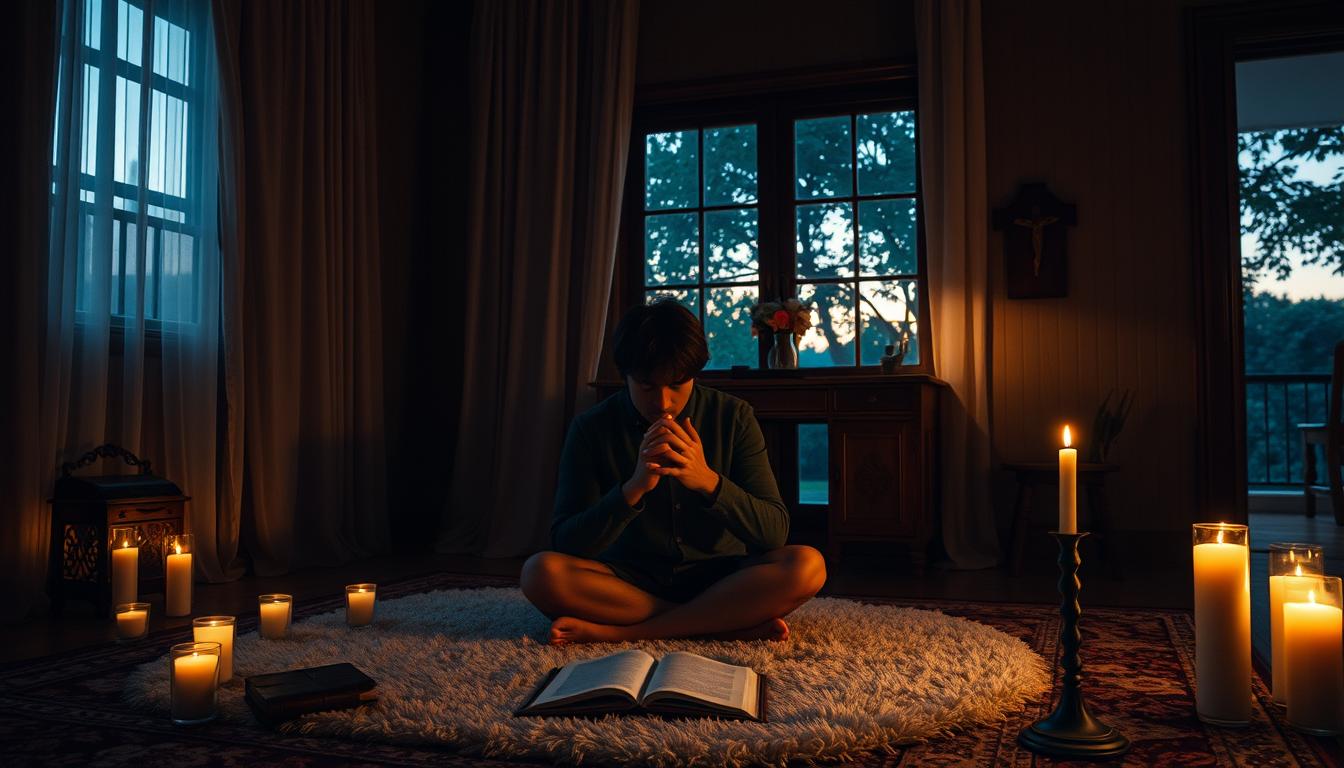
Nighttime brings quiet moments to face the day’s worries. Will bills pile up? Will loved ones stay safe? Day-end devotions offer calm. Evening devotional rituals like nighttime prayers or bedtime reflection help turn anxieties into peace.
From the 18th-century “Now I lay me down to sleep” to 1 John 1:9’s call for forgiveness, these practices have shaped lives for centuries. Even 5 minutes of prayer, like the Lord’s Prayer or Psalm 121, can anchor your mind before bed. Modern tools like the Logos Bible app or historic texts like “Piercing Heaven: Prayers of the Puritans” ($16.99) make it easy to start.
Scripture reminds us: “Give thanks” (1 Chronicles 16:34) and trust God’s promises (Psalm 32:8). Let’s explore how these timeless practices transform nighttime into sacred space.
The Importance of Evening Reflections
Ending the day in a rush can leave our minds full of unfinished thoughts. Dreams about forgetting important things or missing deadlines often show our stress. Taking time to reflect in the evening helps clear our minds.
For centuries, people have used self-examination to reflect on their day. The Stoics and Pythagoreans had simple questions to ask themselves. Today, studies show that just 10 minutes of mindfulness at night can calm our minds.
Practicing mindfulness at night can make us more aware of ourselves. Leaders like Winston Churchill and philosophers like Seneca found calm through nightly reflection. It’s a way to let go of the day and look forward to tomorrow.
Daily Gratitude Practices
Starting a bedtime gratitude practice each night can change your focus from stress to joy. Just listing three things you’re thankful for can make your brain more positive. A 2011 study in *Applied Psychology: Health and Well-Being* showed that those who kept an evening gratitude journal slept better and woke up less often.
Writing down small joys, like a warm meal or a friend’s kindness, helps prepare your mind for sleep.

Nighttime thankfulness doesn’t need to be complicated. Families can share their daily highlights at dinner or bedtime. This teaches kids to see the good in life. Studies show it makes connections stronger and reduces loneliness.
A 2014 *Emotion* study found that thanking others helps build lasting relationships. Even short moments of reflection can make you emotionally stronger.
“A 2003 study found gratitude practices helped people cope with trauma, improving mental strength.”
Research shows gratitude is linked to better sleep, with 80% of journalers reporting better rest. Keeping an evening gratitude journal once a week can also reduce emotional numbness. Try saying “thank you” for things like a quiet home or a good meal. These small acts help calm your mind before sleep, lowering stress hormones like cortisol.
Gratitude practices, whether written or spoken, build positive habits. Small steps, like naming three blessings each night, can make you 25% happier and improve your well-being. Let your last thoughts before bed be about today’s gifts and tomorrow’s hope.
The Role of Prayer at Night
Bedtime prayers are a quiet anchor in our busy lives. In 25 Psalms, night is seen as a time to find solace. Psalm 4, a traditional evening prayer, is often used in Compline, as Tish Harrison Warren notes. It helps us move from the day’s hustle to restful sleep.
Starting night prayer is simple: read Scripture, like Psalm 42:8. It says, “By day the Lord directs his love, and at night his song is with me”. Even a short prayer can release emotions. Studies show it improves sleep by calming the mind.
“The night is a sacred canvas for honesty with God.”
Historic traditions like Compline pray for those facing challenges at night. This aligns with research showing nightly prayers reduce stress. Reading Scripture with prayers deepens faith, building trust in God’s presence at night. Whether it’s Psalms or personal thoughts, this habit lasts through the night.
Finding Peace Through Meditation
Evening meditation is a calm transition from the day’s hustle to a peaceful night’s sleep. Bedtime scripture meditation uses ancient wisdom, like the 6th-century Benedictines’ use of Psalm 4. Today, science backs it up: just 5–10 minutes of meditation can soothe your nervous system and quiet your mind.

Begin with a simple breathing exercise. Sit comfortably and count your breaths. If your mind wanders, bring it back to your breath. This night meditation for sleep can stop racing thoughts that keep you awake. About 30% of Americans have trouble sleeping, but regular meditation can help.
Using scripture or mantras can also calm your mind. Studies show it lowers stress and improves mood. The aim is to move your focus from worries to peace.
Creating a Comfortable Sleep Environment
A spiritual sleep environment begins with a clear mind. Remove clutter to reduce stress. A small prayer candle or scripture near your bed can remind you of peace.
“Visit this place, O Lord, and drive far from it all snares of the enemy,” is a prayer to guide you. Soft amber lighting, like a salt lamp, helps avoid blue light’s effects. Instead of screens, try a book or audiobook before bed.
Choose a mattress that fits your body’s needs. Keep your room at 65-68°F for better sleep. Lavender spritzes or essential oils can also help you relax. Aim for a quiet space with noise levels under 35 dB.
A peaceful bedroom setup means using it only for sleep. Wash your sheets weekly to keep them clean. Soft throws and blackout curtains can make your room even more calming. These small changes can turn your room into a place of renewal.
The Science of Sleep and Its Importance
Modern sleep science and spirituality research shows how rest affects our spiritual health. It finds that deep sleep stages help us process emotions, matching spiritual goals for clarity and compassion. REM sleep is when our brains make sense of our experiences, helping us reflect on our values.
Non-REM sleep helps remove brain toxins, like spiritual cleansing rituals. Lack of sleep can make us less empathetic and more irritable, hurting our spiritual bonds. Getting 7+ hours of sleep each night improves focus and emotional balance, essential for prayer or meditation.
Deep sleep, which makes up 10-20% of our sleep, helps solve problems and gain new perspectives. This aligns with faith views on rest as a time for renewal. Without enough sleep, our brains struggle to feel gratitude or forgive, important for spiritual growth. Even one night without sleep can weaken our immune system and mood, affecting our spiritual practices.
Knowing the rest and faith connection helps us see sleep as part of our overall health. Resting not only heals our bodies but also prepares our minds and spirits. Quality sleep is key for sleep importance for spiritual health, helping us face our faith with clarity and strength.
Touching Stories of Nighttime Devotions
Bedtime devotion stories show how quiet moments before sleep can be powerful. A boy on an Arizona train believed he would meet his father in Los Angeles. This faith turned a long journey into a hopeful one. It shows the strength of evening reflection, where everyday struggles gain spiritual meaning.
“I’m tired, but my father will meet me soon,” the boy said. Like him, many find strength in knowing their ultimate destination guides daily trials.
Nighttime prayer testimonials have lasted for centuries. During the Civil War, soldiers wrote by candlelight, turning fear into courage. Today, a Chicago teacher started a 1-hour nightly Bible reading, completing a 90-Day Challenge. After three months, she said, “These moments transformed my anxiety into calm.”
King David wrote his psalms during sleepless nights, showing God’s presence in quiet moments. Rebbe Nachman’s midnight conversations with God continue to inspire believers. Monks like Brother Aidan pray at 4 a.m., finding clarity in the morning hours.
These stories show bedtime devotion is more than a ritual—it’s a lifeline. Whether through early morning prayers or journaling at night, these practices make weary hours sacred. A cancer survivor wrote, “Evening reflections helped me see each night as a step toward dawn.”
Developing a Bedtime Routine
Starting a spiritual bedtime routine is easy with small steps. You can pray, journal, or reflect quietly. Medieval monks used Psalm 4 to calm their minds. Their rituals show how they found peace in faith and rest.

Begin by setting aside 15–60 minutes before bed. Dim the lights to signal it’s time to relax. Reading can be calming, but avoid thrillers. Instead, choose simple stories or devotional material.
A warm bath an hour before bed can also help. It’s best to keep your room at 65–68°F for better sleep.
Make your routine your own. Some like 30 minutes of prayer and journaling. Others prefer a quick gratitude check-in. The important thing is to be consistent, not complicated. Even busy parents can find moments of peace, like a prayer before bed.
Science supports these habits. Taking evening baths can improve sleep for 39% of people. Avoiding screens an hour before bed also helps. Adding calming practices like deep breathing or stretching can make the transition to sleep smoother. Over time, these habits can bring peace and deepen your faith.
The Benefits of Reading Before Bed
Reading before bed does more than relax you—it boosts sleep and well-being. A 2021 study found that 42% of readers enjoyed better sleep, compared to 28% of non-readers. This shows how reading can change your bedtime routine for the better.
Unlike screens, books don’t mess with melatonin, helping you fall asleep quicker. Reading sacred texts or inspirational stories calms your mind. It shifts your focus to timeless wisdom.
For those new to bedtime reading, start with 10–15 minutes. Choose books that inspire you. Audiobooks are great for listening, keeping screens away.
Reading has been found to reduce stress by up to 68%, outperforming tea or comedy videos.
Reading also boosts empathy and brain connectivity. A 2013 study found better comprehension and critical thinking. Even short reading sessions can ease anxiety and bring positive thoughts.
For best results, add reading to a consistent routine. Choose a cozy spot or dim lights to enhance the calming effect.
Nightly Reflection Prompts
Night journaling prompts and evening reflection questions can make bedtime a time for growth. They help quiet the mind and encourage spiritual and self-awareness. Writing for just 5 or 10 minutes can help you reflect on the day’s events.
“A Baylor University study found writing for 20 minutes before bed improves sleep quality, showing how intentional reflection supports rest.”

Begin with simple questions like: “What small kindness did I overlook today?” or “Where did I feel disconnected from my values?”. Night journaling prompts can also focus on gratitude, such as “Who or what surprised me today?”. These questions promote honesty without judgment.
Reflecting on courage, forgiveness, or support can be part of bedtime spiritual examination. Data shows 78% of people sleep better with pre-sleep journaling, and 70% report improved mental health. Questions like “What lesson did my struggles teach me?” help turn challenges into learning tools.
Writing for 5-8 minutes can lower anxiety by 25%, research finds. Customize prompts to fit your needs, whether it’s faith, relationships, or personal goals. The aim is mindful awareness, not perfection.
Ending the day with these practices connects past actions to future goals. Simple routines like these build resilience and clarity. They turn bedtime into a sacred space for renewal.
Encouraging Children in Evening Reflections
Bedtime prayers and family devotions strengthen a child’s heart and mind. Even the youngest can share one thing they’re thankful for. These kids’ nighttime spiritual practices are simple and start with gratitude.
Parents don’t need to be experts. Being real is more important than being perfect. Studies show 85% of parents use bedtime prayers to build security. Also, 70% of kids feel calmer afterward.
Using stuffed animals or special blankets can make rituals real for preschoolers. As kids get older, ask them to share stories of bravery or helping others. This turns faith into a living conversation.
Family devotions should grow with a child’s age. A 3-year-old might meditate for 3 minutes, while a 5-year-old can share a prayer request. Over 90% of caregivers use these moments to teach values.
Even 5 minutes of shared silence or a bedtime story can anchor the practice. When fears come up, bedtime prayers offer a safe space. Over 65% of children say these moments reduce nighttime anxieties.
Let older kids lead parts of the devotion. They can pick a Bible verse or draw a picture of God’s presence. These small acts make nighttime a time of connection, not just sleep prep.
Remember, 72% of families pray for safety in their routines. Start small, and watch how these quiet moments grow with your child. They plant seeds of faith that grow over time.
Embracing Silence and Stilness
In today’s world, filled with constant noise and tasks, finding evening silence practice is a breath of fresh air. It’s like stepping back from the din to truly listen, not just to others, but to ourselves. Studies show that less noise leads to clearer minds. Over 70% of people use social media to fill quiet moments, but nighttime meditation can reduce anxiety by 58%.
Even a few minutes of quiet each night can change our view. Start small. Turn off your screens and sit quietly for five minutes, focusing on your breath. Many use quiet bedtime reflection to journal or say calming phrases. This practice builds strength over time.
A 2023 study found that daily quiet time brings 40% more peace. Even kids benefit from it, with 80% sleeping better after guided meditations. The aim is not to be perfect but to be present.
Silence is not emptiness; it’s where we find our true selves. By choosing quiet, we trade chaos for calm. Try it tonight: dim the lights, breathe deeply, and let the world slow down. Your mind and heart will be grateful. Small steps today lead to big changes tomorrow.