






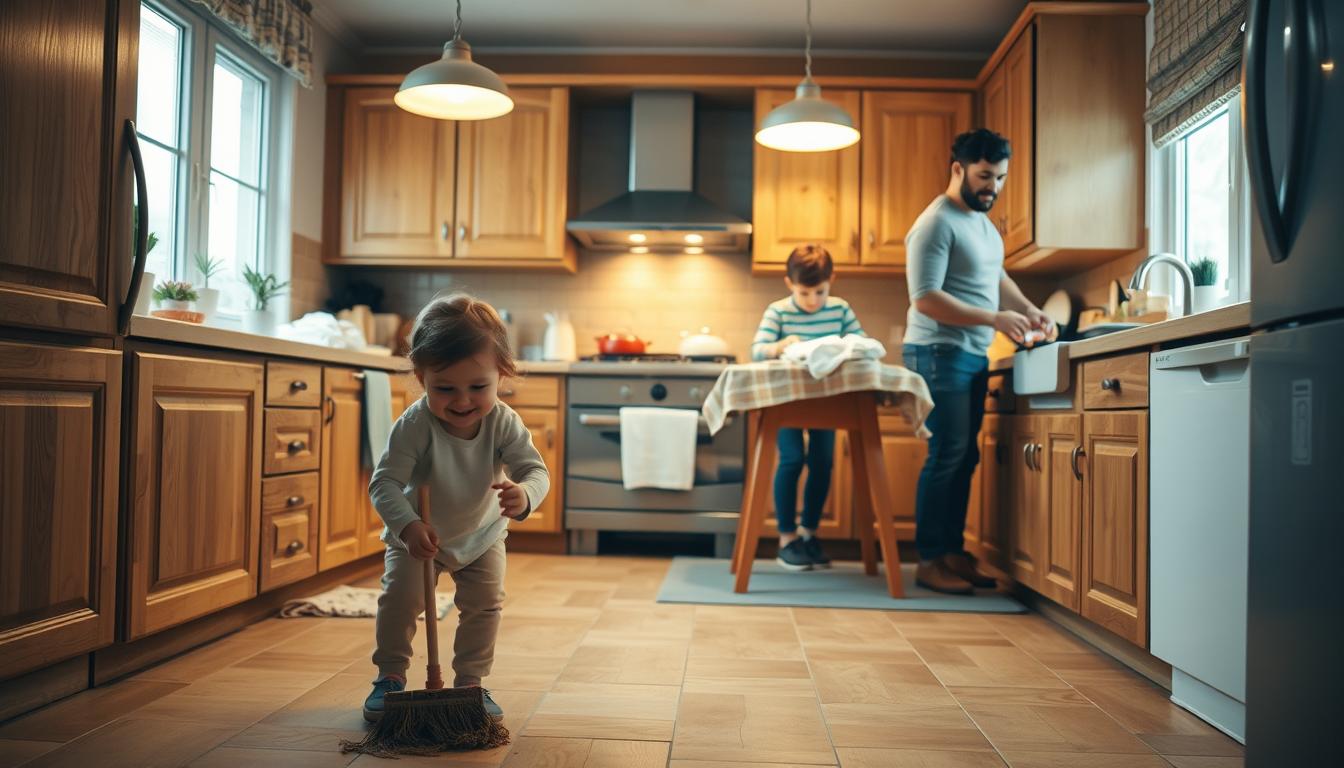
Household chores start as daily tasks but can become precious memories. “Decals with Dads” is a great example. It turned cleaning football helmets into a special family tradition. This shows how simple tasks can become important parts of family history.
Only 28% of parents get their kids involved in household chores (Parent.com, May 2024). But those who do see big benefits. Kids who help out gain self-confidence (Journal of Developmental & Behavioral Pediatrics, March 2024). Harvard Research also links chores to future success, and La Trobe University finds they help with schoolwork.
Tasks for toddlers and teens help build responsibility. These tasks are more than cleaning. They’re chances to make family traditions. Doing things together, like setting the table or folding clothes, creates moments for talking, laughing, and feeling connected.
The Emotional Power of Routine Tasks
Family routines like laundry or meal prep might seem dull, but they are powerful. The emotional connection through chores grows when everyone pitches in. Studies show that families who share chores feel closer.
For kids, doing chores like folding clothes or sweeping floors is more than just work. It’s where they learn to trust and grow.
“Household tasks done together boost psychological benefits of chores by fostering focus and patience,” says Dr. Linda Carter, a family psychologist.
Research shows that adults who do chores regularly have a 21% lower risk of dementia. This is both physical and mental. When families do dishes or yard work together, they talk more.
These moments create lasting memories, turning chores into special rituals. Family routines build security, which is important during big changes like moving or starting school.
Mindful chores also lower stress. A study found that mindful dishwashers felt 25% more inspired. Even simple tasks like feeding pets or watering plants show care.
Shared responsibilities teach empathy and responsibility to kids. Parents show them how to persevere. When families work together, chores teach resilience and teamwork.
Chores as Family Bonding Experiences
Chores are more than just tasks. They’re chances for family bonding activities that strengthen connections. When families work together on projects like organizing a garage or planting a garden, they build teamwork at home. They share laughter and learn new skills.
The Decals with Dads initiative shows how working together sparks conversations and trust. It lets kids see parents as partners, building respect and trust.

Working together turns routine jobs into stories. A parent might learn their child’s passion for gardening while planting flowers. A teen might open up during a joint kitchen cleanup.
These interactions create emotional ties that formal events can’t always replicate. Simple tasks like folding laundry or cooking meals teach empathy and problem-solving. These skills go beyond household work.
Older siblings mentoring younger ones on chores fosters leadership. Parents gain insights into their children’s interests. This turns chores into shared adventures, proving small efforts can deepen family bonds.
By reframing chores as teamwork, families create cherished memories. They turn everyday tasks into special moments.
The Role of Tradition in Household Tasks
Household chores are more than just tasks—they carry family traditions. Studies show that activities like baking holiday cookies or seasonal cleaning strengthen family bonds. These practices can increase family cohesion by up to 50%.
These routines are like heirlooms, weaving generational knowledge into our daily lives. Imagine a grandmother teaching her granddaughter to knead dough, passing down a tradition through generations. This is what heritage through housework looks like.
Generational knowledge is in the details. It’s about how to scrub floors the old way or why certain dishes are made during monsoon seasons. These acts keep cultural traditions alive, passing on values like patience or resourcefulness.
Even today, families create new traditions. For example, the “Decals with Dads” project lets fathers and kids decorate cars together. It’s a way to mix work with making memories.
Now, 75% of families make traditions on purpose. They evolve, like digital scrapbooking during screen-cleaning days, to stay current. Every cleaned sink or folded quilt adds to a family’s story, linking past and present.
By giving chores meaning, even simple tasks become bridges across time. They teach children they’re part of something lasting.
How Memories are Formed from Daily Tasks
Every time you scrub a sink or knead bread dough, your brain records these moments. Scientists say memory formation depends on emotions and senses. A study at Baycrest Hospital found that older adults doing chores like folding laundry or gardening showed increased brain volume in memory areas.

Why do some tasks stick in our minds? Emotional memory triggers like the smell of cinnamon while baking or the rhythm of mopping floors create strong neural connections. These sensory details act as anchors, turning chores into vivid recollections. The study also notes that tasks requiring planning, like meal prep, boost executive functions, reinforcing cognitive pathways that resist decline.
Physical activity from chores like vacuuming or raking leaves increases blood flow to the brain, aiding memory retention. Even light tasks reduce sedentary time, which the research links to better mental sharpness. By mindfully engaging in these routines—like savoring the crunch of autumn leaves while raking—you’re not just cleaning; you’re shaping memories that will linger for decades.
Turning Mundane Tasks into Meaningful Moments
Even simple chores can become special memories with the right mindset. Making chores fun starts with seeing things differently. For example, a family might make cleaning the garage a game, rewarding creativity in organizing.
These moments of meaningful household work create stories that last long after the task is done.
Studies show that purposeful housework can improve mental health. Tasks like washing dishes or folding laundry can help you relax. A study found that healthcare workers during the pandemic felt less stressed by doing structured chores.
Even simple tasks, like caring for plants, can make people happier. Ellen Langer’s study in a nursing home showed this.
Make enjoying family responsibilities a part of your life by adding fun. A pancake breakfast before cleaning or a “laundry storytelling hour” can make chores enjoyable. These activities can make you feel motivated, as found by the Harvard Business Review.
Small changes can make a big difference. Let chores be a chance to connect or reflect quietly. As Oswald Chambers said, character is shaped in the small, unnoticed moments. Let your next task be the start of a new family tradition or a chance to find joy in the doing.
The Influence of Technology on Chores
Technology changes technology and household tasks in big ways. It brings in tools like smart vacuums and apps for scheduling. These tools make our routines easier, but they also change how we do chores.
A 2013 Oxford study found 47% of US jobs could be automated. Now, homes are seeing this change too. Experts say 39% of household work could be automated soon. This could save a lot of time on cleaning and grocery shopping.

Apps for digital chore management make modern family chores easier to track. But, there are cultural differences in how chores are divided. In Japan, men do only 18% of the household work, while in the UK, families share more evenly.
These tools save time but might make us miss out on learning. Cooking and childcare are hard for automation to replace. Only 21% of these tasks can be automated.
Technology also helps us keep family traditions alive. Photos and chat logs become digital keepsakes. A family’s dinner prep, once just routine, now has a special place in cloud albums.
As devices take over tasks, we must find a balance. We need to keep moments that connect us and create memories.
Teaching Responsibility through Chores
Children’s chores are more than just tasks. They are the foundation for life. From toddlers to teens, teaching responsibility at home starts with jobs that match their skills. A 2-year-old sorting toys helps them focus, while a 10-year-old folding laundry teaches them to be independent. These tasks are not just about cleaning; they are where kids learn life skills.
Studies show that kids who do chores develop strong character development through chores. A Harvard study followed 70 years and found that kids who did chores as kids had better mental health as adults. Another study of 10,000 kids showed that doing chores led to better grades and happiness. When kids help out, they learn to persevere and understand others better.
Begin with simple tasks. Preschoolers can help set the table, while teens can plan meals. Being consistent is key: 4 out of 5 successful CEOs started with chores early. Yet, only 28% of parents today give regular tasks, leaving kids without essential skills. Research from the University of Minnesota shows that starting chores too late (around age 15) can harm self-regulation.
Tasks like making lunches or feeding pets teach kids to take care of things. Let kids pick chores they like, but make sure they know what’s expected. As they grow, they learn to plan, solve problems, and take charge. Chores are not a burden; they are a way to build resilience and responsibility.
The Changes in Chore Dynamics Over Time
Household tasks have changed a lot over the years. Tasks like churning butter or gathering firewood are now replaced by modern chores like laundry or managing tech. These changes show how housework has evolved from basic survival tasks to more efficient routines. Yet, some old traditions are kept alive, helping families bond.

How chores are divided by gender has also changed. In the past, tasks were strictly based on gender. But today, families divide chores based on who is best at them or who wants to do them. Studies show that sharing chores fairly makes families happier. Families now use creative ways like chore wheels or family meetings to make sure everyone does their part.
Older generations might stick to old ways, but younger families want to be flexible. A 7-year-old helping with lunch or “book duty” shows how chores can fit kids’ interests while teaching important values. This mix of old and new helps families teach responsibility while moving forward.
Incorporating Creativity into Household Tasks
Turn everyday tasks into chances to be creative. Artistic homemaking makes chores a way to express yourself. Try arranging fruits in patterns or folding laundry with origami designs. These actions mix function with creativity, making chores less boring.
Being creative at home can lead to new ideas. Use old jars as decorations or make a magnetic chore chart. A study in the Journal of Positive Psychology shows daily creativity makes us happier. Even small changes, like dancing while vacuuming, can change our view.
“Knitting frequency correlates with calmness and happiness,” noted researchers tracking 3,500 global knitters. Similar principles apply to chores: folding clothes while storytelling or singing transforms tasks into joyful rituals.
Getting kids involved in solving problems helps them grow. Let them come up with a recycling system or a game for cleaning. This helps them think critically and work together. A 14-year nanny’s experience shows kids feel more confident when they do creative chores, like painting a chore chart or changing a room’s layout.
Creativity in chores is not just fun—it’s good for you. Tasks inspired by art therapy lower stress, and moving around while doing chores is good for your heart. Small daily efforts, like arranging flowers or decorating meals, make our homes and minds healthier.
The Importance of Reflection on Daily Tasks
Reflective homemaking is about seeing the big picture in everyday tasks. It’s not just cleaning. It’s noticing how small actions shape our lives. When we express gratitude for tasks like cooking or folding laundry, we find purpose in them.
Learning from daily routines means seeing challenges as lessons. A dropped plate or a forgotten chore might seem like setbacks. But they teach us patience and problem-solving. Families who talk about these moments together learn from mistakes.
“Hindsight is 20/20,” but foresight comes from looking back with curiosity—not judgment.
Reflective homemaking also strengthens emotional bonds. Writing about why certain tasks matter can reveal family patterns. This awareness helps adjust responsibilities fairly. Small changes, like rotating chores, build teamwork and empathy.
Regular reflection makes daily work a tool for growth. It’s not about being perfect. It’s about noticing how simple tasks like sweeping floors or watering plants improve our well-being. By embracing reflective homemaking, daily routines become a foundation for resilience and connection.
Celebrating Memories Through Chore-Related Events
Turning chores into cherished memories starts with small, intentional gestures. The “Decals with Dads” initiative shows how shared tasks can spark joy. Families can adopt similar family celebration ideas to commemorate family memories.
For example, hosting an annual “Dishwasher Dash” race or a “Garage Sale Storytime” where items are sold with tales of their past uses. These moments honor the work and the people behind them.
Legacy projects like recipe books or photo journals help honor traditions by preserving stories tied to tasks. A family’s holiday baking routine becomes a legacy project when recipes are paired with notes about who taught them or why certain steps matter.
The Joyspotters Society’s members show even small acts can make chores memorable. Their tips, such as pairing chores with citrus-scented sprays or post-task treats, show how simple changes create lasting impressions.
Neuroscience highlights that repeated, meaningful rituals strengthen emotional ties. A yearly “Spring Cleaning Feast,” where families cook with ingredients grown together, combines work and celebration.
Even a quick “Dinner Table Debrief” to share the day’s chore highlights can turn ordinary tasks into shared narratives. These practices align with research showing positive childhood memories boost mental health and relationships.
Creating these moments doesn’t require grand plans. A handwritten note thanking kids for laundry duty, a playlist of “chores mixtapes,” or a scrapbook of garden harvest photos can become cherished keepsakes.
By framing chores as part of family history, we transform routines into heirlooms, ensuring traditions live on. Every scrubbed sink or mowed lawn becomes a step toward building a legacy worth remembering.