






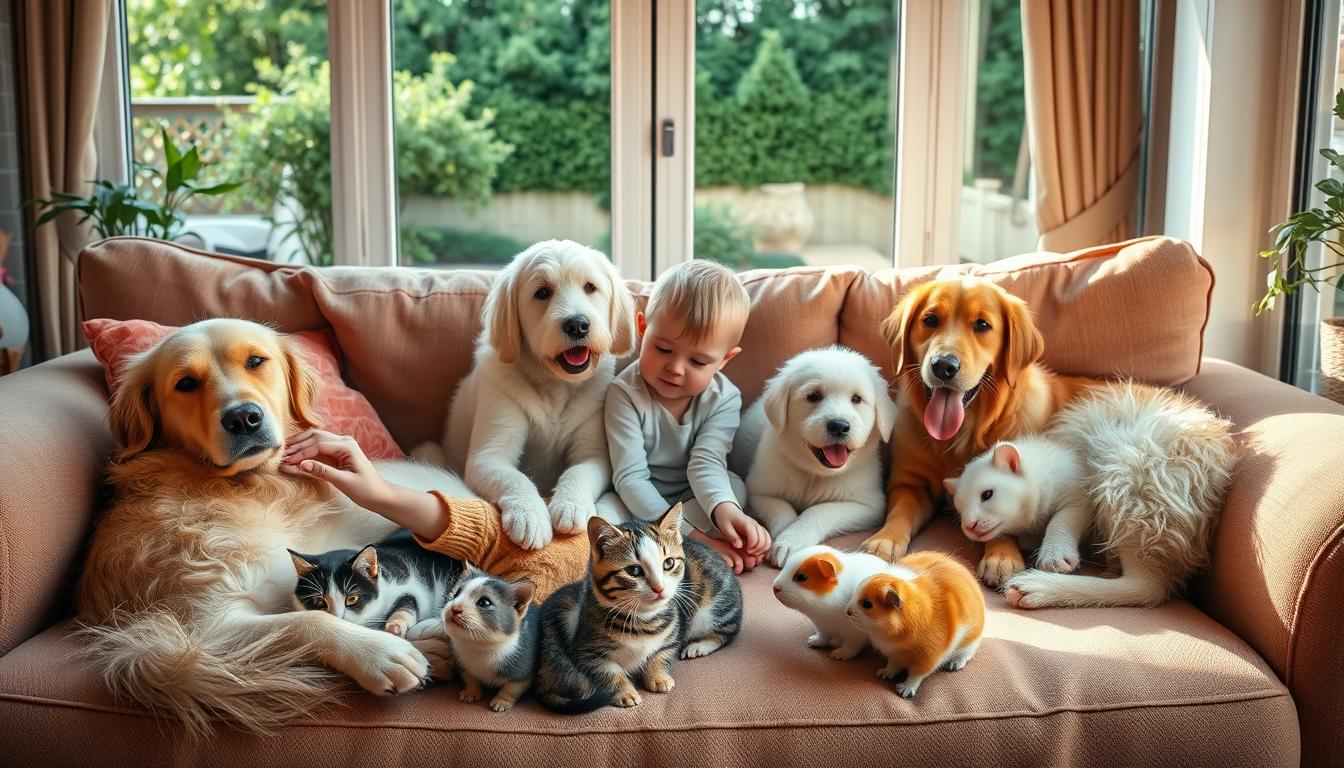
Pets teach families more than just joy. They act as silent mentors, teaching love, responsibility, and empathy. Over 67% of U.S. homes have pets, making them a big part of our lives.
A former pastor called dogs “God’s secret agents.” They show us unconditional love, just like divine grace. This bond is both spiritual and practical, teaching us important lessons.
Pets also benefit children. Young kids learn to watch how they interact with pets. Older kids learn to do tasks like refilling water bowls or walking dogs.
Studies show kids with dogs might have fewer ear infections. But pets teach more than health benefits. They teach empathy, patience, and kindness, skills that last a lifetime.
In 2021, 40% of owners adopted pets to practice caregiving before having kids. Pets teach us to respect living creatures and balance discipline with compassion. This article will show how pets shape our immune systems and emotional strength, proving they’re more than just friends.
Unconditional Love: The Core Lesson from Pets
Pets show us that love doesn’t need conditions. They love us no matter how we feel, look, or act. A dog’s wagging tail or a cat’s purr when we’re stressed shows pet affection beyond our expectations. This deep connection is the heart of the animal bond we share with them.
“If you treat them right at all, dogs just love you, no matter how you look, what you do or what you say.”
Studies reveal 85% of pet owners believe their pets love them without condition, making them happier. Dogs always welcome us with excitement, whether we’ve been away for a few minutes or hours. Cats, too, show love by nudging our hands, forgetting past disagreements. These actions, like tail wags or snuggles, help us grow emotionally.
Research (Kalenkoski & Korankye, 2022) shows pets lower our stress levels. They teach us to live in the moment, without judgment. This loyalty helps us learn to forgive and trust, showing the animal bond can heal emotional wounds.
Responsibility and Care
Teaching kids about pet care responsibilities helps them develop important life skills. At The Sammamish Montessori School, over 5,000 students have learned from classroom pets. They learn about feeding and keeping habitats clean, which teaches them about consistency.
Even young children can start helping. Toddlers can measure food or check on pets. As they get older, they can take on more tasks, like feeding, under adult supervision. This helps them learn about time management and responsibility.
Studies show that having pets during the pandemic helped kids become more empathetic. Taking care of pets teaches kids about accountability. Older kids can handle vet visits or budgeting for pet needs.
It’s important to find a balance in household chores. Some families share tasks equally, while others rely on one person. Teaching kids to care for pets, even if they make mistakes, helps them understand commitment. This experience builds self-esteem and teamwork in families.
Empathy and Compassion
Pets help children learn empathy through pets by showing them how to read nonverbal signs. A dog’s worried whine or a cat’s hiding teaches them to understand animal feelings. This helps kids develop compassion as they learn to recognize hunger, fear, or pain in others.

Having pets in classrooms can really change things. One teacher saw a big drop in violence after getting a hamster. Kids were quieter and even brought extra food for the hamster. These pet empathy lessons help kids do better in school and with their friends.
“Their animals were lifelines,” writes author Jane Smith in What Helped Get Me Through, citing cancer patients who relied on pets during treatment.
Cen-Clear Child Services uses classroom pets to help kids grow. They see better self-control and kindness. By caring for animals, kids learn to notice and help others’ feelings. This is key for a kinder world.
Building Stronger Family Bonds
Pets make every day an adventure, turning simple tasks into special moments. Morning walks, feeding, and weekend hikes become pet family activities that bond families. A Texas mom and her daughters found healing through horseback rides under the stars.

These activities become pet traditions, like celebrating a dog’s birthday with cake. They also go on camping trips where their golden retriever joins them. Research shows that walking the dog boosts oxytocin levels, strengthening family ties through touch and teamwork.
Over 67% of U.S. households now include pets in their daily lives. Families treat pets as honorary members, hosting costume parties for their cats or taking them to pet-friendly restaurants. Studies from the University of Virginia show that caring for a pet reduces stress.
Teaching kids to read dog body language fosters empathy, as noted by the ASPCA. These interactions build trust. A child feeding a guinea pig learns responsibility, while grandparents and teens bond over grooming the family cat. Even challenges, like calming a skittish puppy during thunderstorms, teach patience and unity.
Pets are the glue that holds families together, even in busy lives. Planning a dog’s “birthday” or going on hikes together helps families reconnect. The result? Stronger bonds that last long after the pet is gone, carrying memories of joy.
Health Benefits of Pet Ownership
Pets make families healthier in many ways. They help our bodies and minds stay strong. Walking and playing with pets can add 22 minutes of exercise a day.
This extra activity helps families stay fit and keeps hearts healthy. It lowers the risk of high cholesterol and heart disease. Kids who play with pets are more likely to have a healthy weight and strong immune system.
“My dog seemed to know when I was struggling. His presence made healing possible.”

Pets also help with mental health. Playing with animals can increase serotonin and dopamine. This can help reduce anxiety and depression.
Studies show that 86% of people feel better mentally with pets. Just petting a dog can lower stress levels. Elderly people visit doctors 30% less often with pets, fighting loneliness.
Therapeutic pets offer special support. Kids with autism build trust through pets. Pets can calm Alzheimer’s patients, as University of California research shows.
Even those recovering from heart issues live longer with pets. Their calm presence helps in recovery. Pets are more than just friends; they are health allies, making daily routines healthier.
Communication Skills Development
Pets make homes into learning spaces for pet communication skills. Kids whisper stories to cats or shout to dogs, learning to speak clearly. They also learn to read body language, like a wagging tail showing excitement.
“Callie, our current dog, came along much sooner than I would have expected following the death of Duffy. She was a rescue dog, but I’m pretty sure SHE rescued ME.”
Research shows 74% of kids aged 6–17 ask for pets every year. Learning to teach pets teaches patience. Kids learn about tone and consistency when teaching pets to sit or stay.

Non-verbal learning goes beyond pets. Kids learn to read emotions by watching a dog’s relaxed posture or a cat’s purr. Sharing pet care routines teaches teamwork and models family communication improvement.
When a child notices their dog’s unease during thunderstorms, they learn empathy. This helps them understand friends or siblings better. Pets teach kids to speak clearly and listen well, improving all relationships.
Teaching Patience and Understanding
“Noah, my old English Sheepdog, offered me warmth when the chills were so bad. He checks up on me at every opportunity of the day and takes me for walks.”
Patience grows from daily routines like potty training or exercise. These are key parts of training patience. Families learn to adjust when pets act out, like when a dog knocks over a Christmas tree.
These moments teach us about understanding animal behavior. We see that barking or chewing means pets need something, not that they’re being bad.
Children who care for pets learn valuable lessons. Studies show 50% of parents see their kids become more patient and selfless. This is true when kids help with feeding or vet visits.
Even tough moments, like a dog climbing 13 floors, help kids grow stronger. Over time, Finn’s owner learned to see his dog’s antics as playful, not naughty.
Pets show us how to be emotionally honest. They lick our wounds or rest when tired, teaching us to be empathetic. Research shows 70% of families grow closer through pet care.
These pet patience lessons help us in our relationships with people. They teach us to accept differences and value consistent care. Every wag or purr reminds us: trust grows when we meet others’ needs with kindness.
Educational Opportunities Through Pet Ownership
Educational pets make caring for them a learning through animals experience. Kids learn about feeding, growth, and health by watching their pets. They practice math by measuring food and learn to think critically about what pets need.
A program at Shasta Elementary introduced 250 students to pet science. They explored animal behavior and habitats. This hands-on learning is a unique way to understand biology.
At Weed Elementary’s Dog Socialization Camp, 12 kids helped shy dogs become confident. They learned about biology by tracking a puppy’s weight and analyzing fur texture. One parent said, “Watching a hamster’s heartbeat under a heat lamp sparked my son’s interest in veterinary science.”
Programs like Karen Topping’s workshop at Evergreen Elementary mix literacy and science. Kids write care journals, calculate medicine, and research pet needs. Even simple pets like guinea pigs teach important lessons about nutrition and energy.
These activities teach more than just biology. They help kids solve problems and learn about money. As one teacher said, “Kids who struggled with diagrams suddenly understand anatomy when they see it on their own cat.”
Coping with Loss and Grief
Many families face pet loss and grief. In the U.S., over 67% of households have pets as family members. When a pet dies, families feel sad, guilty, or confused. For kids, it’s their first lesson on teaching children about death, needing honesty and patience.
“When we arrived home from the vet’s office, I was sobbing… never have I seen what I saw on that day…”
Children may act differently. Some pull back, others ask lots of questions. The American Academy of Pediatrics says parents should talk openly about feelings. Creating memory books, gardens, or donating to shelters can help families heal. Over 40% of pet owners do these things to remember their pets.
Adults often feel misunderstood when they grieve. Studies show 70% of pet owners feel their grief isn’t valued. But, there are resources like hotlines, counseling, and support groups. The Rainbow Bridge metaphor comforts many, showing a peaceful transition. For those struggling, 63% of owners seek counseling to cope with pet death.
Children’s grief can show in play or drawings. Parents should accept their feelings without ignoring them. Helping at shelters or adopting a new pet can also help. Remember, grief has no timeline; every family’s journey is unique.
The Joy of Adoption and Rescue
Bringing a rescue pet into your home is more than just getting a friend. It’s a chance to grow together as a family. Pet adoption benefits go beyond the animal’s new life. Families learn about resilience and compassion from their stories.
Visiting shelters teaches kids the value of second chances. Shelters like SPCA-NN make sure pets are spayed/neutered and vaccinated before adoption. This makes the process affordable and responsible.
Rescue pets teach families valuable lessons as they bond. A Virginia family adopted a stray German Shepherd through ACE program dogs. They learned about empathy as she gained trust.
Shelter pets show us that love and healing are possible after hardship. Every adoption means another animal has a chance. It also helps reduce euthanasia rates that claim 3 million pets yearly.
Adopting a pet is a smart choice financially. The average first-year cost for a shelter dog is $1,270, much less than buying from breeders. It also strengthens communities through volunteer work and donations.
Adoption is a journey of healing for both the family and the pet. Families gain lifelong companions and help create a kinder world. As one adopter said, “She rescued me as much as I rescued her.” This is the true joy of choosing rescue.