






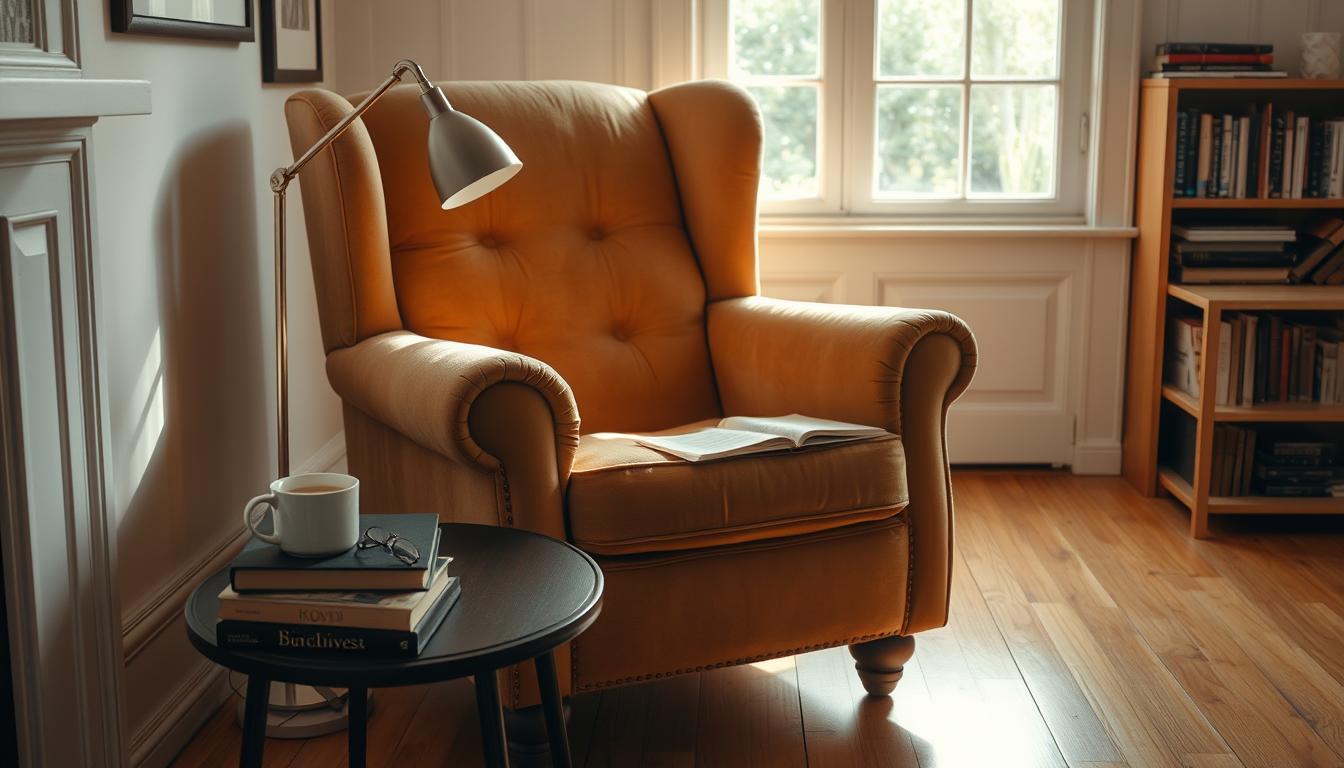
A favorite chair is more than just a piece of furniture. It’s where memories are made and emotions are felt. It’s not just about the comfort, but the stories it holds.
Our emotional bond with furniture is deep. A favorite chair is more than a place to sit. It’s a reflection of our lives and the moments we treasure. It silently witnesses our stories, blending comfort with personal significance.
The Emotional Connection to Our Favorite Chair
Chairs are more than just seats. They silently watch our lives unfold. As we read, rest, or share stories, a bond forms. Replacing a worn chair feels like losing a dear friend.
“Each and every step of the way, we are growing and developing a completely unique, one of a kind, never seen before skillset (literally, emotionally and mentally).,”
Psychologists say chair sentimental value comes from the “endowment effect.” Ownership turns objects into symbols of our history. A sofa with childhood memories or a desk chair for career dreams is priceless. Studies show 70% of users feel furniture bonding boosts their well-being, linking comfort to emotional security.
Designers like Bill Stumpf created chairs that were both comfortable and psychologically supportive. His work, like the Herman Miller Ergon, showed furniture can shape our interactions with spaces. The 1976 Ergon chair aimed to build trust and belonging.
Personalizing a chair with cushions or placing it by a window is more than decorating. It’s building a relationship. These actions turn objects into parts of ourselves, carrying our joys and struggles. The chair becomes a silent ally, part of our daily routines and emotional lives.
A Refuge for Solitude and Reflection
In a world full of noise, a favorite chair can be a quiet haven. It’s not just about being alone. It’s a chance to pause and connect with your thoughts. Whether you’re journaling or just staring, this reflection space helps clear your mind.
Many people find it hard to enjoy being alone. A study showed some would choose pain over 15 minutes of solitude. But, a special chair can turn empty time into valuable rest. Over time, it becomes a place where you can focus calmly.
“I have never found a companion so distract-free as a good chair.”
For introverts, having such a space is essential. They often find peace in quiet moments, and a favorite chair is their mental refuge. Even in busy places, like dorms or offices, this chair can be a quiet escape. Thoreau said, “Solitude is not measured by miles of land but by the depth of thought.”
To create this peaceful spot, you don’t need much. Just a chair that invites quiet. It’s a way to honor our basic need to think without being interrupted.
The Role of the Chair in Our Daily Routines
“Life doesn’t ask us what we think about the changes it brings into our lives. Those changes just happen. And life always wins.”
Starting your day with coffee in your favorite chair is more than just a seat. It’s a key part of how we move from morning to night. For many, that cozy armchair is the heart of their comfort rituals. It helps us separate work, rest, and play.
The CDC says one in four U.S. adults sit for over eight hours a day. But, furniture like ergonomic chairs can change that. Office Chair Superstore shows how adjustable ergonomic chairs can ease back pain by supporting good posture. CoreChair users say they feel less discomfort and stay focused better after using it for months.
Bad seating can lead to chronic pain, but the right chair can help. Chairs that let you sit upright, lean, or recline improve blood flow and reduce tension. Using ergonomic furniture for comfort rituals is not just a trend—it’s a smart choice. It helps fight the effects of sitting too long, as the American Posture Institute points out.
Daily chair routines are not just sitting there. They are active choices that put well-being first. A chair is more than just furniture; it’s a partner in keeping life’s chaos in balance.
How Chairs Help Us Process Our Emotions
Your favorite chair might be your best emotional friend. It’s like an emotional processing space where you can sort out your thoughts and feelings. When you’re stressed or feeling overwhelmed, this chair becomes more than just furniture. It’s furniture emotional support that wraps you in comfort.
Those emotions you are feeling are trying to tell you something. Look deep within. It’s not an easy task, but the answers are always there.

Sitting in this safe place for feelings, your body relaxes, and your brain slows down. The chair’s embrace lets you face your emotions without feeling rushed. Over time, this spot becomes a place where you can cry or have quiet breakthroughs.
Science supports this idea. Comfortable seating lowers stress hormones, giving you mental space to think. A chair that fits your shape isn’t just good for your body. It’s a partner in emotional strength. Next time you sit in yours, remember: it’s not just a place to sit. It’s where you find calm and clarity, one seat at a time.
Creating a Personal Sanctuary
Turning a favorite chair into a personal sanctuary begins with comfort space design. Add soft blankets, supportive pillows, and warm lighting. This makes the chair feel like a cozy retreat. Books, cozy throws, or a side table for tea can make it even more special.
A well-designed space is like a mental reset button. It offers peace in the midst of chaos.
Studies show 70% of people feel calmer in tidy spaces. Decluttering and arranging items like framed photos or scented candles can improve focus and mood. Even small changes, like rearranging decor, can make us happier by 60%.
Historically, bedrooms evolved from shared spaces to private retreats. Personalizing a chair nook continues this tradition.
“We cannot make sense of everything… Trust Life. Trust the Universe.”
Professional organizers say up to 50% less anxiety comes from well-curated spaces. A chair environment with layered lighting or textured fabrics can make it feel bigger by 20%. Making this area a priority shows we value our mental health.
60% of people use their bedrooms for relaxation. This shows that having a designated zone is important. Every throw pillow or curated bookshelf makes this corner your own.
The Psychological Benefits of Having a Favorite Chair
Your favorite chair is more than a spot to sit. It’s a mental health ally. Psychological benefits of furniture like ergonomic seating go beyond just feeling comfortable. Chairs with good lumbar support and adjustable features help reduce stress and promote mindfulness.
Imagine a place where your body feels supported and your mind can unwind. This is the magic of mental health and comfort spaces.

Chair therapy is becoming more popular, showing how choosing the right chair can boost emotional health. Research shows that sitting in a well-designed chair can lower cortisol levels, which helps with anxiety. The right chair also helps you sit in a way that boosts confidence and focus.
Brands like Nilkamal Furniture focus on ergonomics. They follow research that shows proper seating can reduce tension and improve mood.
This lesson of enjoying the process has allowed me to let go of the need to control the outcome. When our well-being isn’t tied to outcomes, we find freedom in the present moment.
A favorite chair creates a safe space where you feel secure. This is because consistent comfort builds neurological patterns of security. Ergonomic features like adjustable armrests and tilt functions ensure you’re physically comfortable, letting your mind process emotions.
Over time, this routine helps you deal with stress better and manage your emotions. Creating such spaces is essential for overall health, not just a luxury.
Investing in ergonomic seating is about more than just your body. It’s about your mind too. When chairs meet our needs, they help us stay clear-headed and calm.
Chairs and Social Interactions
Chairs change how we connect with others, making rooms into conversation spaces. A grandparent’s rocking chair might be the heart of family stories. The way we sit at a dining table sets the mood for meals.
These furniture in social dynamics play a big role in building trust and connection. Sitting on your favorite couch with a friend invites deeper talks.
“Life does not only work like this when it comes to your jobs and careers. It is active on all dimensions. Relationships, friendships, hardships, friendships, hardships, challenges, and experiences – you name it!”
In a living room, chairs facing each other encourage open talks. Round chairs, like Eames lounge chairs, are perfect for casual chats. Changing the chair layout at a party can totally change the vibe, showing how chairs and relationships are linked.
A shared seat might mean friendship, while a single chair at a table could mean distance.
Think about family traditions: like always eating together or sharing secrets on the porch swing. These furniture in social dynamics are more than just things—they’re where we build connections. Next time you set up chairs, think of it as starting a conversation.
Cultural Significance of Chairs
An empty chair at a Passover table or the ornate papal throne hold more than just people—they carry centuries of cultural chair significance. Chairs have long been silent storytellers, reflecting beliefs and values across civilizations. As philosopher Alan Watts noted, “We do not ‘come into’ this world; we come out of it,” and this truth echoes in how chairs embody our connection to the broader human experience.
“The universe peoples.”

Historical chair meanings stretch back to 3200 BC, where Neolithic stone seats in Skara Brae, Scotland, marked communal spaces. Egyptian pharaohs like Tutankhamen were buried with gold-adorned armchairs, symbolizing eternal power. Ancient Greece’s klismos chairs, with curved legs, became symbols of democracy’s ideals. Rome’s curule chair, reserved for magistrates, linked seating to authority—a tradition echoed in medieval bishops’ faldstools.
Chair symbolism persists today. The Eames Lounge Chair, designed for mid-20th-century America, mirrored post-war optimism. Even Philippe Starck’s AI-designed chairs now blend tech with sustainability, proving how seating adapts while retaining core cultural roles. From the Peacock Throne’s 500 lbs of gems to a child’s wooden stool, chairs anchor us to shared histories while shaping tomorrow’s stories.
How Our Chairs Reflect Our Personality
Ever wonder why you choose a certain chair? It’s not just a random pick. Chairs show our inner world. A sleek chair might mean you love simplicity. A plush armchair could show you value comfort.
Did you know 55% of workers see their chair as a personal statement? A minimalist desk chair might show you’re goal-oriented. A vintage piece could mean you love history.
Seating preferences also show our comfort and values. 45% of employees stay longer in jobs with chairs they like.
Ergonomic chairs, chosen by 70% of millennials, mix function and self-care. A bold-colored chair in an office might signal creativity. Even the cost of a chair matters—some spend €10,000 on a Banquete Chair, making it a personal emblem.
Next time you pick a chair, think about why. Its design, materials, and style might be showing your priorities. Seating preferences mean more than just comfort—they’re a quiet way to share who you are with your environment.
The Lifespan of a Favorite Chair
Every chair has a story. Over years, it becomes a silent witness to life’s rhythms. It sees late-night work sessions and quiet moments of rest. The furniture emotional attachment formed isn’t just about comfort; it’s about the memories woven into its fabric.

Steelcase’s Gesture Chair, for instance, is designed to last up to 15 years with care. It comes with a 12-year warranty, showing confidence in its build quality. Even durable chairs face the inevitable, showing scratches or loose parts over time. These signs of age aren’t flaws—they’re proof of service.
Have faith in it—stop being so impatient with it. Trust the process.
When it’s time to say goodbye, letting go of possessions tied to decades of memories feels like losing a part of ourselves. Yet this transition isn’t failure—it’s part of the chair lifespan meaning. Many host small rituals, like placing a photo on the chair before donating it, to honor its role. The act of replacing it with a new ergonomic option, perhaps the Herman Miller Sayl with its 12-year warranty, starts a new chapter without erasing the past.
Maintaining chairs through regular checks and gentle cleaning extends their service. But their true value lies beyond utility. Letting go is hard, but it’s also a reminder that even as we move forward, the lessons and comfort of the past remain a part of us.
The Impact of Ergonomics on Well-Being
Chair ergonomics is more than looks. Good seating cuts down on physical stress and boosts mental focus. For example, British workers spend about 34 hours a week at work. Time they could spend in chairs that support their bodies.
Old office chairs lead to over 600,000 injuries each year. But, ergonomic chairs like the Mirra 2 help by keeping the spine aligned. This prevents long-term pain.
Being physically comfortable affects our mental health. Sit-stand desks, for instance, made NHS staff 38% less anxious. Adjustable chairs also help, with 47% of users feeling less neck pain.
Good posture improves focus and mood. A chair that supports your spine is more than furniture. It shapes our daily habits. Ergonomic seating boosts productivity by 4.87% and lowers medical costs.
Ergonomics creates a cycle of well-being. Adjustable features help us adapt to tasks, reducing stress. The Mirra 2 offers lumbar support at a good price.
When our bodies feel right, our minds relax. Choosing the right furniture is caring for ourselves. Small changes today can prevent big problems later. Comfort is essential for a happy life.
Conclusion: More Than Just a Place to Sit
A favorite chair is more than just a piece of furniture. It silently watches our lives unfold. Chairs, from ergonomic designs to those in aged care, play a big role in our well-being. They make us comfortable and hold deep emotional value.
Think about the 19 residents in aged care facilities. Their chairs were more than seats; they were symbols of dignity and freedom. Ergonomic standards, like armrests at 730 mm, show how design impacts our health. But chairs also tell our stories, making us feel seen and supported.
Appreciating chairs means noticing the little things. Like how a cushion molds to your body or the memories a dining chair holds. The TV Decoder Circuitry Act of 1990 showed us design matters to all. So, let’s give our chairs the attention they deserve.
When you sit, remember: your chair is a partner in your life. Its design, materials, and history offer more than support. They give us presence. As we say, “We’re free to enjoy the moment.” That freedom comes from chairs that truly meet us, body and soul.