






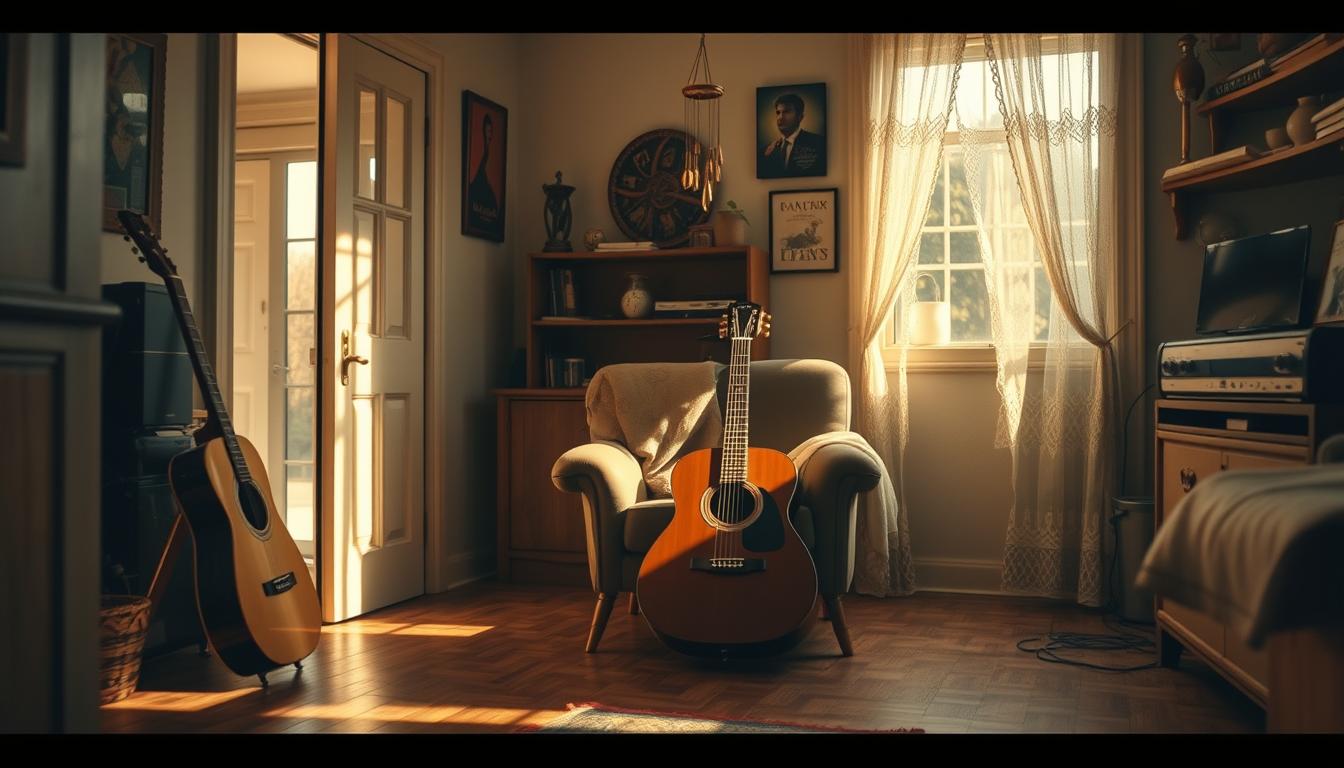
Every home has its own special home sounds. These sounds mix together to create the acoustic environment of a place. The hum of a fridge, the groan of floorboards, or the rustle of curtains in a breeze are all part of this soundtrack.
These sounds are not just background noise. They create emotional ties and mark moments of comfort or change. A running faucet’s rhythm, the chime of a doorbell, or even a neighbor’s laughter through walls all become part of our personal sonic landscape.
Paying attention to these sounds can deepen our connection to where we live. It turns ordinary household noises into cherished memories.
Understanding the Concept of Home Sounds
Every home has its own home soundscape, made up of ambient noises and household acoustics. Sounds like creaking floors and humming appliances make up our sound environment. Our brains categorize these sounds into three types: structural, mechanical, and environmental.
Starting a new life in a new home? Unfamiliar ambient noises might stress you out at first. But, poor household acoustics can stick around, like a subwoofer’s low buzz shaking your dishes. Studies link chronic noise to higher anxiety and depression risks.
It’s not just a nuisance; it’s a health issue. A study found 83 million Europeans face too much noise, showing how sound affects our well-being.
“Noise pollution isn’t just annoying—it’s a health concern,” said acoustic experts.
Small changes can make a big difference in our sound environment. A rug on hardwood floors can cut down echoes. Where you place speakers is also key. One family fixed a problem by adjusting their center speaker’s position.
Experts suggest using sound panels to cover less than 30% of walls. This avoids making spaces feel “dead.” Even ancient places like Malta’s Ħal Saflieni Hypogeum show how sound design affects our comfort.
Creating a thoughtful home soundscape is all about balance. From choosing rugs to adjusting speaker settings, every choice affects how we feel at home.
The Role of Nostalgia in Home Sounds
Childhood home sounds shape our emotional landscapes, turning ordinary noises into anchors of memory. A creaky door, a ticking clock, or a familiar melody can instantly revive vivid scenes from the past. These sound memories are more than echoes—they’re neural pathways linking us to moments of joy, comfort, or even anxiety. Studies show that such nostalgic sounds trigger the brain’s reward centers, releasing dopamine and fostering emotional resilience.

Research reveals why these sound associations matter. Neurologically, sounds bypass some cognitive filters, making them potent memory triggers. For instance, hearing a lullaby from childhood might flood the mind with images of a parent’s voice, even decades later. This phenomenon isn’t just personal—it’s universal. A 2018 study by Sedikides and Wildschut found that nostalgia fuels hope and meaning, helping people navigate present challenges by revisiting past joys.
Consider the quiet home of someone raised in a silent household: unfamiliar sounds in new environments can heighten disorientation. Yet, modern streaming services now let people recreate those childhood home sounds effortlessly. Playlists of rain on roofs, vinyl records, or even a neighbor’s laugh digitized become tools for grounding. These sounds aren’t just relics—they’re bridges between past and present.
Sound memories also offer therapeutic value. Programs like music-based wellness sessions use familiar tunes to reduce stress in older adults, leveraging how sound ties to emotional stability. Whether through a ticking clock or a hummed tune, these auditory cues remind us that home isn’t just a place—it’s a symphony of sensory echoes.
Creating a Musical Atmosphere
Turn your living space into a cozy haven with home music atmosphere for every room. Think about domestic sound design when choosing music. For example, kitchens need upbeat background music, while bedrooms should have calming tunes.
A well-crafted curated playlist can change the mood quickly. Jazz or classical music can even help plants grow. Studies show that music in the 115–250 Hz range is good for plants. Binaural beats in the 8–13 Hz range can relax your mind during work.
Spotify’s “Focus Mode” and Apple Music’s genres make setting up easy. Casio PX digital pianos add fun with built-in songs and synthesizers. Playing instruments, like pianos, is better for memory than just listening.
Keep playlists short, with 10 songs per room. Mix genres to avoid too much stimulation. Remember, silence is as important as sound. Use 1–3 hours of quiet time daily for plants and your mind.
Intentional music choices can make any space special. Your home’s music isn’t just about volume. It’s about creating a sense of connection.
Everyday Sounds: Embracing the Ordinary
Everyday sounds like a furnace’s hum or rain on windows make up our household rhythm. These ambient home sounds—like a toaster popping or a clock ticking—are often ignored. Yet, they have a deep impact. Think about the furnace starting up: the ignition, the wood creaking, or the water pipes whispering.
These moments mark time, but 80% of adults say social media drowns out such awareness.
“Live the questions now,” wrote Rainer Maria Rilke. Listening to life’s ordinary soundtrack can be that question.

Michael Foley’s journey shows the power of noticing these sounds. When he listened to his home’s everyday sounds, he felt “30 years younger.” Modern life rushes us, leaving little time for this. Yet, 60% of adults regret missing these moments.
Statistics show 70% feel stressed by wanting to be perfect. But small changes can make a big difference. Enjoying a cup of coffee or a child’s laughter turns tasks into special moments.
Simple acts like listening to birds at dawn or a fan’s soft hum ground us in the present. Even doing laundry to a favorite song becomes a meditation. The key is curiosity: see your home’s sounds as a story waiting to be heard. As Foley said, ordinary moments are life’s true music.
Enhancing Home Soundscapes with Technology
Modern smart sound systems and home audio technology let you shape your living space’s soundscape with precision. From whisper-quiet background music to immersive theater experiences, these tools offer unmatched control over your auditory environment. Brands like Sonos and Focal lead the way, with solutions like the Sonos Beam (Gen 2) and Focal 1000 Series to match any room’s needs.
Systems like Sonance Architectural Series in-wall speakers blend into walls while delivering rich sound. This shows acoustic enhancement doesn’t sacrifice aesthetics. Over 70% of luxury homeowners now use multi-room setups, ensuring music flows seamlessly from kitchen to patio.
Voice commands and mobile apps let you adjust volume or playlists effortlessly. Sound management tools reduce echo or noise in open spaces.
Advanced systems like the Sonos Ultimate Immersive Set offer 360-degree sound, turning homes into personal theaters. Yet, ethical use matters: 80% of users value privacy controls to balance convenience with security. Future trends, like AI-driven audio and eco-friendly materials from brands like Focal and Sonance, promise even smarter, sustainable solutions.
The Therapeutic Benefits of Sounds
Sound therapy has been comforting minds for thousands of years. It ranges from Indigenous Australian didgeridoo rituals to modern binaural beats. Acoustic healing traditions show how sound impacts well-being.
Science backs these ancient practices. fMRI scans show music activates brain areas linked to emotion and memory. Rhythmic beats help Parkinson’s patients walk and stroke survivors speak again.
“Music is the catharsis that takes pain and turns it into hope.”
At home, simple tools like $10 Himalayan singing bowls create restorative sounds. These vibrations calm the nervous system, lowering stress hormones. Studies show daily sound meditation—even 10 minutes—can reset focus and mood.
Pairing sounds with hand mudras, ancient gestures, amplifies their effects. This fosters mindfulness.

Sound healing works best when personalized. Some find solace in ocean waves; others thrive with Tibetan singing bowls. A recent study found consistent users report better sleep and reduced anxiety.
Yet, not all sounds fit every person. Experts recommend trying different methods to find what resonates.
Like a daily walk or yoga, sound practices build resilience over time. For families, shared sound rituals can deepen bonds. Whether using a smartphone app or a crystal bowl, sound therapy offers a low-cost, accessible way to nurture mental health. Let your home’s sounds be a sanctuary of calm, one vibration at a time.
Curating Your Home Soundtrack
Sound curation starts with listening. Take stock of your space: what sounds energize you? Maybe you want rain sounds in the bedroom or jazz in the kitchen. Start by finding acoustic balance—spaces where noise bothers you need tweaking.
Modern systems like Sonos or Bose help tailor audio to each room. They blend style with function.
Think about different tastes in your home. Use multi-room systems to let everyone choose their zone. Will Gill, a Forbes Next 1000 honoree, suggests playlists with 30–50 tracks. This mix of classics and new finds is perfect.
Smart speakers, used by 55% of households, make it easy. They adapt to your mood through apps or voice commands.
“Music doesn’t heal anxiety, but it can create space for reflection,” says Hanif Abdurraqib, whose New York Times bestseller Go Ahead In The Rain explores music’s emotional power.
Balance is essential. Compact systems work for 40% of those with small spaces. You don’t need big setups for acoustic harmony.
Do yearly audits—65% of users update systems yearly to match changing tastes. Don’t forget quiet moments too. Intentional silence refreshes the mind as much as music.
Combine tech with mindful choices. Wall-mounted speakers (chosen by 70% for their sleek look) keep rooms tidy. Cable management boosts both visual and acoustic clarity, studies show. Let your soundtrack evolve—70% of listeners use music to lift their mood, so let it grow with your life.
Exploring Cultural Sounds
Cultural sound traditions shape how we experience home environments. In Japan, the concept of ma shows the beauty of silence and space. This idea influences modern minimalist sound design. Traditional instruments like the koto and taiko drums reflect these values, creating international soundscapes that blend heritage with contemporary living.

African cultural sound elements thrive in communal rhythms. Instruments like the djembe and kora carry stories through polyrhythms. Genres like Afrobeat (popularized by Fela Kuti) merge traditional beats with modern energy. In homes today, these global sound elements inspire playlists blending ancestral drums with contemporary tracks.
Indian classical music traditions, such as Hindustani and Carnatic styles, use ragas and talas. Instruments like the sitar and tabla are often used. Bollywood melodies and regional folk like Bhangra add vibrant layers to home soundscapes. Middle Eastern maqam scales and instruments like the oud bring melodic depth. Latin American rhythms from salsa to reggaeton celebrate communal joy.
Exploring ethnic music doesn’t mean imitation—it’s about respectful appreciation. Play a West African storyteller’s songs during gatherings, or incorporate Japanese singing bowls for meditation. These practices connect us to heritage while fostering cross-cultural understanding. With 128 million U.S. adults engaging in creative activities, embracing diverse sound traditions enriches homes while honoring their origins.
DIY Sound Inventions for Your Home
Turn everyday items into homemade instruments and make your home a musical haven. Begin with simple projects: fill jars with water to create a glass harp, or make tiny bass guitars from cardboard and rubber bands. These acoustic crafts require only curiosity and no special skills.
The book *Make: Musical Inventions* provides plans for projects like a pizza box radio or a straw flute. It shows that even kids can explore sound design.
For inspiration, look at artists like Aaron Dilloway, who turns tape machines into sound installations that alter time and texture. At home, create wind chimes with bottle caps on strings or tap rhythms with metal bowls. A cigar box guitar, made from scrap wood and strings, proves that little can lead to big sounds.
Even failed attempts, like a wobbly record player from manila folders, teach about the importance of precision and patience. Projects like tinfoil record players show the value of trial and error. Thicker foil and sharp pins help in making crisp recordings.
Testing different containers for balloon drums shows how materials affect sound. Ceramic amplifies tones, while metal sharpens them. These DIY sound projects are more than hobbies; they’re ways for families to bond and tune into their surroundings.
Soundproofing Your Home
Unwanted noise can ruin even the most cozy spots. It could be creaky floors or neighbors’ talk. Home soundproofing has simple fixes. Start with weatherstripping doors or rubber mats under furniture.
Acoustic treatment like foam panels or thick rugs can reduce echoes. Two-inch foam absorbs mid-range sounds, while bass traps handle low tones. Adding a soundproofing underlayment under hardwood floors stops vibrations.
Carpets with dense padding also dampen footsteps and echoes. Ms. Paruz and Mr. Munson, musicians, made their home a studio. They used double-pane windows and foam squares to cut noise by up to 50%.
For severe issues, professional acoustic treatment might be needed. This includes adding insulation in walls or installing acoustic ceiling tiles. Budget-friendly options like blackout curtains can reduce noise by 25-30% and save energy. DIY fixes like door sweeps and rug pads cost under $50 but make a big difference.
Knowing when to DIY versus hire a pro is key. Soundproofing costs vary, from $1,000 to $3,000 for professional services. Many musicians plan to invest in home soundproofing after the pandemic. Balancing DIY steps with acoustic principles keeps spaces quiet and inviting.
The Future of Sound in Home Design
Homes are changing, and so are their sounds. Imagine rooms where walls adjust their architectural acoustics to match your mood. Or sound-conscious architecture that mixes nature’s sounds with technology. Dolby Atmos, introduced a decade ago, shows us what’s next.
It brings object-based audio to homes, changing how we design spaces. From immersive living rooms to focused home offices, the possibilities are endless.
Systems like Relaxound’s Zwitscherbox already meet the demand for natural sounds. They let users add rain, birdsong, or ocean waves to create their own environments. Future homes might use AI to adapt these sounds in real time.
Think of Spatial’s 2021 workspaces project, which uses biophilic sounds to boost productivity. Or Earth.fm’s habitats that mimic forests or coastlines.
Health trends are driving this change. With 86% of people wanting soothing sounds, companies like MyNoise offer customizable sound masking. Generative AI, as WIRED highlights, could soon create endless soundscapes based on what users like.
Even simple sounds, like brown noise or ASMR triggers, are becoming mental health tools.
Architects now focus on acoustic design from the beginning, not as an afterthought. Projects like Conserve the Sound aim to preserve vanishing sounds for future spaces. As cities grow, tech like adaptive walls or AI-driven soundscapes will become common.
The future home will be more than just inviting—it will sound like a sanctuary. It will blend innovation with the timeless need for comfort.