






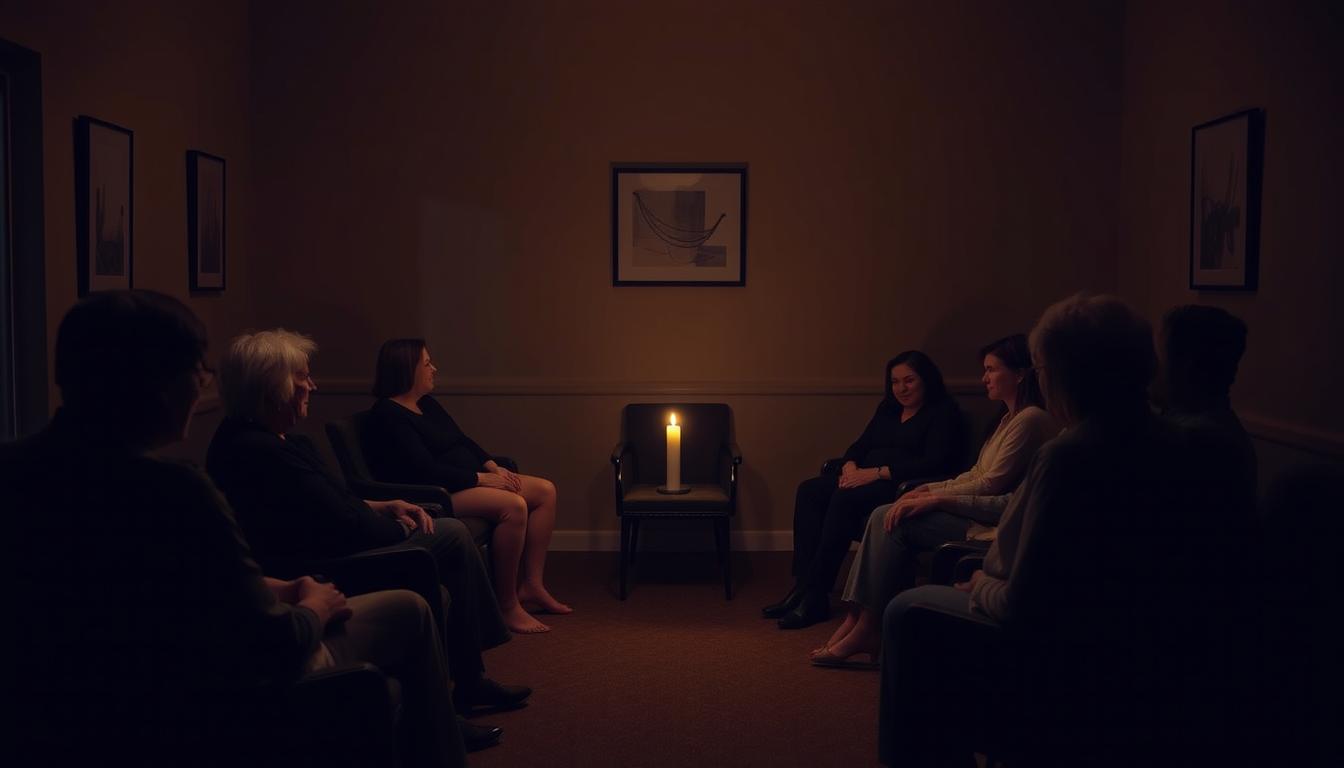
When the world keeps moving but your heart stops, the silence after loss feels endless. The loss of a loved one changes how we see time. Days seem long, but years go by slowly as we heal.
My journey started with a silence so heavy it seemed to reverberate. But I found strength in unexpected places. The grief process is not a straight line; it’s a mix of moments, some painful, others full of hope.
Many people feel alone after losing someone, feeling pushed to “get over it.” But 70% believe talking about their feelings helps. My family and I joined the American Foundation for Suicide Prevention (AFSP) 13 years after my brother’s death.
At their training, we learned that quiet grief is not the same as absent grief. This taught us that coping with silence doesn’t mean we have to face it by ourselves.
Every step in navigating grief together starts small. Whether it’s walking together or sharing quiet moments, connecting with others changes everything. This article shows how shared stories can turn silence into support. The journey ahead may not be straightforward, but we’re never alone in the darkness.
Understanding the Silence of Loss
The silence after losing someone can feel like an emotional void. This grief silence isn’t just quiet—it’s the absence feeling that fills empty rooms and unanswered texts. It’s the weight of routines now missing a familiar voice. Some call it numbness; others describe it as a storm inside a calm room.
Society often tells us to “stay strong” or “look ahead,” but these words can make unspoken grief worse. Many feel judged when sharing memories, leading to isolation. Research shows 70% find relief in talking openly, yet shame or fear silences many. This tension between internal pain and external expectation creates a gap few know how to bridge.
“The absence of conversation around loss can prolong emotional pain,” a 2023 grief study emphasizes. “Acknowledging silence, not fearing it, is key to healing.”
Everyone’s journey with these silences is different. Some find comfort in rituals; others need time to sit in silence. The goal isn’t to rush the quiet but to recognize it as part of the healing process. Even small steps—like writing letters or visiting meaningful places—can turn overwhelming silence into a space for connection.
The Grieving Process: What to Expect
When someone loses someone close, the idea of stages of grief or a clear grief timeline might seem comforting. But grief is never straightforward. Over 40 years of research in grief counseling shows that everyone reacts differently. Some days are easier, while others, like the 10-month mark, can be very tough.
Emotional responses during grief can be hard to predict. Shock is the first feeling for most. Then, numbness, confusion, or even physical symptoms like feeling lightheaded can happen. But what comes next can vary a lot. Dr. Alan Wolfelt says grief mixes pain with unexpected joy. “Laughter doesn’t erase grief,” he writes, “but it proves life can be light again.”
Memories and rituals are important but often overlooked. A study in Memory Studies (Baddeley & Singer, 2010) found that unspoken memories are emotional anchors. They help people keep a loved one’s memory alive. On the other hand, avoiding emotions can make grief last longer, as Keltner & Bonanno’s research (1997) shows.
“Grief is a conversation with the past, not a race to the future.”
There’s no end to grief. Even years later, a scent or song can bring sadness. This isn’t a sign of failure—it shows deep love. By not expecting a certain way to grieve, people can find their own path. Bonanno’s 2012 study found that those who felt both joy and sadness while mourning healed faster. Grief is a journey, not a list to follow.
Finding Comfort in Shared Grief
“Grief shared is grief softened.” — A shared truth among those who’ve walked through loss together.
When sorrow feels heavy, reaching out to others who understand can lighten the load. Shared grief healing starts with connecting through loss. This can be through grief support groups or informal gatherings. Organizations like The Compassionate Friends offer spaces for families who’ve lost children to find solace in collective mourning.
These groups remind us we’re not alone in our pain. Participating in grief support groups can reduce isolation. Research shows 30-50% of members improve coping skills through these communities.
The American Psychological Association notes there’s no “right” way to grieve—only paths that feel right. Online forums and local meetups provide forums to voice fears, laughter, or memories without judgment.
Even small steps matter. Sharing stories with a friend, joining a virtual chat, or attending a memorial event can spark healing. Remember, seeking connection isn’t a sign of weakness—it’s a brave first step toward rebuilding hope.
Honoring Memories in Silence
Quiet moments can be incredibly powerful. Many find comfort in meaningful silence, using it to connect with precious memories. Activities like lighting a candle or writing in a journal become grief rituals that turn sorrow into something meaningful. Helen’s family, for example, comes together in quiet reflection every year on her birthday. They share stories that keep her spirit alive.

“Silence becomes a language of its own when words fall short,” says Dr. Emily Carter, a grief counselor at the Center for Bereavement Support. “It allows space to hold both sorrow and joy.”
Creating remembrance practices like memory albums or charity projects can turn grief into action. Over 65% of those grieving say that honoring memories this way helps ease their pain. Even small actions, like planting a tree or playing a loved one’s favorite song, help bridge the gap between absence and presence.
These moments aren’t about forgetting loss but integrating it into life. As time goes on, silence becomes a bridge to gratitude, not just grief. Letting memories guide your rituals, not control them, is essential. Your loved one’s legacy lives on in how you carry their light forward.
Coping Mechanisms for the Unsettled Silence
Trying to hide grief only makes the silence worse. It’s important to face our feelings head-on. The Center for the Heart teaches people to replace old habits with new ways to deal with grief.
Emotional processing starts with naming our feelings. This can be through journaling, breathing exercises, or art. It helps us understand and deal with our emotions.
Studies show that yoga and meditation change our brain’s stress patterns. Activities like walking meditations or gardening help us process loss. They give our minds a chance to heal.
Even short moments of mindful breathing can calm us down. It helps with panic attacks or feeling overwhelmed.
Try writing letters to someone you’ve lost or painting your emotions. Music can also be a powerful way to express what we can’t say. Cognitive Behavioral Therapy helps change negative thoughts.
White noise machines create peaceful spaces for reflection. The Ready to COPE app offers exercises for parents dealing with grief or anger.
Healthy grieving isn’t about being happy all the time. It’s about creating safe spaces for our emotions. When silence feels too much, use these tools. Let creativity be your voice when words are hard to find.
Remember, even small steps in emotional processing can help us heal. They can break the cycle of hiding and open new paths to healing.
The Role of Professional Support
When grief feels too heavy to carry alone, grief counseling and professional grief support can offer lifelines. Many people hesitate to seek help, fearing it signals weakness. In truth, reaching out to grief specialists is a brave step toward healing. Programs like those at the Center for the Heart tailor care to individual journeys, ensuring no one walks this path alone.

While some employers like U.S. Bank provide grants—up to $5,000 for funeral costs—many lack adequate therapy for loss resources. Data shows only 25.8% of respondents rated social support as excellent, highlighting gaps in informal networks. Grief specialists bridge these gaps, providing strategies to navigate complicated emotions. For instance, Mastercard’s 20-day leave policy contrasts sharply with the national average of 3–4 days, underscoring the need for expert guidance when workplace policies fall short.
Professional support isn’t a last resort. It’s a proactive choice. Trained therapists can address guilt, confusion, or prolonged sadness, helping individuals rebuild life’s rhythm. Whether through one-on-one sessions or group programs, grief counseling provides tools to process loss at your own pace. Remember: healing isn’t linear. Let experts guide you through it with compassion and expertise.
Understanding Grief Triggers
Grief triggers can hit at any time, making everyday moments feel like a reminder of loss. An unexpected memory of a loved one’s laugh or their favorite coffee scent might make you cry. These grief triggers help keep our hearts connected, even when life keeps moving.
“The Dual Process Model shows grievers balance facing loss and avoiding it—a cycle as natural as breathing,”
Starting to manage grief waves means knowing these emotional triggers. Holidays, songs, or even weather changes can bring back sorrow. While we can’t avoid all unexpected memories, acknowledging the pain can lessen its blow. Mindfulness helps us stay present, making overwhelming emotions more manageable.
Some triggers, like anniversaries, are expected. Others, like finding an old photo, surprise us. Allowing ourselves to feel without judgment builds strength. Grief is a journey, not a race. Every grief trigger reminds us of the lasting impact of love.
The Importance of Self-Care During Grief
When grief feels heavy, it’s hard to think about grief self-care. Yet, it’s a key step towards healing. Small acts like eating well, taking short walks, or resting help a lot. Think of your body and mind as a garden that needs care.

Start with the basics like eating three meals a day, even if they’re small. Outdoor activities like gardening or walking can boost your mood by 20%, studies show. Also, getting enough sleep is important. Try going to bed at the same time, keep your room dark, and avoid screens before bed.
Setting emotional boundaries helps save your energy. It’s okay to say no to things when you’re feeling down. Remember, taking care of yourself first is not selfish. It’s the first step to being strong again for others. Even just 15 minutes of yoga or journaling can help.
If you’re feeling overwhelmed, call 218-786-4402 for support. Taking small steps every day can help you get stronger. Your self-care today is a step towards healing tomorrow.
Loneliness: A Common Companion in Grief
Grief loneliness feels like a heavy weight, even when you’re with others. Many people feel isolated in their mourning, feeling cut off from their usual lives. For example, after losing a spouse, simple things like sharing a meal or watching TV can remind you of their absence.
It’s important to understand the difference between solitude and isolation. Solitude is choosing quiet time to reflect, while isolation makes you feel trapped in silence. The U.S. Surgeon General, Vivek Murthy, calls loneliness a public health crisis, as harmful as smoking 15 cigarettes a day. Yet, many feel ashamed, thinking loneliness means they are weak.
“Loneliness is not a flaw—it’s a shared human experience.”
Jon and Jillian found ways to overcome loneliness. Jon, after losing his wife Amanda, started a weekly sports-watching group with other bereaved men. Jillian, who lost her husband Rocco, began spending Sundays on community projects. These small steps show how connecting after loss can start with small actions.
Volunteering or joining grief groups can help you feel less alone. Studies show volunteers feel 25% more emotionally balanced. Sharing stories in safe spaces helps rebuild connections. When loneliness feels overwhelming during holidays or milestones, reaching out to support networks or starting new traditions can help.
Remember, solitude offers a chance to heal, but isolation can deepen sorrow. Seeking support is not a failure—it’s a step towards reconnecting.
The Journey of Moving Forward
When grief becomes less intense, we start moving forward. This doesn’t mean forgetting the past. Instead, we integrate those memories into our lives. Grief integration is like the seasons changing, with moments of joy and sorrow.
Research shows 75% of people in support groups find comfort in sharing their stories. This highlights the importance of connection during tough times.

Many find ways to honor their loss, like planting a garden or volunteering. Writing in a journal can also help, boosting well-being by 50%. It’s okay to feel both joy and sorrow at the same time.
One person said, “Your loved one is part of your soul and always will be,” after a year of healing. Finding meaning can mean mentoring or creating art. Grief changes us, but we can grow from it.
Life after grieving isn’t straightforward. Some days are easier, others harder. But moving forward means living fully and keeping memories alive. Every step forward is a step towards healing.
The Role of Cultural Perspectives in Grief
Cultural grief traditions vary worldwide, showing how mourning practices differ. In India, Hindu families hold rituals for 13 days to honor the deceased. In Bali, brief ceremonies discourage crying to protect the spirit’s journey. These practices reflect shared values and beliefs that guide individuals through loss.
Research by Catlin (1992) shows how Mexican Americans openly cry in public, unlike others. Egyptian communities may grieve for up to seven years, challenging Western views. These differences show how cultural norms shape what’s considered “normal” in expressing sorrow.
Even in death, traditions vary widely. The Toraja people in Indonesia care for the deceased as if alive until the funeral. Māori communities in New Zealand perform tangihanga rituals to send spirits onward. These rituals, as noted by Martin and Doka (2000), aren’t just traditions—they’re tools for healing.
Personalized grieving means respecting cultural roots while adapting to personal needs. Some find comfort in ancestral rituals; others blend old and new. For example, a 2023 study on urban diaspora communities showed many combine digital memorials with traditional prayers. The key is balancing heritage with what feels authentic.
Understanding these differences helps us respect others’ journeys. Whether through 49-day Tibetan Buddhist ceremonies or Italian refrigerated coffins allowing home visits, every practice offers a path to healing. By embracing this diversity, we honor both our roots and our own hearts’ needs.
Sharing Your Grief Story
Sharing your grief story doesn’t mean you have to tell everything. It’s about picking the right time and way to share, like C.S. Lewis did in *A Grief Observed*. Studies show that 90% of people find healing by sharing in safe places. Even a short, heartfelt story can connect us without feeling too much.
It’s important to remember that 70% of widows feel overwhelmed by others’ stories. So, share what feels right for you. You can share with friends, write in a journal, or join a support group. These ways help us express our feelings in meaningful ways.
Storytelling for healing can be done in many ways. Talking to trusted friends, writing, or joining a support group can help. Over 60% of support group members say they feel less lonely after sharing. It’s the small steps that count.
When sharing, it’s key to respect boundaries. Focus on the emotional impact of your story, not every detail. If a moment feels too hard, wait. Let your story grow as you do.
Sharing your grief doesn’t make it disappear, but it makes it lighter. When you’re ready, your story can help others. As Lewis said, grief shows us the depth of life. Your story, whether shared quietly or widely, adds to our understanding of each other.
Remember, 75% of bereaved parents find more positive memories of their child over time. Your story is part of a bigger picture of human connection. It’s not just yours; it’s a thread in a larger tapestry.