






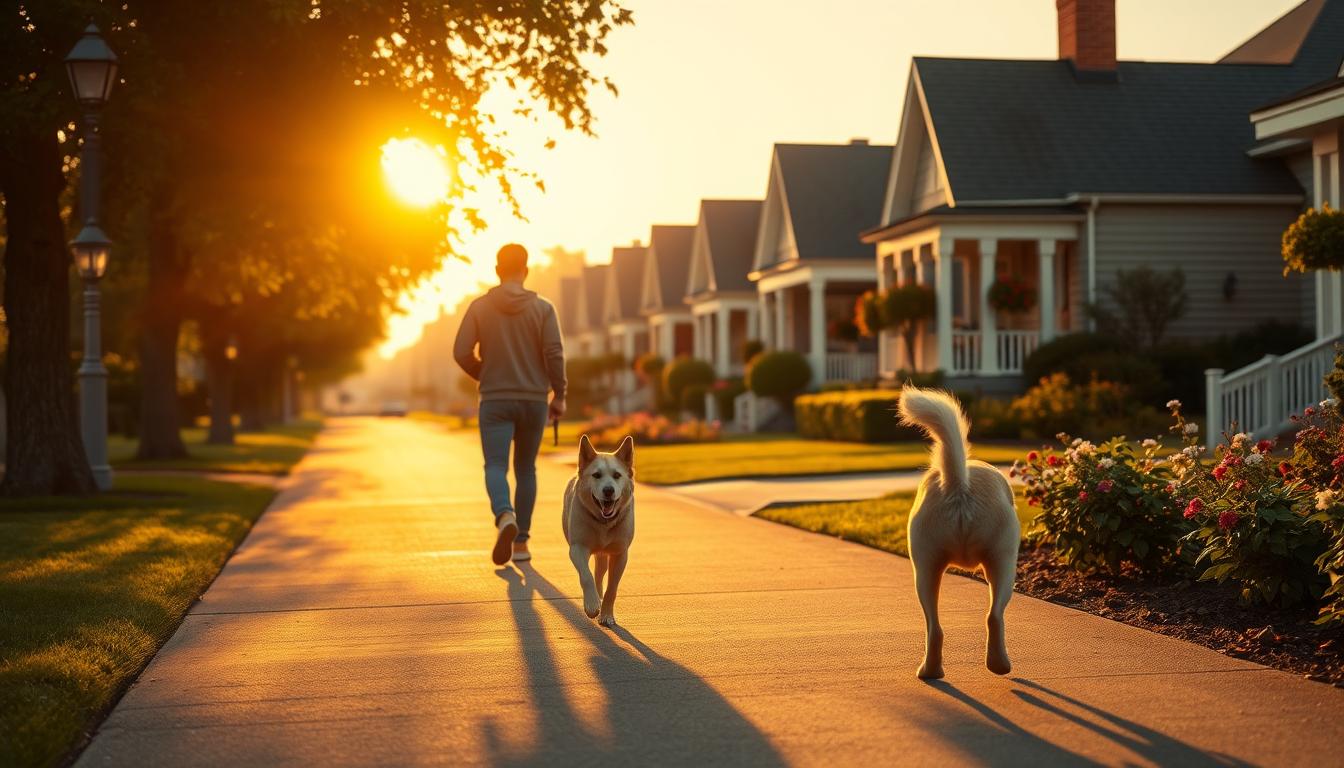
Starting your day with a morning dog walk makes it special. Dogs, like Doof, show happiness with rightward tail wags. Leftward wags might mean worry, but walks strengthen bonds.
Studies show 74% of owners feel happier, and stress drops by half. Each wag is a way to connect.
A morning walk with your dog is more than just a routine. It’s a chance to be present and mindful. These walks reduce loneliness and make your bond stronger.
Let’s dive into how these walks turn simple steps into cherished moments. They bring joy and health into our lives. Every step is a meaningful way to connect with our furry friends.
The Importance of Rituals in Daily Life
For thousands of years, humans have used rituals to make sense of life’s ups and downs. Today, science backs up what old traditions said: rituals do more than just become habits. A morning ritual is key because it grounds our days, making simple actions meaningful.
Studies show that having set routines can lower anxiety. This is because our brains like knowing what to expect. It’s like having a map for our day.
Creating rituals, like Steve Jobs’ black turtleneck or Taco Tuesday, gives our routines a special touch. These actions serve as mental markers, helping us move from one state to another. Even small habits, like drinking coffee while planning, help us stay focused and calm.
“Rituals help us regain control in uncontrollable times,” says psychologist Margaret Clark. She points out how activities like morning walks or evening routines cut down on mental exhaustion.
In today’s fast world, having routines is more important than ever. A 2023 study found people with regular morning routines felt 30% less stressed. Rituals like walking the dog at 6 a.m. or setting weekly goals are not just filler. They are mental anchors that help us stay strong and happy.
How Dog Walking Can Be a Ritual
Turning daily dog walks into intentional dog walking makes them special moments. It starts with small choices, like setting a specific time or using a special collar or leash. These choices tell both pet and owner that this time is important. Intentional dog walking turns into a ceremony when you pause to notice the surroundings, your dog’s reactions, and quiet moments together.

“Walking together became a daily meditation, not just an errand.”— A 16-year walker’s reflection
Studies show 95% of dog social interactions happen while moving. So, walks are great for mental stimulation. Adding a morning stretch or ending with a paw-print in the dirt makes these moments special. The SPCA Albrecht Center found that regular walks cut destructive behaviors by 40%, showing structure improves happiness.
Rituals grow from repetition. A Chicago owner starts walks by letting their dog sniff a specific tree, building excitement. Others time walks to see sunrises, blending their mindfulness with their pet’s needs. The walk becomes a shared language of care and presence, turning routine into ritual.
The Physical Benefits of Walking Your Dog
Walking with your dog is more than just a task—it’s a way to improve health for both of you. Studies show that walking your dog can lead to better health. It’s a win-win situation for pet owners and their dogs.
Walking helps humans get stronger and more energetic. A 30-minute walk can meet daily exercise needs. It can even lower heart disease risk by up to 40%.
Over 80% of pet owners say they feel more fit from walking their dogs. This shows that exercising with your dog is beneficial. Walking in the sun also boosts vitamin D, which is good for bones and immunity.
“60% of dog owners feel calmer after walks,” says a national survey. This mental clarity comes from endorphins released during exercise, creating a cycle where better physical health fuels emotional well-being.
Dogs also gain from regular walks. It helps prevent obesity, as 42% of U.S. dogs are overweight. Walking keeps dogs limber and reduces joint strain.
Dogs who walk daily have 25% fewer behavioral problems. They use their energy for walks instead of chewing on things. Over time, this routine makes both hearts and paws healthier.
Emotional Bonds Strengthened Through Ritual
Walking together turns daily exercise into a language of love. Dogs show their dog-human bond with joyful tail wags. The right-sided wag means they’re happy during their adventures.

Consistent walks act as emotional anchors. Dogs love predictability, seeing their owners as safe and joyful. This strengthening pet relationships comes from repeated interactions.
Training programs like Off Leash K9 Training of Tucson use walks to teach commands. They mix education with affection, making walks special.
Every stroll is a dialogue. Dogs reflect their owner’s calm, while humans feel a rush of oxytocin. This emotional connection grows through these quiet moments.
When stress fades for both, the ritual becomes a foundation of mutual well-being.
Creating a Morning Routine with Your Dog
Starting the day with a morning dog routine sets a positive tone for both you and your pet. Begin by mapping out a dog walking schedule that fits your work hours and your dog’s energy peaks. Many owners find 6–8 AM works best, but adjust based on your pup’s needs. Over 90 million U.S. dogs thrive on predictability, so consistency matters.
Establishing a walking ritual starts with small cues: a specific leash, a “time to go” phrase, or a quick training command. These signals signal transition from sleep to adventure. After walks, create a post-walk ritual like a treat or quiet cuddle time to reinforce calmness.
Routines aren’t rigid. Use flexible consistent dog walks even on weekends. Adjust for rain or snow with indoor play, but keep the schedule’s core intact. Use puzzle feeders post-walk to satisfy high-energy breeds mentally.
“A missed walk is a missed connection,” says the American Kennel Club, stressing how missed routines can increase anxiety in dogs.
Protect this time like any priority. Early starts boost productivity for owners too—less midday chaos, more focus. Small steps build big habits: start with three days a week, then expand. The goal? A shared morning rhythm that grows stronger over time.
The Role of Environment in Walking Ritual
Choosing the right dog walking locations can make a big difference. Urban neighborhood dog routes are convenient but might not be as calming as nature. Parks and trails offer fresh air, while beaches add a unique touch with waves and sand.
The best places to walk dogs change with the seasons. For example, autumn trails or winter paths are great for dogs.

A 2015 study by the American National Academy of Science found that 90-minute nature walks dogs can reduce depression risk. For seniors, trails with varied terrain help improve balance. The British Pilgrimage Trust suggests trails like the Camino de Santiago for a deeper connection.
Books like *Britain’s Pilgrimage Places* show how historical paths are now dog-friendly. This makes walks more meaningful.
“Walking in natural environments lowers stress hormones,” says the study, linking green spaces to improved focus.
Safe dog walking locations depend on the dog’s breed. For example, sturdy leashes are needed for off-leash parks or rocky trails. Seasonal changes make walks exciting again, like winter snow turning familiar routes into adventures.
Mindful observation, like identifying trees or bird calls, makes walks more impactful. Over 350,000 pilgrims walked the Camino trail last year, showing long routes can connect us.
Whether it’s local parks or forest paths, the environment greatly influences the walk’s benefits. By combining science-backed health gains with mindful exploration, a simple walk can become a transformative ritual.
Social Connections Through Dog Walking
Walking your dog is more than just exercise. It opens the door to the dog walking community. Parks and neighborhoods are full of chances to meet other dog owners. Dogs bring people together, starting conversations that can lead to lasting friendships.
Studies show that nearly half of older adults in community settings own dogs. This helps create social bonds that go beyond just walking your dog.
Groups like local dog walking friends clubs or breed-specific meetups make walks into social events. Research shows that 54% of U.S. households with dogs experience these connections. About 39-42% of seniors actively engage in these activities.
These interactions build trust and reduce isolation. They also strengthen neighborhood ties. Even short conversations about pets can make people feel more connected to their community.
“Dogs are social magnets. They make it easier to start conversations,” says a 2021 study by Carr et al., highlighting how pets can bridge gaps between strangers.
Regular walkers often join charity walks or group hikes. This turns exercise into a team effort. These networks also help introverts by making it easier to start conversations.
The social benefits of dog walking are real. They create safety nets, shared responsibilities, and a sense of shared purpose. Whether it’s swapping tips at the park or planning routes together, these connections make life richer in many ways.
Mindfulness Practices While Walking
Turn regular attentive dog walks into peaceful moments. Pay attention to your breath and your dog’s actions during mindful dog walking. Let your pet’s curiosity lead you—watch how they pause to sniff or tilt their head. This shared experience makes walks a form of walking meditation dogs.
“Rituals help us notice life’s small wonders,” said Dr. John Gottman. “Walking together deepens connection.”
Begin with small steps. Notice the crunch of leaves, the feel of your dog’s leash, or the rhythm of your steps during present moment walking. If distractions come—a neighbor’s chat or a buzzing phone—gently refocus on your journey together. Jaycee Gossett uses 5 minutes each morning to breathe deeply while her dog Chili explores, blending movement and awareness.
Dealing with squirrels darting across paths? Breathe. Let curiosity replace frustration. Dogs live in the now—no need for perfection. Over 23 years, this practice has kept author Jane Doe walking fluidly despite age, proving consistency builds resilience.
These moments foster gratitude. Every sniff, pawstep, and shared silence becomes a ritual grounding you in the here and now. Let your dog’s natural attentiveness remind you: mindfulness isn’t about being perfectly calm—it’s about noticing life’s flow together.
Personal Growth Through Dog Walking Rituals
Walking a dog is more than just a walk—it’s a chance to learn. Dogs teach us patience and how to keep going. Each step is a chance to think and learn about ourselves.
Dogs live in the moment, a lesson we all want. This helps us enjoy the present, even when life is fast.
Studies show 80% of dog owners feel more grateful and mindful while walking. These moments help us understand our feelings better. Overcoming challenges, like a stubborn dog, teaches us to solve problems.
Walking with my dog, I learned to embrace small joys—like sniffing a blade of grass—that redefine success.
Improving ourselves starts with small steps, like a daily walk. This routine helps us grow. Overcoming obstacles together makes us emotionally stronger, just like teamwork does for people.
Nature makes these walks even more special. Studies show walks in nature reduce anxiety by 40%. This creates a space for creativity. Walking together helps us achieve goals and grow together.
These walks become a part of who we are. As we set goals in 2023, dog walks help us stay focused. Every step reminds us of our capabilities when we walk with purpose.
The Power of Consistency in Rituals
A consistent dog routine makes walks a daily habit. Your dog’s excitement at the leash shows how much they love routine. Science says that habit formation walking strengthens brain connections, making it easier over time.
Dogs feel safe with a regular walking schedule. Owners get the daily walking benefits of less stress and clearer minds.

Life can throw off plans, like rain or busy days. But being flexible keeps the routine going. Short indoor play or rescheduled walks keep things moving.
Research shows it takes 12 tries to make a habit stick. A regular walking schedule is like a boat’s keel—stable but can adjust.
Consistency is good for both you and your pet. Dogs feel calm with a routine, and owners get clearer minds. Studies show routines can lower anxiety by 30% and improve focus.
When life gets in the way, gently get back on track. Celebrate small wins. Every step keeps the habit alive.
Make walks a foundation for calmness and connection. Every step, even on tough days, strengthens your bond and the brain’s love for order. Keep moving, one paw print at a time.
Transitioning Walking Rituals into Other Activities
Walking is just the start of shared rituals. Expanding dog rituals means finding new ways to bond. Activities like training or puzzle toys can deepen your connection. Turning daily tasks like feeding or brushing into mindful moments brings enrichment.
Imagine making mealtime a ritual. A quiet moment to let your dog sniff their food or practice “sit” before eating adds intention. Grooming can become a calm routine, building trust through gentle touch. Even quiet cuddles or indoor fetch games create structure when weather or schedules change.
“Rituals aren’t about perfection—they’re about presence.” —Day Schildkret, Hello, Goodbye
Adaptingability is key. Puppies thrive on structured play, while older dogs might prefer slower activities like scent games. Let your dog’s energy guide you. Short training breaks during workdays or bedtime stories with a stuffed toy can become mini-rituals. These small acts turn ordinary moments into meaningful touchpoints.
When life disrupts walks, these rituals keep the bond strong. A 10-minute fetch game in the living room or a backyard hide-and-seek session fills the gap. Enrichment with dogs grows as you explore what fits your lifestyle. Whether it’s a morning stretch routine or a post-work de-stress walk-and-play combo, creativity keeps both of you engaged.
Like musical counts keeping time, these varied rituals create rhythm. They prepare for changes—vacations, bad weather, or aging—by being flexible. The goal? Build a tapestry of moments that adapt as life shifts. Every small ritual adds depth, making every day a chance to grow together.
Tips for Establishing Your Dog Walking Ritual
Starting a dog walking habit is easy with small steps. Pick a time each day, like after morning coffee, for a routine. Use cues like a clicker or a familiar scent on the leash to signal it’s time to walk.
Choose gear that makes walking comfortable for your dog. Use ergonomic leashes and harnesses that fit the weather. If your dog pulls, start with short walks and reward them for staying focused. As they get more confident, you can walk further.
Quality walks are more important than how long they are. Even short walks, like 10 minutes, are beneficial if done every day. Keep track of your progress with a calendar or photos. Celebrate when you reach a milestone, like a week of consistent walks.
Make walks fit your lifestyle by adjusting the pace or terrain. Keep the preparation calm. Consistency is key, not perfection. This makes walks special moments for you and your dog.
Start with what you can manage today. A 5-minute walk done daily can strengthen your bond more than a perfect but irregular routine. Let your dog’s wagging tail remind you: every walk brings you closer.