






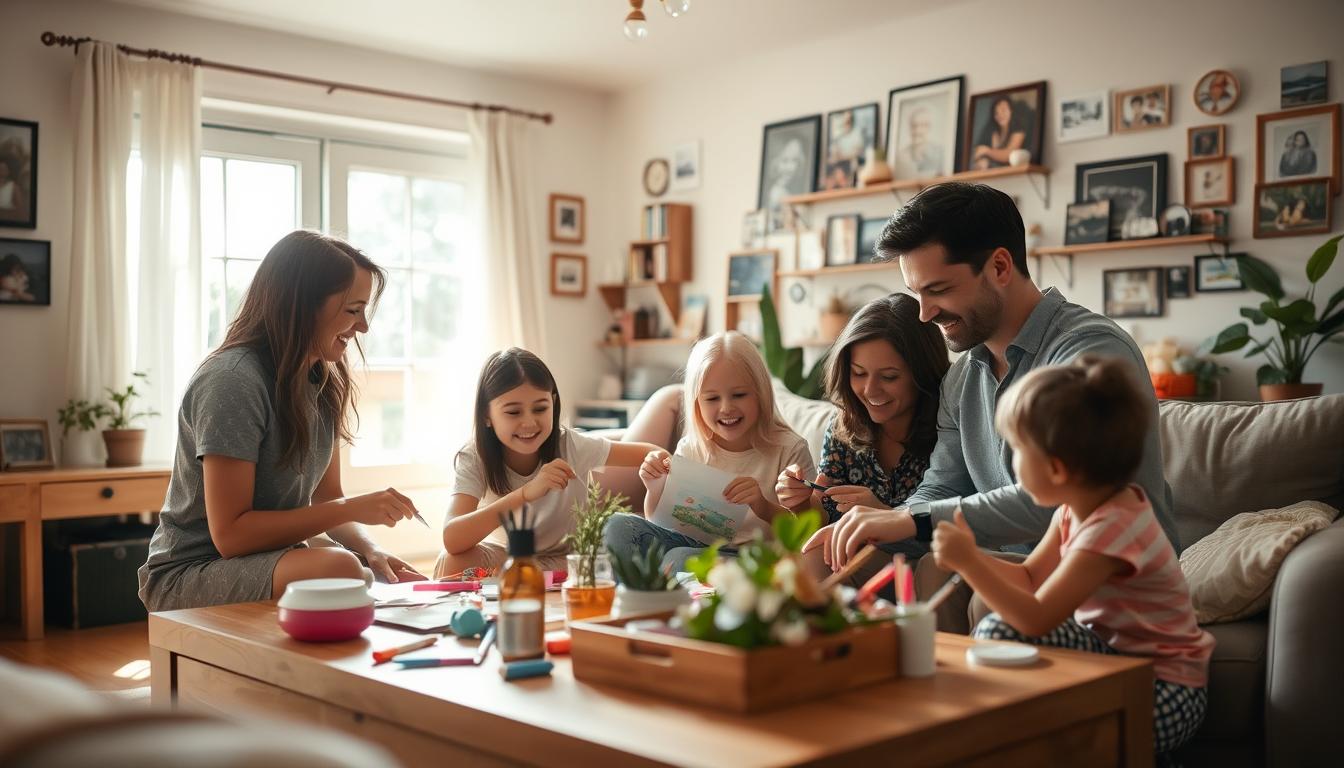
Love shapes families in many ways, like in blended homes. Building trust in stepfamilies takes time and effort. Blended family life can be complex, but it can work with the right approach.
Experts Ron Deal and Gary Chapman have over 30 years of experience. They say trust grows slowly. Their book, “Building Love Together in Blended Families,” offers tools like the 5 Love Languages model to help.
Ron Deal and Gary Chapman explain that trust grows slowly. They say blended families need a common language to connect. In the U.S., 16% of families are blended, but 60% face challenges like trust issues or sibling jealousy.
“Love means so much, and so many different things,” writes Deal. Trust starts with small steps, like one-on-one talks or using co-parenting apps. Families who focus on shared goals, like making traditions, often feel closer. Blended family formation is hard, but it’s worth it.
Understanding Blended Families: A New Beginning
Blended family dynamics shape the unique journey of merging households. Today, stepfamily statistics show nearly 40% of U.S. marriages involve at least one partner with children from prior relationships. These families often include step-siblings, half-siblings, and new parental roles requiring intentional effort for stepfamily adjustment.

Children in blended families typically take 3–5 years to adjust emotionally. Research shows boys may accept stepparents faster than girls, yet all kids need time to navigate loyalty conflicts and emotional bonds. Stepfamily adjustment also depends on parental patience—waiting two years post-divorce before remarrying boosts success rates.
“They have endless possibilities for play and learning. For me, they are also prompts for reflection, and an opportunity to think deeply about family, identity…”
Common challenges include differing parenting styles and competition for parental attention. Studies by Patricia Papernow highlight that stepparents often prefer stricter boundaries, while biological parents seek warmth. Open communication and shared routines, like weekly family dinners, help build trust. Consistent rituals reduce confusion and foster belonging.
Every blended family’s journey is unique, but understanding these dynamics empowers parents to create a supportive environment. Patience and collaboration are key to nurturing unity without forcing an instant “perfect” family image.
The Importance of Trust in Blended Families
Blended families make up 40% of U.S. marriages. Building stepfamily trust building is key for peace. Children and adults often carry past emotional wounds, making trust in relationships a daily challenge. Without it, even simple decisions can spark doubt or fear.
“We each have love languages, but our partner may expect love differently.”
Dr. Chapman’s insight shows how mismatched expectations strain trust. A stepparent’s effort might feel overlooked if it doesn’t align with a child’s need for quality time over gifts. Misunderstandings like this erode emotional safety, the bedrock of vulnerability in new family bonds.
Reliability matters most: keeping promises builds predictability. When parents consistently respect boundaries—like honoring biological parent time—children feel secure. Over 60% of blended families face heightened estate disputes, but trust in relationships reduces these risks. Small acts, like transparent communication about finances or parenting roles, create an environment where everyone’s needs are acknowledged. 
Emotional safety grows when family members know their voices matter. Trust isn’t automatic—it requires patience, active listening, and acknowledging past hurts without blame. This foundation turns uncertainty into a shared commitment, proving that even small steps today shape the family’s future together.
Steps to Build Trust Among Family Members
Building trust in a blended family takes effort and patience. Start with blended family communication practices like weekly family meetings. These meetings let everyone share feelings and solve problems openly. Make sure everyone, even the youngest, gets to speak without being cut off.
Plan stepfamily bonding activities that are fun and team-based. Try cooking meals together, playing backyard games, or going on weekend hikes. Activities like gardening or DIY projects also help. They make family members see each other as allies, boosting cohesion by 40%.
Try building trust exercises like “compliment circles” where everyone shares something they appreciate. Role-playing games can help practice solving conflicts. Small acts of reliability, like keeping promises, show consistency over time.

Respect everyone’s space while creating shared traditions. Let kids help design new rituals, like a “family game night” or holiday craft project. These rituals help everyone feel they belong. Celebrate small victories, like solving a minor disagreement calmly.
Trust grows with repetition and kindness. Celebrate small steps, like a teenager joining a family outing, as signs of progress. Building trust takes time, but steady effort leads to deeper connections.
Fostering Connections Among Siblings
Building step siblings bonding in blended families needs patience and effort. Sibling relationships in blended families often face challenges like step sibling jealousy or different loyalties. Open communication and shared activities can help ease tensions.
Scheduling regular game nights or outdoor adventures lets kids connect naturally. This approach helps them bond.
“Our circle represents a gathering of friends who want to listen, to learn and to love.”
Creating space for dialogue helps address emotions. Encourage siblings to express their feelings without judgment. Research shows 70% of families using family therapy saw improved communication.
Simple steps like assigning joint chores or hobbies can turn strangers into allies. A study found 75% of families struggle with emotional bonds. But structured activities, like cooking together or art projects, help bridge gaps.

Respect personal boundaries too. Letting kids keep some spaces private builds trust. Fair rules, like equal screen time or shared responsibilities, reduce conflicts over perceived favoritism.
When disagreements arise, guide them toward problem-solving instead of taking sides. Over time, these efforts nurture stronger sibling relationships in blended families. Remember, trust grows gradually—celebrate small wins along the way.
Role of Parents in Building Trust
Co-parenting in blended families needs a lot of effort to create stability. Biological parents must agree on rules and support each other. This shows children that adults are united, making them feel secure.
Consistent communication between ex-partners is key for a healthy family. It sets the stage for successful blended family parenting.
Stepparents have a big role by respecting boundaries. Building trust takes patience—avoiding comparisons is important. Start with small steps like shared hobbies or weekend outings.
Trust grows when stepparents focus on small wins. Dr. Karen Mapp’s research shows trust grows with open dialogue.
“Pragma is the love that endures through compromise and shared growth,”
This shows how effort strengthens family bonds. Using scripts for tough talks helps, like saying “We’re all learning together.” This makes uncertainty normal.
Sharing time with each child prevents jealousy. Regular one-on-one moments show each child is cared for.
Active listening in family meetings encourages openness. Schools that use these methods see better student outcomes. Shared activities like cooking or sports help build trust in the family.
The Impact of Patience and Time
Blended families do best when patience is key. The blended family adjustment period can take 2 to 7 years. This time lets trust grow and new bonds form.
Knowing the stepfamily integration timeline helps set realistic goals. The start can be tough as everyone finds their place. But, as they share experiences, they grow closer, moving from excitement to stability.
Agape, the most radical type of love according to ancient Greeks, is selfless and unconditional. This love is a catalyst for creating a new family identity.
It’s normal to face setbacks like arguments or resistance. But, celebrate the small victories, like a shared meal or solving a conflict. These small steps help bring the family closer together.
Research shows that regular routines and open talks help families stay strong. Counseling and taking care of yourself are also important. Remember, every small step counts in building strong family bonds.
Navigating the Role of Extended Family
Extended family relationships in blended families need careful attention. Each relative has a special role in the family’s story. Grandparents, aunts, and uncles may welcome the change or find it hard to adjust.
Open talks help set clear expectations. This way, everyone respects the family’s new boundaries.
Stepfamily holiday traditions are often a big deal. When traditions don’t match, starting new ones can help. For example, a joint Thanksgiving potluck can bring everyone together.
In Fort Worth, 75% of blended families who got counseling felt closer. This shows how help can solve problems.
It’s important to set clear boundaries to avoid confusion. Kids might feel torn between grandparents from different homes. Parents should talk about roles to avoid this.
Celebrating values like togetherness can unite the family. This is better than sticking to old traditions.
When disagreements happen, family meetings can help. By working together, extended family can become a support system. Small steps, like inviting cousins to game nights, build trust over time.
Handling Difficult Situations Together
Blended families often face unique stepfamily challenges like financial disputes or loyalty conflicts. When disagreements arise, open dialogue is key. Over 60% of blended families struggle to form cohesive units, but addressing issues head-on can turn tension into strength. For example, financial disagreements can be eased through shared budgeting plans or legal agreements.
Loyalty struggles, like children feeling torn between parents, require patience. Parents should reassure kids that love isn’t limited. Studies show 70% of children feel loss during transitions, so validating emotions helps everyone heal. Regular family meetings can reduce misunderstandings—research shows these cut conflicts by up to 50%.
“When we open the heart’s capacity for love, it becomes a force that unites even the most fragmented parts.”
When tensions escalate, family counseling for blended families offers tools to navigate complex dynamics. Professionals guide families through blended family conflict resolution, helping with discipline disagreements (50% of parents clash here) or resentment. Early intervention, like counseling before marriage, helps 80% of families build stronger bonds over time.
Blended families aren’t fixed overnight. Challenges like financial stress or stepfamily challenges test even the strongest intentions. But by facing problems together—through communication, counseling, and patience—families can transform difficulties into opportunities for growth. Every step forward strengthens trust, proving love can thrive in its many forms.
Celebrating Milestones as a Blended Family
Blended family traditions help families bond over time. Small steps like weekly dinners or holiday rituals create shared memories. Stepfamily celebrations don’t just mark events—they build trust. Birthdays, anniversaries, or even overcoming small challenges become moments to honor growth.
Research shows it takes 5-7 years for blended families to settle. During this journey, milestones like first family vacations or joint holiday celebrations matter. Imagine a stack of dolls, each layer representing a new shared experience. Over years, these layers form a strong foundation.
Just as love has many forms, traditions can reflect the family’s evolving story. Game nights, shared hobbies, or even a family scrapbook can become symbols of progress.
Blended family success stories show that patience pays off. Families who mark milestones together often report stronger bonds. Open communication and mutual respect remain key.
Celebrating small wins—like a calm family meeting or a child’s improved grades—keeps motivation high. Even after years, rituals like weekend hikes or annual photo albums reinforce belonging.
While challenges may arise, focusing on shared goals helps. Therapists suggest creating traditions that honor both old and new family histories. By acknowledging individual and collective achievements, families turn “what if” moments into “we did it” memories.
The journey takes time, but every milestone brings the family closer to a home where everyone feels seen and valued.