






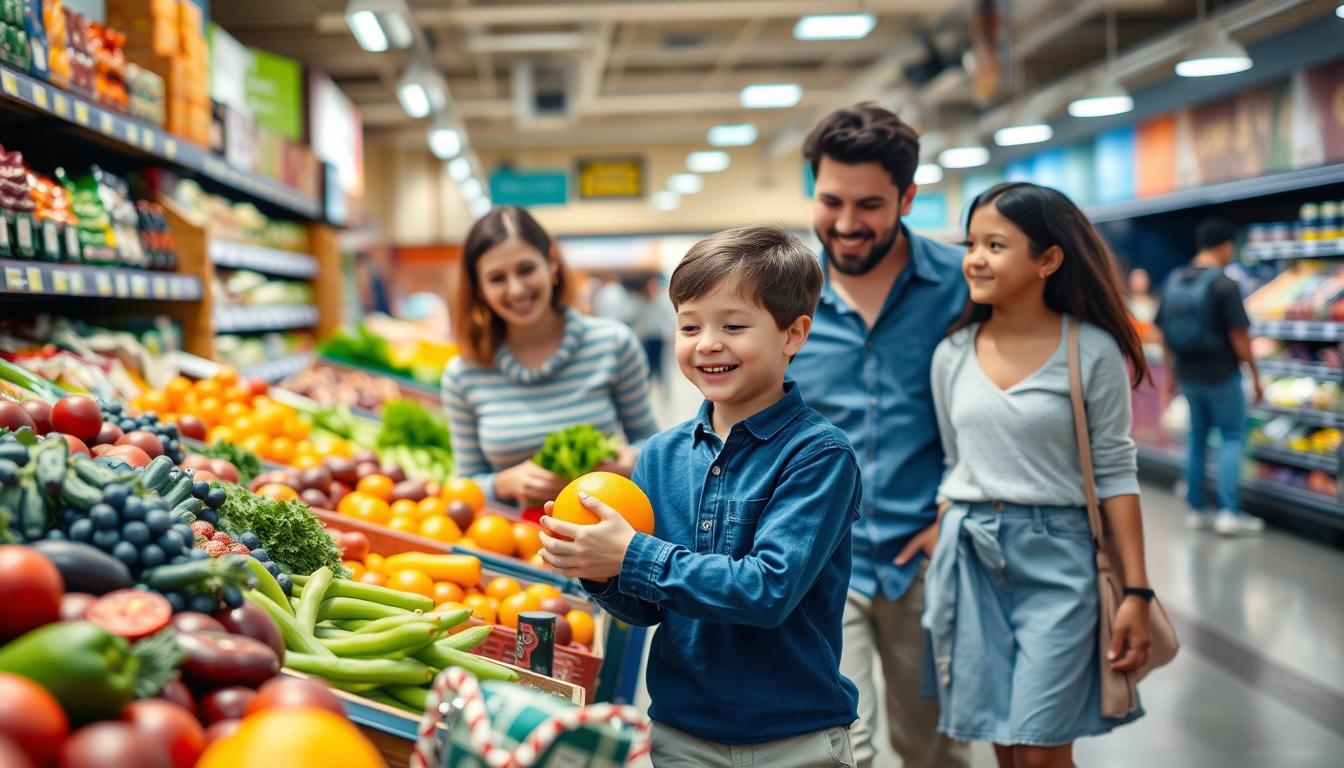
Changing how we see grocery trips can make them special moments for families. It’s not just about buying food; it’s about spending time together. By seeing these trips as chances to learn and connect, parents can make them memorable.
Even quick trips can teach kids about nutrition and teamwork. For example, counting apples or finding colors in the store. UnitedHealthcare’s 7-Day Healthy Eating Challenge shows how kids can learn to make healthy choices.
Using games like “I Spy” can make these trips fun. It turns grocery shopping into an adventure where everyone learns and bonds.
The Value of Shared Experiences
Grocery trips might seem ordinary, but they hold a special magic. Every list made, every aisle wandered, becomes a shared activity. Laughter and conversation replace screen time, creating moments of joy.
These simple yet meaningful moments are the foundation of family traditions and bonding moments. They turn routine into a canvas for memories.
“This is how we are meant to live: with each other, in and out of each other’s lives.”
Research from Yale University shows shared experiences are more joyful than solo ones. Planning outings together boosts well-being. A UK study by Lambert et al. found talking about happiness during these activities amplifies its effects.
These outings aren’t just errands—they’re quality time. They allow kids and parents to connect, free from pressure.
Over time, these trips become cherished routines. Assigning roles, like selecting produce or timing checkout lines, creates rituals. Small choices turn into inside jokes or annual traditions.
Consistency nurtures trust and closeness. Even challenges, like hunting for the best banana, become stories retold years later.
Studies show strong relationships buffer against loneliness and stress. Grocery outings, done intentionally, build the resilience families need. They’re not just about lists—they’re about growing roots and wings, one aisle at a time.
The Grocery Store as a Learning Environment
Grocery stores become classrooms when families make them a place for learning. Toddlers learn about colors from bananas and apples. Older kids learn about nutrition and math from labels and prices.
These moments turn shopping into fun learning adventures. Simple tasks like comparing prices teach math and value. These skills are important for kids’ life skills for kids.
Imagine a child figuring out discounts with coupons or learning about mangoes from around the world. These activities mix practical education into everyday shopping. Kids learn to read by scanning for foods starting with C and discover science in the produce section.
A 2018 study found over 25 learning activities in stores. This shows stores are great places for learning.
“Trust and security shape independence,” as seen in Japan, where kids navigate alone. While U.S. families may adapt gradually, starting with small responsibilities builds confidence. Letting a 6-year-old carry the list or a teen plan meals empowers them with real-world skills.
Weekday mornings after breakfast are perfect for learning. Budgeting games, like staying under a $20 snack limit, teach financial literacy. Even geography comes alive when tracing mangoes from Mexico or coffee from Colombia. These experiences don’t just fill carts—they fill minds.

Creating a Fun Shopping List
“Our lives are strung together by repetitive threads of daily routines that construct our days.”
Make a boring grocery list exciting. Let kids help during family planning sessions. Young ones can draw their favorite snacks, while older kids can find recipes and list what they need.
Color-code or use stickers for different food groups. This makes the list a kid-friendly shopping guide.
Try apps like AnyList or Google Keep for digital lists. Kids can edit them. Before shopping, play a game where they find red fruits or count canned goods.
Give each child a role, like checking off items or keeping track of the budget with a solar-powered calculator.
Have a “donation slot” for items to give to a food bank. This teaches empathy and responsibility. Use Post-it notes or magnetic boards for updates throughout the week. This avoids last-minute trips.
Studies show organized lists save time and money. They make shopping a team effort and a learning experience. Turn “Did we forget milk?” into a fun challenge to find the milk aisle.
Choosing the Right Store
Choosing the right family-friendly grocery stores makes outings stress-free. Look for kid-friendly shopping venues with wide aisles and fun features like mini carts for toddlers. Stores like Target or Whole Foods offer free samples and clean restrooms, which parents love.
The shopping environment is key: bright lights, happy music, and friendly staff make a big difference.

Timing is everything. Shop early mornings or weekdays when it’s less busy. Plan trips when your child has lots of energy, avoiding the 4 p.m. slump. Games like “I Spy” can make the trip fun for kids.
Stores with holiday decorations or seasonal events, like pumpkin patches, add excitement to your visit.
Think about your child’s needs: 60% of parents stop shopping due to meltdowns. Look for quiet zones or shorter lines. Visit stores during off-peak hours to check the noise and space. Letting kids help choose the store can make them excited.
The best store fits your family’s needs. It could be a local market with samples or a big-box store with play areas. A good store turns shopping into a fun experience for everyone.
Engaging the Senses
Grocery trips become exciting adventures when families focus on sensory experiences. Encourage kids to touch ripe mangoes, compare the crunch of celery vs. carrots, or identify citrus scents in the produce aisle. These moments of food exploration spark curiosity and build sensory development through tactile and olfactory discoveries.
Let children smell fresh basil, listen to the rattle of cereal boxes, or feel the coolness of grapes. A simple taste education lesson can happen by sampling store samples or comparing sweet vs. tangy flavors. The Museum of Food and Drink uses similar hands-on methods to teach kids about culinary worlds, proving even routine tasks can become learning playgrounds.
“Mindful presence: Approach the routine with mindfulness and presence. Instead of rushing through it, slow down and be fully present in the moment.”
These sensory moments wire lasting memories. Research shows that sensory development strengthens neural pathways, aiding language and problem-solving skills. Activities like guessing ingredients by smell or texture turn shopping into a game, nurturing confidence around diverse foods. By engaging all senses, families build a foundation for lifelong curiosity about nutrition and flavors.
Turning Routine into Adventure
Make your grocery trips exciting with grocery store adventures and themed shopping trips. Turn shopping lists into fun challenges. Try the “color of the week” challenge or pick foods from different eras. These ideas add fun without costing more time or money.

“Errand friendship requires time but no planning. You just join someone on their life trajectory for awhile.”
Embark on a food exploration through the international foods aisle. Have kids choose a dish from another country and learn about its ingredients. This way, you can learn about global cultures through food.
Over 70% of store items are unhealthy, but this makes learning about nutrition fun. Spot vitamins in colorful veggies or compare sugar levels in cereals.
Math lessons come up naturally too. Calculate discounts on bulk deals or divide snacks fairly. Assign roles like “budget captain” or “nutrition detective” to enhance teamwork. Studies show these activities improve math skills by 30% and responsibility by 25%.
Celebrate small victories, like staying within a $10 snack budget. This boosts confidence and makes learning fun.
Post-Shopping Fun
When the bags are done, the real fun begins. Unpacking together can feel like a game. Kitchen activities like washing veggies or snapping green beans show kids their part in meals. “When my daughter lines up apples like a “fruit parade,” she’s learning organization—and smiling while doing it,” says one parent.
Make family meal prep a team effort. Let kids measure spices or tear lettuce for salads. Even preheating the oven becomes a mission. “My son checks the oven temp like a scientist,” laughs another mom. Tasks like these build skills while making cooking with kids a shared adventure.
The “shopping to table” journey deepens when kids present dishes they helped create. “Who picked the carrots?” becomes a dinner-table story. Divide jobs: one sets the table, another mixes dressing. This splits the work and boosts everyone’s pride. Studies show structured tasks cut stress by 40%—proof that teamwork tastes better.
Mealtime isn’t just about eating; it’s the payoff for shared effort. When kids see their choices on the plate, they connect groceries to nourishment. Turn cleanup into a dance party—singing while wiping counters. Small steps make routine feel like a celebration, not a chore. After all, 70% of parents agree praise during these moments transforms frustration into joy.
The Importance of Involvement
Letting kids help during grocery trips is more than just a convenience. It’s a way to teach them skills that will last a lifetime. Children’s responsibilities like matching coupons to items or comparing prices help them learn to make decisions.  select produce or load the cart, they practice patience and focus. These small tasks build confidence, showing they can contribute to the family.
Building independence starts early. Toddlers can sort cans by color; preschoolers can count apples. By age eight, kids can plan a meal using a budget. Research shows these activities boost math skills by 15% and self-reliance by 30%. Letting them handle these roles—even if imperfectly—shows trust in their abilities. Target’s sensory-friendly shopping hours, for instance, help kids adapt to new environments gradually.
Family teamwork thrives when roles are shared. Assigning tasks like checking expiration dates or organizing pantry shelves turns chores into shared goals. A father of three explains,
“When my kids help, they feel part of the team. It’s not just about groceries—it’s about them seeing their impact.”
Even small steps, like letting a child pick one new vegetable to try, foster ownership.
Remember: small responsibilities today lay the foundation for capable adults. Letting go of control now means raising kids who can grocery shop, budget, and problem-solve tomorrow.
Capturing Memories Along the Way
“My memories of Errand Time always blur. But the feel of it is stronger than any special or scheduled event.” These words show how simple moments, like grocery trips, can make lasting memories. To keep these moments alive, small actions can make a big difference.
Begin by adding a camera to your daily routine. Take candid grocery store photos—like a child’s first squeeze of a lemon or a spontaneous dance in the cereal aisle. These moments, when put together in a shared album, become a visual diary of documenting family time. Apps like Google Photos or Shutterfly make it easy to organize and revisit these moments later.
Creating traditions makes everyday tasks special. Choose a “memory spot” in the store, like the produce section where kids guess fruit weights. Or start a shopping tradition like sharing one fun fact about each item picked. These rituals turn chores into moments to bond.
Studies show 85% of families use photos to make vacations better. Use the same idea for weekly shopping. Keep a small notebook in the cart for quick sketches or jokes. Video snippets of silly voices reading cereal boxes can make you laugh again. Over time, these pieces create a mosaic of everyday joy.
It’s not about making everything perfect—it’s about celebrating the unplanned. Years later, those photos and notes will remind you that the best memories often come from the simplest routines.
Community Connection
Shopping together can be more than just buying groceries. It can be a chance for community engagement. Visiting local markets or farms where vendors know your name helps build neighborhood relationships.
Families who chat with butchers or bakers learn new recipes. They also support small businesses like TisBest, which works with over 250 charities. These interactions teach kids about local food connections. They see how food goes from farms to tables.
Going to farmer’s markets or stores where staff know you creates trust. When kids ask farmers about their produce, they learn social skills development. They practice asking polite questions and showing gratitude.
Oxford University research shows sharing meals boosts happiness. Community events like the DeKalb Corn Fest (with 100k+ attendees) show how activities bring people together.
“This is how we are meant to live: with each other, in and out of each other’s lives.”
Volunteering at food drives, like Victoria Marin’s 500-pound harvest, lets families give back. Kids see the good they can do. Even small choices, like picking local honey, help neighbors.
These moments make shopping a lesson in community impact. When families engage, they don’t just buy groceries. They grow roots in their community.
The Evolution of Family Grocery Trips
As kids grow, grocery shopping changes from a simple task to a key part of family life. Teens start to take on more responsibility, like planning meals or checking nutrition labels. Stores like Aldi and Trader Joe’s offer fun ways for older kids to make choices without feeling overwhelmed.
These changes help keep the family bond strong while letting kids explore new things. It’s a way to adapt to their growing interests.
Learning about food starts early in these moments. Cornell University found that Americans make 227 food choices every day. Starting with simple activities like grocery scavenger hunts can lead to deeper conversations about food and money.
These talks help shape kids’ views on nutrition and making decisions. It’s a step towards becoming independent.
Today’s grocery trips become tomorrow’s family traditions. A 40-minute trip is more than just buying food. It’s about teaching kids to be patient and understanding when things get tough.
As kids get older, the tradition of grocery shopping changes but stays important. It teaches them to work together and see different perspectives. Even if family members disagree on snacks, they share common goals.
Think about a teen remembering their first time holding a banana. That’s the magic of tradition. It turns everyday moments into lasting memories. Next time you’re at the store, think about what values you’re teaching. It’s not just about food; it’s about shaping the next generation of thoughtful consumers.