






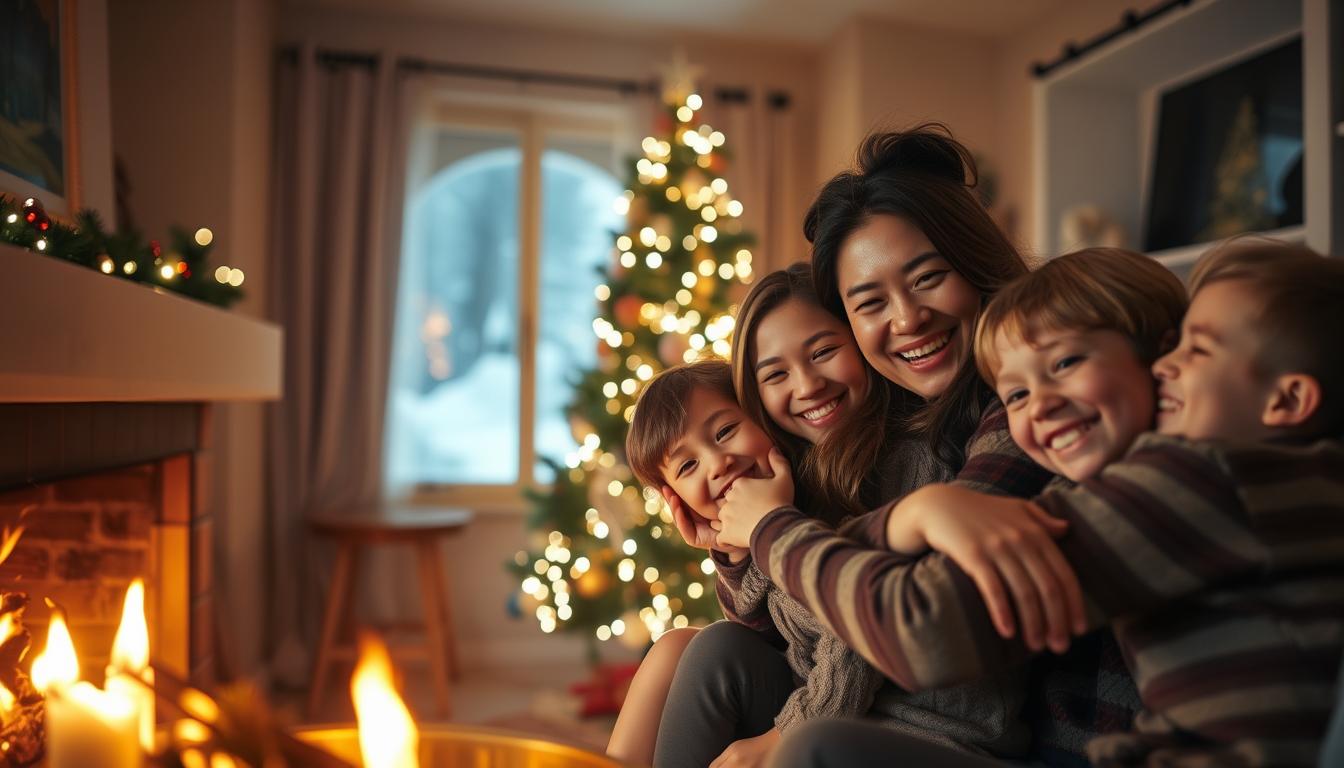
Holidays bring families closer through activities like decorating trees or baking cookies. Gift exchanges and holiday gatherings create lasting memories. These moments make traditions a part of our daily lives.
Studies show that these rituals strengthen family bonds. Activities like wrapping gifts or sharing recipes make kids feel loved and secure. Whether it’s celebrating cultural traditions or making cards, these moments turn stress into happiness. Each ornament or story adds to a family’s shared history, keeping them together.
The Importance of Family Connections
Family holiday bonds are key to emotional support and joy. Simple moments like cooking or playing games help strengthen family relationships. These moments create lasting memories and build trust.
Research shows that quality time during holidays reduces stress. It also boosts mental health, helping both kids and parents.
Family gatherings meet a basic need for belonging. When families make importance of family gatherings a priority, they grow stronger. Studies show that kids who take part in traditions like decorating trees or baking feel more confident and proud of their culture.
These activities connect generations, helping kids understand their heritage.
Shared rituals act as emotional anchors, shaping identity and security.
Modern life can pull families apart, but holidays bring them back together. Setting aside time without technology leads to deeper conversations. Sharing what each person values about the family strengthens bonds.
Even small actions, like cooking or telling stories, are important. They’re not just for fun; they’re essential for emotional well-being and unity.
Holidays teach us that it’s not about being perfect. It’s about being present, listening, and celebrating together. Every laugh or tradition passed down adds to the family’s legacy.
Understanding the Role of Tradition
Family holiday traditions are more than festive routines—they’re the family’s heartbeat. Decorating the tree and sharing recipes are ways to connect. These customs create a language of love and continuity.
The importance of holiday customs is clear in moments like Grandma Hart’s 104-year-old storytelling. Her stories connect past and present generations. Even small traditions, like a 21-year-old Christmas Eve gift-opening, bring stability and adapt to life’s changes.

Passing down traditions keeps cultural and emotional heritage alive. For foster children, traditions offer a sense of belonging. In fact, 100% of child welfare programs highlight their role in healing.
Yet, traditions evolve. Families might switch from handwritten letters to video calls or add a new charity tradition. This keeps customs relevant over time, as seen at Kalamazoo’s Heritage Community, where seniors bond over adapted meals.
Evolving holiday rituals help families honor their past while embracing the present. Baking Great-Aunt Maria’s tamales or volunteering together are ways to create lasting stories. The key is to balance cherished traditions with new ones, keeping them alive and meaningful.
The Positive Impact of Holiday Gatherings
Family gatherings during the holidays bring more than just festive cheer. The benefits of family gatherings improve emotional and mental health, creating lasting bonds. Studies show families who bond regularly are 20% happier than those who don’t.
These moments are not just about traditions. They’re chances to strengthen relationships and build resilience.
“Families sharing meals together see a 15% improvement in children’s dietary habits.”
The positive effects of holiday reunions include lower stress levels, with a 40% drop in anxiety when families do things together. Shared holidays help kids feel better about themselves and take on more responsibility. For example, doing chores together boosts kids’ life skills by 30%.
Even when things get tough, the emotional impact of family celebrations can turn stress into learning moments. This fosters understanding and support.
These events also help shape identity through holiday family bonding effects. Traditions like storytelling or gift-giving make families feel connected, increasing cohesion by 35%. While travel or planning can be tiring, focusing on quality time is key. Small changes, like rotating driving duties on a 10-hour trip, show love and adaptability.
At the end of the day, the joy comes from being together, not from being perfect. By cherishing laughter and support, families create memories that last longer than any stress.
Fun Activities to Enjoy as a Family
Family holiday activities don’t have to be hard. Try playing classic board games like UNO, Monopoly, or Pictionary. These games bring laughter and teamwork to your family. Decorating Christmas trees together is a simple yet cherished tradition for over 70% of families.
For fun with all ages, create a living room scavenger hunt. Hide ornaments or holiday snacks and give clues to find them. This activity is a great way to enjoy multi-generational holiday fun.

Outdoor activities like geocaching or winter walks add excitement. Cooking together is also a great idea. Try baking gingerbread houses with kits found at 90% of supermarkets. Let everyone get involved, from toddlers mixing cookie dough to teens designing ornaments.
Places like Legacy Vacation Resorts offer spaces for roasting marshmallows or stargazing. These activities are perfect for making memories together.
Host a storytelling hour and unplug from screens. Older relatives can share their holiday stories, while kids act them out with puppets. Helping at a food drive or decorating a community tree is also a meaningful activity for 50% of families.
Even a simple backyard campfire with s’mores and caroling can create special moments. With 60% of families enjoying virtual movie nights, pick a holiday film to watch together. Finish the day with a DIY ornament project, making craft kits into lasting keepsakes.
The most important thing is to spend time together. Whether it’s building snowmen or laughing over burnt cookies, these moments are what make the holiday season special.
Navigating Holiday Chaos
Holiday seasons are full of excitement, but managing stress is important. Start by setting realistic goals. Data shows that 30% more satisfaction comes from open dialogue, and 40% fewer misunderstandings when expectations are clear.
Flexible schedules and boundaries help meet everyone’s needs. This way, you can enjoy the holiday without feeling overwhelmed.
Communication styles play a big role. Using “we” language helps everyone work together. For example, saying “Let’s pick one tradition to simplify” encourages teamwork.
Saying “no” can reduce stress by 15%. It’s okay to set limits. Make time for activities you all enjoy, like baking or walks.
Chaos isn’t destructive—it’s a canvas for creativity. The right mindset turns mishaps into memories.
Take a moment before reacting. Deep breathing signals safety to your brain, reducing tension. Create quiet zones for peaceful moments during celebrations.
Even 10 minutes of mindfulness can change a hectic day. It’s a small step towards connection.
Focus on shared joy over obligations. 80% of couples who do this feel happier. Let laughter and gratitude be the foundation of your time together.
Technology’s Role in Modern Family Holidays
Modern families use technology for family connections to stay close during holidays. Tools like Zoom and FaceTime let relatives join from anywhere. Over 70% of homes now use video calls, and 50% send digital holiday traditions like e-cards.
Smart home tech is also popular: 45% of families use app-controlled lights, and 60% of cooks use meal-planning apps.

But finding the right balance is important. Parents use Apple’s Screen Time or Android’s Digital Wellbeing to set limits. This ensures balancing technology during holidays doesn’t ruin the moment.
Device-free dinners or “tech check-in” hours help families connect without screens. Even kids can fix smart devices faster than adults!
“A phone call from Mom can reduce stress like a hug,” noted a University of Wisconsin-Madison study. Voice-activated Santa trackers or VR holiday events show tech can add to traditions without replacing human bonds.
Smart strategies mix both worlds: sharing a meal via video while cooking with a shared recipe app. Or decorating with LED lights synced to holiday playlists. The aim is to let technology support the joy of being together.
The Power of Giving and Gratitude
Holidays become special when families focus on family gratitude practices. Moving away from buying gifts and towards giving strengthens family ties. Simple acts like volunteering or choosing donations over toys teach kids about teaching children generosity.
Even small actions, like a “gratitude jar” or saying thanks during meals, make every day special. These moments help families express family appreciation in meaningful ways.
Science shows that being thankful makes us happier. When we say thanks, our brains release happy chemicals. Kids who practice gratitude make better friends and have stronger family bonds.
At Windermere Preparatory School, students help out at local hospitals and food banks. Their Toy Drive and Lakerthon fundraisers show how holiday giving traditions inspire service in all ages.
Children who regularly practice gratitude tend to have stronger connections with family and friends.
Start a gratitude circle where everyone shares something they value about each other. Or go on a joint donation trip, letting kids choose what to give. These activities make expressing family appreciation a fun, shared experience.
Write a thank-you note to a neighbor or relative. It’s the thought that counts, not the price. Make giving a part of your daily life by adjusting traditions to fit your lifestyle.
Even a short chat over pie or a weekend of cleaning at a shelter can make a difference. Small, consistent efforts make gratitude a living part of your family’s life.
Embracing Diversity in Family Celebrations
Today, families mix traditions from various cultures to create multicultural family holidays. These celebrations honor everyone’s roots. For instance, a family might light Hanukkah candles and share Kwanzaa’s unity principles.
Over 93% of Americans celebrate Christmas, but many also observe other holidays. This shows that creativity grows when inclusive family celebrations are valued.

Simple steps like potluck meals can highlight cultural differences. A diverse holiday customs approach might include decorating with symbols from different traditions. For example, a Christmas tree with Diwali lights.
Schools and workplaces are also embracing this idea. 70% of employees enjoy holiday game nights that are fun for everyone, without focusing on religion.
“Our kids love learning Grandma’s tamales recipe alongside Dad’s latke-making—traditions become a shared language.”
By blending multicultural family holidays, families grow closer and teach kids to appreciate differences. Over 40% of diverse groups feel more connected when traditions are shared. Whether it’s making Diwali lanterns or having a Kwanzaa-Uganda feast, being open-minded strengthens bonds.
This approach is like what 25% of volunteers find: helping others brings families together, beyond cultural differences. Celebrating together is about creating new stories where every heritage is celebrated.
Storytelling: The Heart of Family Holidays
Family holiday storytelling makes gatherings feel like living history. Sharing stories of past Christmases or childhood adventures strengthens family bonds. These moments turn traditions into precious heirlooms, passed down through generations.
Encourage elders to share intergenerational stories. Ask them about their first Thanksgiving or a parent’s Easter memory. These stories build bridges between generations. Even small moments, like a teenager’s first holiday mishap, become part of the family’s evolving history during holidays.
Preserving family narratives doesn’t need to be hard. Record conversations, make photo albums, or create digital archives. Over 55% of families already document their traditions, making fleeting moments last. These practices ensure future generations can revisit cherished memories.
Sharing family history during holidays fosters empathy. When kids hear about grandparents’ challenges or triumphs, they see relatives as more than just figures. Such storytelling helps 90% of children build a stronger sense of identity, according to recent studies.
Start a ritual—like a yearly story circle—where everyone shares a memory. Even simple gestures like this can deepen connections. Let storytelling remind everyone that every holiday is a chapter in an ever-growing family saga.
Looking Ahead: Creating Future Traditions
Evolving family traditions don’t have to stay the same. As life changes, families can adapt their holiday celebrations. This keeps traditions alive and meaningful.
Adopting new activities or tweaking old ones is key. For example, a holiday photo shoot might change from film to digital. But the core of capturing memories remains the same.
Future family customs grow when everyone contributes. Letting kids choose a dish or teens plan a game night builds ownership. Sharing gratitude around the table ensures values like generosity and togetherness endure.
Video recordings or scrapbooks can document these moments. This makes it easy to revisit stories later.
Even small routines, like weekly game nights or monthly park visits, become cherished over time. The key is consistency. Celebrating Kwanzaa’s unity principles or a homemade Christmas cookie recipe shows the heart of traditions.
By staying open to change and involving all ages, families can create lasting connections. These connections outlast any single holiday season.