






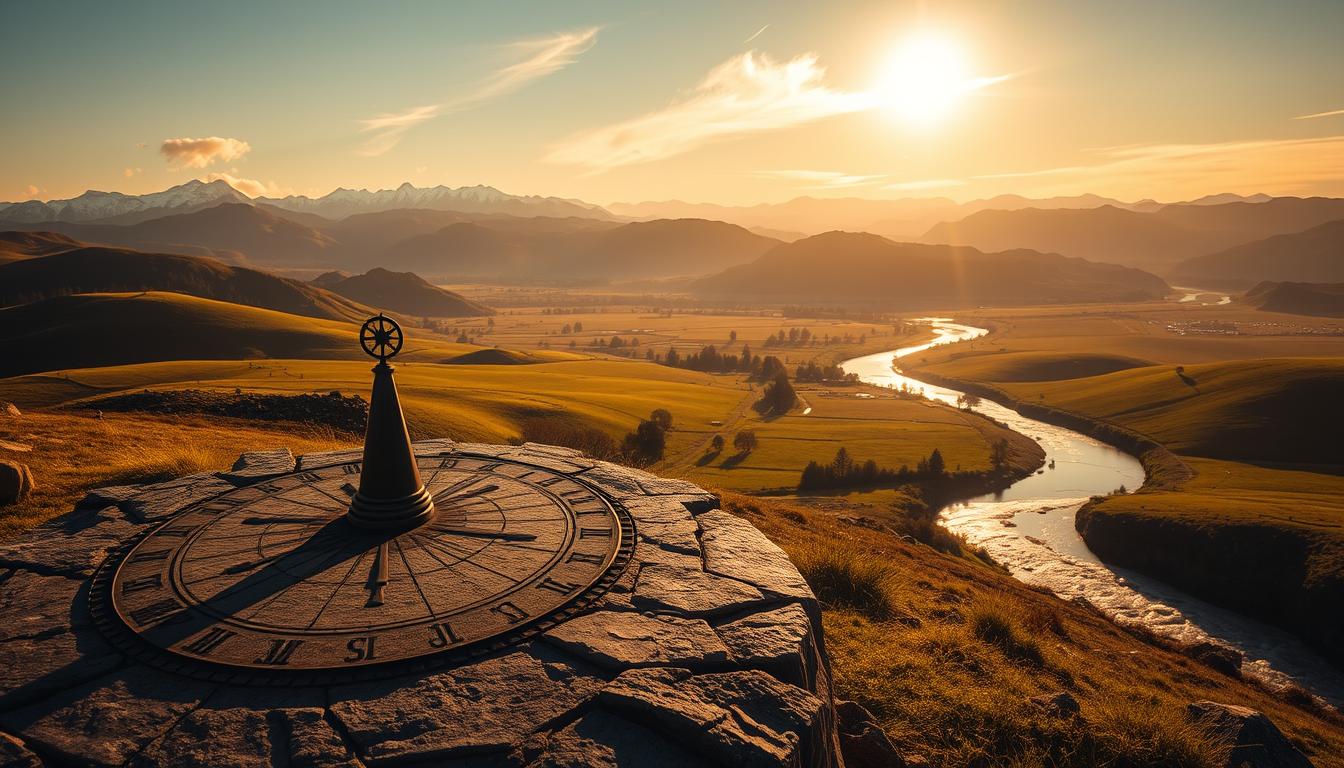
Have you ever felt tired at sunset or woke up with the sunrise? Our bodies are connected to a natural clock that follows light patterns. For centuries, humans used daylight to tell time before clocks were invented. Now, science shows how light affects our time perception through the circadian rhythm.
This rhythm is a 24-hour cycle that controls our body’s functions. It affects everything from our bowel movements in the morning to our focus at night.
Every morning, light resets our internal clock. By 6:30 AM, our colon is most active, matching the morning light to start digestion. Afternoon sunlight makes us more alert, and evening light tells our body it’s time to sleep.
Changing this balance, like during daylight savings, can be risky. Studies show car accidents increase the Monday after clocks spring forward. This shows how light’s power affects our daily lives.
Our bodies have trillions of tiny clocks, all controlled by a master center in the brain’s hypothalamus. This system uses light to manage hormones, metabolism, and how we process medicines. From sunrise to sunset, light reminds us of time’s passage, a universal language.
The Science of Light and Perception
Photoreceptors in your eyes act as nature’s sensors. They detect light and send signals to your brain’s internal clock. Different light wavelengths trigger unique responses. Morning sunlight has more blue light, which boosts alertness.
When evening comes, shorter exposure to blue light lets the pineal gland start melatonin production. This signals it’s time for bed.
Daylight’s full spectrum tells your body it’s time to be awake. At night, dimmer light slows melatonin production only when blue light effects fade. Modern screens emit artificial blue light, confusing these signals and delaying sleep.
The pineal gland relies on natural light cues to keep rhythms in sync.
Photoreceptors also sense light intensity. Bright mornings reset sleep cycles, while evening dimness preps the body for rest. Understanding how light wavelengths interact with these systems helps align daily routines with natural light patterns. This science shows why sunlight matters for energy and restful nights.
Morning Light: A New Day Begins
Every sunrise is a chance to start anew. The early light helps us become more productive and focused. The sky changes from cool blues to golden hues, showing us a fresh start is coming.
Scientists say starting your day with the sunrise helps you feel more alert. This is because it aligns our body’s clock with the daylight.

Biblical texts also talk about starting fresh every morning. In Hilton Head, the sun rises at 7 AM, lighting up forests and beaches. Hunters like Scott find hidden details in nature with the first light of dawn.
Morning walks or meditation in the early light can make us feel better. The sunrise paints the sky with vibrant colors, reminding us of endless possibilities. As 2 Corinthians 5:17 says, every morning is a chance to feel like we’re starting anew.
By embracing the dawn, we honor its promise of renewal. Whether through yoga or quiet prayers, we celebrate the light’s power to refresh us. The science and symbolism are clear: mornings are nature’s way of saying, “Start again.”
Midday Sun: Peak Productivity
At solar zenith, sunlight casts crisp shadows patterns, bathing spaces in zenith lighting’s unrelenting glow. This peak illumination has long symbolized high noon’s productivity. Farmers, builders, and coders alike maximize daylight productivity when shadows shrink to faint lines.
Ancient cultures tracked this midday marker, using it to guide tasks requiring precision.
Biologically, midday energy levels hit a natural high. Studies show structured work blocks during this window boost output. Even morning risers like Tim Cook and Sallie Krawcheck schedule critical tasks when daylight intensity peaks.
Our bodies’ cortisol surges align with this sunlit sweet spot.
High noon symbolism persists in work habits globally. Mediterranean siestas or Silicon Valley’s caffeine-fueled sprints both honor midday’s dual edge: intense energy paired with heat challenges. Modern workers can harness this cycle by reserving complex tasks for zenith hours.
Let shadows’ shortness mirror mental clarity. Let the sun’s peak guide your focus—its brightest hours may hold the key to finishing projects under daylight’s watch.
Evening Glow: Transitions and Reflections
As the sun sets, the world becomes peaceful. Warm colors spread across the land, creating long shadows. This marks a time for calm and reflection.

Many cultures celebrate the sunset with special rituals. They might pray or gather with lanterns. These moments honor the transition from day to night.
Science backs up the beauty of this time. Studies show that evening light helps us relax. Venus often shines brightly, reminding us of beauty’s fleeting nature.
Watching the sunset can make us more mindful. The Moon’s glow or Jupiter’s light in the sky can amaze us. Taking a moment to appreciate the colors can help us feel more grounded.
Nature’s light show teaches us about balance. The colors of dusk reflect the ups and downs of life. By embracing these moments, we can find peace in the evening.
Nightfall: The End of the Day
Nightfall has always been the end of the day in nature, guiding us to sleep. But modern lights mess with this natural rhythm. Isaac Asimov’s “Nightfall” tells of a planet where six suns keep it bright, until a rare eclipse brings darkness.
This darkness is a sign of chaos for Lagash’s people, who face collapse every 2,049 years. This is a stark contrast to our need for light.
Today, screens and streetlights keep it light all day and night. Over 90% of Americans stay up late because of these lights. This messes with our sleep patterns.
Asimov’s Lagashians and we today struggle with the arrival of darkness. Sunset anxiety affects many, making them restless as the light goes down.
“Civilizations that forget darkness lose touch with their foundations,” warns the story’s scientists, mirroring today’s sleep disruptions.
Getting back to nature’s cycles can help. Dimming screens and lights in the evening, or enjoying quiet moments, can reconnect us. Stargazing also helps us remember the night’s importance.
Letting darkness take its place helps us rest better. This is like Hari Seldon’s plan to rebuild societies. Finding a balance between artificial light and natural routines can heal us.
Seasonal Variations in Light
Seasonal rhythms shape life on Earth, with photoperiod changes affecting everything. In places like Seattle or Devon, winter days get much shorter. This change can lead to mood swings and affect our routines.
Shorter days can cause seasonal affective disorder, linked to less sunlight. But these changes also inspire cultural traditions. For example, solstice celebrations and daylight saving time adjustments.

Daylight saving time adds more evening light, balancing out the loss. Solstice celebrations, like the winter solstice, mark important moments in nature. The Japanese have 72 microseasons, each with its own natural signs.
These rhythms influence our behavior. Winter’s shorter days might make us want comfort foods. Spring’s longer light encourages us to garden and be outdoors.
Winter’s calm offers clarity, not just cold—a time to reflect before spring’s renewal.
Understanding photoperiod changes helps us manage seasonal shifts. Knowing these patterns can make the transition from summer to autumn easier. Whether it’s adjusting for daylight saving time or celebrating solstices, following nature’s rhythms brings harmony.
Cultural Perspectives on Light and Time
Light and time are deeply connected in many cultures. For example, the Jewish Hanukkah menorah is a symbol of light and faith. It marks eight nights of spiritual reflection. In Islam, prayer times are set based on the sun’s position, blending faith with timekeeping.
Light festivals like Diwali in India and Japan’s Fujiyama Gongen-gamae sunrise gatherings celebrate dawn. These events honor renewal and guide daily life. In Japan, morning rituals at Mount Fuji’s Torii Gate bring communities together. Spain’s flexible “mañana” attitude contrasts with the U.S.’s strict time views.
Projects like the UN’s 2015 International Year of Light show light’s universal importance. Ben-Gurion University’s 2017 symposium also explored light’s cultural meanings. Even in Madagascar, where buses leave when full, light marks the rhythm of life. These examples show that light’s meaning varies across cultures.
Light in Art and Literature
Artists and writers see light as silent storytellers. Paintings of light like Monet’s “Rouen Cathedral” series show time’s passage through color changes. Turner’s seascapes capture the beauty of dawn and dusk.

Writers use literary light metaphors to explore deep themes. Shakespeare’s sonnet 73 sees aging as a “dark night” after a “day” of youth. Poet Martin Rock’s Dear Mark combines words with Rothko’s abstracts, showing light’s impact on us.
Rock and Phillip Ischy’s Fish, You Bird project took 6 years. It uses a renga-jo style to express time through words and art.
“The colors felt alive, like time passing,” noted reader Liz Talbot. This shows how light in art reflects our lives. Films and photos use temporal imagery to set scenes, as the New York Times highlighted.
Small presses keep this tradition alive. Rock’s 18-poem selection from 100 drafts distills time’s essence. Each stroke or stanza marks a moment we’ll never see again, proving light’s universal language for time’s mystery.
Mindfulness and Light Awareness
Starting with light meditation is easy. Just pause and look at sunlight through a window or watch shadows on a wall. This mindful observation of light helps us stay in the present moment awareness. It turns everyday moments into mindful practices.
“Mindfulness is the awareness that arises through paying attention, on purpose, in the present moment, without judgment.” — Jon Kabat-Zinn
Try this: Stop what you’re doing and watch. See steam rise, light reflect off the kettle, or shadows on your hands. This attention to light makes daily tasks into sensory awareness practices. Even a quick look at a candle or your phone’s screen can refocus you.
Studies show present moment awareness lowers stress by keeping us in the now. Techniques like Vipassana use light’s fleeting nature to teach us about life’s impermanence. Notice how morning light is crisp, afternoon rays warm, and evening hues soft. Each change shows time’s passage without judgment.
Start small. Record light’s daily changes: sunrise’s blush, noon’s brightness, dusk’s amber. These moments connect mindfulness with time’s flow. Every glance at light is a meditation, encouraging us to live more fully in the present.
Conclusion: Embracing the Cycle of Light
Natural time awareness starts with noticing how light shapes our world. From dawn’s first rays to starlit nights, the light cycle guides us. Scientists like Einstein showed how light’s constant speed relates to time. Yet, modern life often disconnects us from these rhythms.
Daily rhythms, once in sync with sunlight, now face competition from screens and schedules. Reconnecting with light’s cycles can help us live more balanced lives.
The Colorado River’s dwindling flow shows how human choices disrupt natural patterns. The Amazon’s weakened rainfall also highlights the importance of unbroken cycles. Small steps, like tracking sunrises or dimming lights at dusk, help rebuild our connection to light.
These actions honor both science and tradition, connecting past and present. Einstein’s theories remind us that light and time are intertwined. Indigenous communities and artists have long celebrated this bond.
By aligning with daily rhythms, we foster resilience. Whether through mindful moments at noon or evening reflections, embracing these cycles nurtures well-being. Light’s dance is more than physics—it’s a call to live more intentionally, honoring Earth’s timeless pulse.