






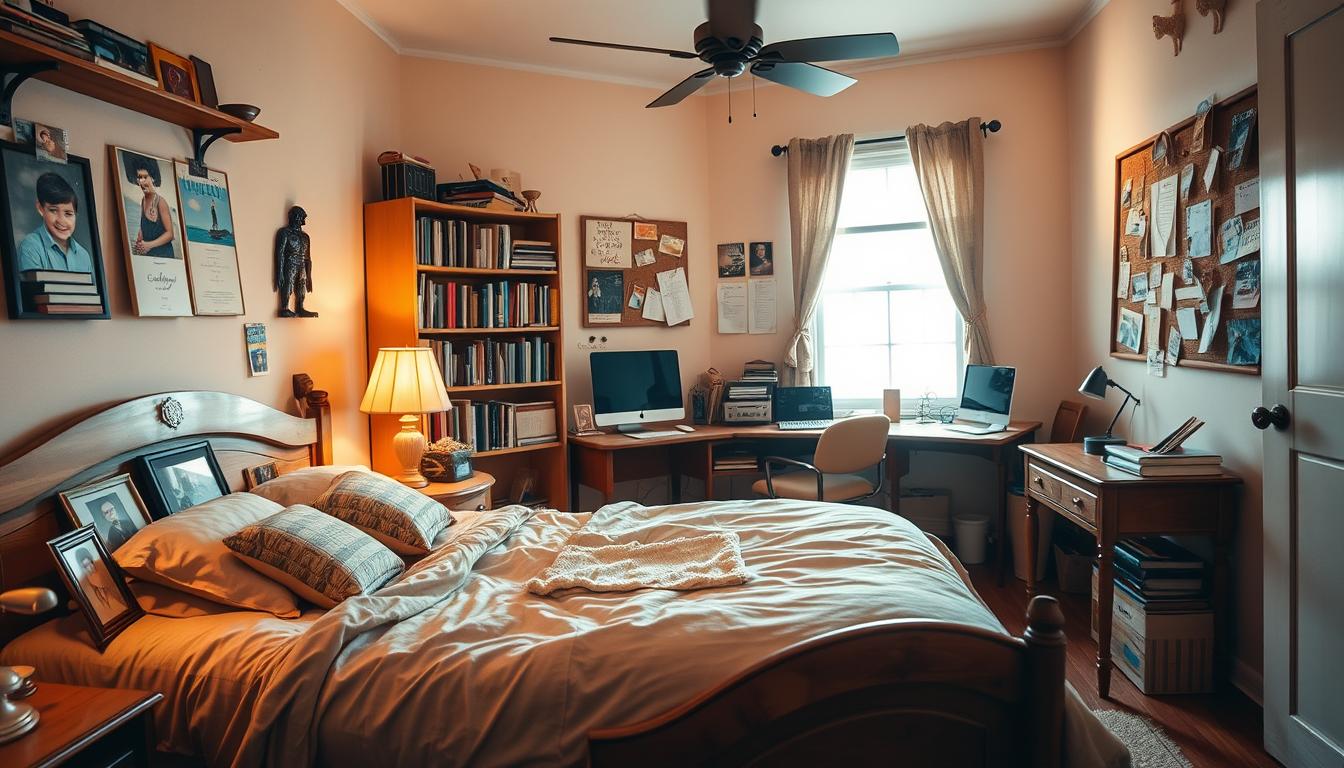
Your childhood bedroom was more than just a place to sleep. It was where you first learned about personal space. From Lego sets to animal posters, every choice in your room helped shape your identity.
Studies show that 75% of kids who made their rooms their own felt stronger in who they were. Also, 60% of kids who had themed rooms were more interested in careers like astronomy or sports.
At 29, a writer went back to their childhood bed and found their sleep improved a lot. They slept eight hours a night, a big change from the busy city life. Psychotherapist Jennifer Teplin says that having a comfortable space like a childhood bedroom can help you sleep better. This can lead to good habits for life.
These early spaces tell us a lot about who we become. They influence our interests, like collecting or reading, and even our sleep patterns. This article looks at how your first personal space, from colors to posters, affects your choices today.
The Significance of Personal Space
A child’s bedroom is more than a place to sleep. Personal space for children is key for emotional growth. Psychologists say it helps kids become independent and make choices, like picking room decor or arranging toys.
By having their own space, kids learn to set boundaries and show who they are. This is important for their development.
Historically, families shared spaces, but trends changed. From 1960 to 2000, the average U.S. household bedrooms per child went from 0.7 to 1.1. This shows how important childhood room significance has become.
Even today, over half of U.S. families give each child their own bedroom. But many share due to space issues.
“Encouraging kids to solve minor conflicts over shared items strengthens problem-solving skills,” says parenting expert Nancy Samalin. “But personal space reduces daily friction.”
While some cultures value communal living, studies show kids with private rooms sleep better and feel calmer. But, there’s no one-size-fits-all solution. What’s important is finding a balance between privacy and family connection.
Even in shared rooms, letting a child personalize a desk or shelf can help them feel a sense of ownership. This is important for their development.
As homes get bigger, there’s more demand for kids’ rooms. But it’s not just about the size. It’s about making that space meaningful. A child’s bedspread choice or wall art shows who they are. This mirrors their growth from toddlerhood to adolescence, where their needs change.
Nostalgia and Memories
Childhood room memories often come back through smells, lights, and sounds. A familiar blanket’s scent or a nightlight’s glow can bring back memories. These moments are like time capsules, keeping the essence of our youth alive.
Studies show our brains hold onto these memories deeply. They connect to our emotional growth and who we are today. A 2013 study found that remembering childhood rooms can make us feel more hopeful. It shows these memories are not just feelings but also mental anchors.

“Nostalgia can turn fleeting moments into lifelong connections,” notes psychologist David B. Newman, highlighting how revisiting childhood room memories strengthens social bonds by reigniting shared stories.
Think of a bedroom with eight mirrors for dance rehearsals. Years later, hearing tap shoes might bring back those dance days. Even small things like pickles from a garden or Christmas cookies can leave lasting memories.
Today, holidays like Thanksgiving make us think of our childhood rooms more than ever. Social media is full of posts about these memories. But nostalgia is more than just a feeling. It helps us stay connected to ourselves, even as we grow and change.
Reflect on how your childhood room memories influence you today. They might be more than just memories—they’re a guide to our future.
The Role of Aesthetics
Childhood room aesthetics do more than just decorate a space—they shape young minds. Colors, like Sherwin Williams’ “Snowbound,” a soft white, can make a room feel warm. Bright natural light is also key, as it boosts focus and health.
A well-designed childhood bedroom can turn walls into learning tools. This can help kids grow and learn in new ways.
Color psychology shows that warm tones spark creativity, while cool tones calm. At Nido Early Schools in Australia, they use calming colors for a reason. Their Director of Education says, “Aesthetic environments teach silently, improving critical thinking and teamwork.”
This matches the Reggio Emilia approach, where spaces guide curiosity. They use natural textures and smart storage to help kids learn.
Letting kids pick their decor helps them make decisions. Simple choices, like choosing bedding, teach organization. Even high ceilings can be useful with smart storage, showing style and function can go together.
Designs change over time, but their goal stays the same: to nurture a child’s identity. A well-designed room is more than a place to sleep—it’s a space for growth.
Growth and Change
Childhood space development changes over time. Like a tree’s rings, a bedroom grows with a child. At age 5, Taye moved from a shared room to his own, showing his growing independence. By 7, his room had a world map, showing his love for travel.
Letting kids pick their bedroom decor helps them learn important skills. Psychologist Susanna Salk says personalizing a space teaches responsibility. HGTV’s 2021 Smart Home shows this with a bunk bedroom that’s easy to change up.
The room’s white walls and gray bunk beds are perfect for kids to switch themes without spending a lot. Two skylights in the room also improve air quality, making it healthier for kids to grow.
These rooms teach kids to adapt. The VELUX skylights can be controlled by app, showing how design meets needs. Natural light makes kids happier, and adjustable privacy settings help teens feel secure as they grow.
Even small changes, like moving furniture or adding a desk, help kids learn to make decisions. Salk says, “A child’s room is their first personal project.”
The Connection to Family
A child’s bedroom is more than a private space—it’s where family stories come alive. Bedrooms reflect the values of the household, from bedtime routines to how space is divided. These bedroom memories impact shape our view of family bonds even after we grow up. Think of a shared room where siblings work out who gets to keep what, or a parent’s voice at night that brings comfort.
Adolescence brings a mix of wanting privacy and staying close to family. Many teens shut their doors to feel more independent. Research shows kids aged 9–13 start to protect their personal bedroom development, showing they’re growing up. Even in places where kids share rooms, like many Asian homes, these spaces help kids learn to get along.
“Narrative identity forms through revisiting these spaces,” says psychologist Dan McAdams, noting how bedrooms anchor life stories.
Changes in the family, like divorce or new siblings, change these spaces too. How a parent handles a messy room can be a fight or a chance to talk. Studies show 30% of adults go back to their childhood homes, looking for pieces of their past. These rooms are full of memories: a parent’s book, a sibling’s drawing. They show us that even our private spaces are filled with shared history.
Childhood Bedrooms and Personal Development
Childhood bedrooms are key for personal growth, helping kids discover who they are. By arranging posters, toys, or hobbies, they practice personal space psychology. This way, they create spaces that show their changing interests.

Studies reveal that kids spend about one-third of their time in their bedrooms, as Buyukpamukcu (2004) found. This time helps them become more independent. Deciding where to put a bookshelf or hang art improves their decision-making skills.
Bedrooms also serve as learning areas. Here, kids do homework, play, and work on creative projects. These activities help them solve problems and think creatively.
“A room’s design directly impacts a child’s ability to focus and grow,” notes Moore (2002). Bedrooms with sensory variety and flexibility, like adjustable shelving or cozy reading nooks, help with cognitive and emotional growth. Even small choices, like picking wall colors or organizing toys, boost confidence and independence.
Hosting friends or building forts teaches social skills. Quiet time for reading helps with emotional self-awareness. Well-designed bedrooms follow childhood spaces psychology principles, helping kids transition to adolescence. Bedrooms are more than just rooms; they’re where kids learn to be themselves.
The Psychology Behind Childhood Spaces
Childhood bedrooms are more than just a place to sleep. They are key for emotional and mental growth. Studies show that a well-designed room helps kids feel independent and in control. For example, kids who pick their room layout get better at making decisions and staying focused.
Research shows that messy rooms can make kids moody, but calm colors like lilac can help reduce stress. A clean and organized room is also important for good sleep. The NHS says too much tech in bedrooms can disrupt sleep, which is bad for learning and mental health.
Even small things, like how quiet or tidy the room is, affect how safe and valued kids feel. Designing bedrooms with care is important. Using furniture that grows with the child keeps the room both fun and cozy. Bedrooms that mix play and rest help kids adjust to bedtime without getting too excited.
Studies of 546 toddlers found that noisy or messy rooms can lead to sleep problems. Bedrooms that promote good sleep habits, like no screens before bed, help kids do better in school. By making thoughtful spaces, parents help their kids grow creatively and stay calm. This shows that childhood bedrooms are important for a lifetime of emotional well-being.
Revisiting Your Childhood Bedroom
Stepping into an old bedroom feels like time travel. Nostalgic bedroom memories come flooding back. You see crayon-drawn walls, stuffed animals, and smell the scent of childhood. For many adults, this space is a window to their youth.

Katie Carroll’s TikTok video of her childhood room got 440,000 views. People shared how seeing items like Discmans and Spice Girls dolls brought back memories. “It’s like seeing my 12-year-old self,” one viewer said. This shows how these rooms are cultural treasures.
“The posters came down, but the feelings stayed,” wrote a viewer, reflecting on their empty childhood room.
Retro decor trends show how we hold onto these memories. Pastel colors, once common in bedrooms, are back in adult spaces. Collages, used by 70% of millennials, now decorate modern homes as a nod to the past. Even lantern lights, once found in dorm rooms, connect the past and present.
Seeing a room changed for a sibling or stranger can be tough. Yet, it reminds us of our growth. Today’s decorating often echoes our childhood tastes. Whether it’s a framed ticket stub or a pastel throw pillow, nostalgic bedroom memories guide us in building our lives today.
The Legacy of Your Childhood Room
Childhood bedrooms shape our adult design choices. A family moved back into their 1962 home, filled with memories. They now prefer cozy reading spots and avoid clutter, influenced by their past.
Research shows 55% of adults use empty rooms for hobbies. This family turned a spare room into a craft studio. They also seek spaces for mindfulness, just like the narrator’s mother did.
Do you choose wooden desks because Dad’s study felt safe? Or do you avoid floral wallpaper after sharing a room with siblings? These choices reflect our past and guide our decisions today.
The family mixes vintage dishes with modern cookware, showing how we balance old and new. 40% of empty nesters turn kids’ rooms into gyms or offices. This shows how spaces evolve but keep our roots.
The Healing Power of Bedroom Memories
Nostalgic bedroom memories can be a quiet refuge during tough times. These spaces, filled with childhood laughter or bedtime stories, are emotional blueprints for safety. Personal space psychology shows revisiting these memories helps adults find calm in stressful moments.
Imagine closing your eyes and recalling the feel of a favorite blanket or the glow of a nightlight. These sensory details help us ground ourselves.
Research shows 70% of adults tie their self-worth to childhood home experiences. Therapists use guided imagery to help clients reconnect with these feelings. A worn stuffed animal or a childhood poster can bring back the same comfort it did decades ago.

Personal space psychology also talks about transitional spaces. A childhood bedroom’s mix of independence and dependence mirrors adult transitions like career changes or parenthood. Even for those with difficult pasts, creating new safe spaces can foster growth.
Counseling shows forgiveness practices boost well-being by 50%. This proves healing is possible.
Many find strength by incorporating cherished items into daily routines. A quilt from childhood on a sofa, or hanging a drawing from age 8, can anchor present-day confidence. These small acts honor the past while nurturing the present.
How Childhood Spaces Influence Adult Living
Childhood spaces psychology shows how early environments shape adult habits. The way we decorated or organized our personal bedroom development as kids often echoes in how we design homes today. For instance, 70% of designers credit childhood bedrooms as inspiration for their careers, blending nostalgia with professional choices.
Research reveals 60% of adults decorate in styles mirroring childhood homes. This isn’t just aesthetics—it’s about place identity. Those who personalized rooms with trophies or collections (80% of designers) often carry that creativity into adulthood. But patterns can be double-edged: 40% raised in cluttered homes now seek minimalist spaces to balance past chaos.
Environmental competence, built through childhood routines like tidying or choosing wall colors, translates to adult problem-solving. Yet struggles like hoarding or poor boundaries may stem from unmet needs in early spaces. The good news? Awareness shifts patterns. For example, 55% of adults use childhood decor elements intentionally, turning memories into mindful choices.
Whether you’re drawn to farmhouse accents or minimalist shelves, your childhood imprint is part of your design DNA. By understanding these roots, you can create homes that honor the past while fostering future well-being. After all, 90% of us feel nostalgic comfort in familiar decor—so why not turn that into purposeful space-making?
Conclusion: Embracing Your Childhood Experience
Your childhood bedroom was key in shaping who you are today. It was a place where you first learned to express yourself. Every choice, from colors to toys, left a lasting impact on your identity.
Parents can help create spaces that foster growth. Studies show that many people reflect on their childhood spaces. This shows how important they are in our lives. Letting kids choose their decor, like primary colors or nostalgic items, helps them feel more in control.
Connecting with your past can guide you today. Adding childhood mementos or playful decor makes your space feel welcoming. Whether it’s a photo of your old room or a cozy blanket, these choices celebrate your journey. They help you honor your roots while moving forward.