






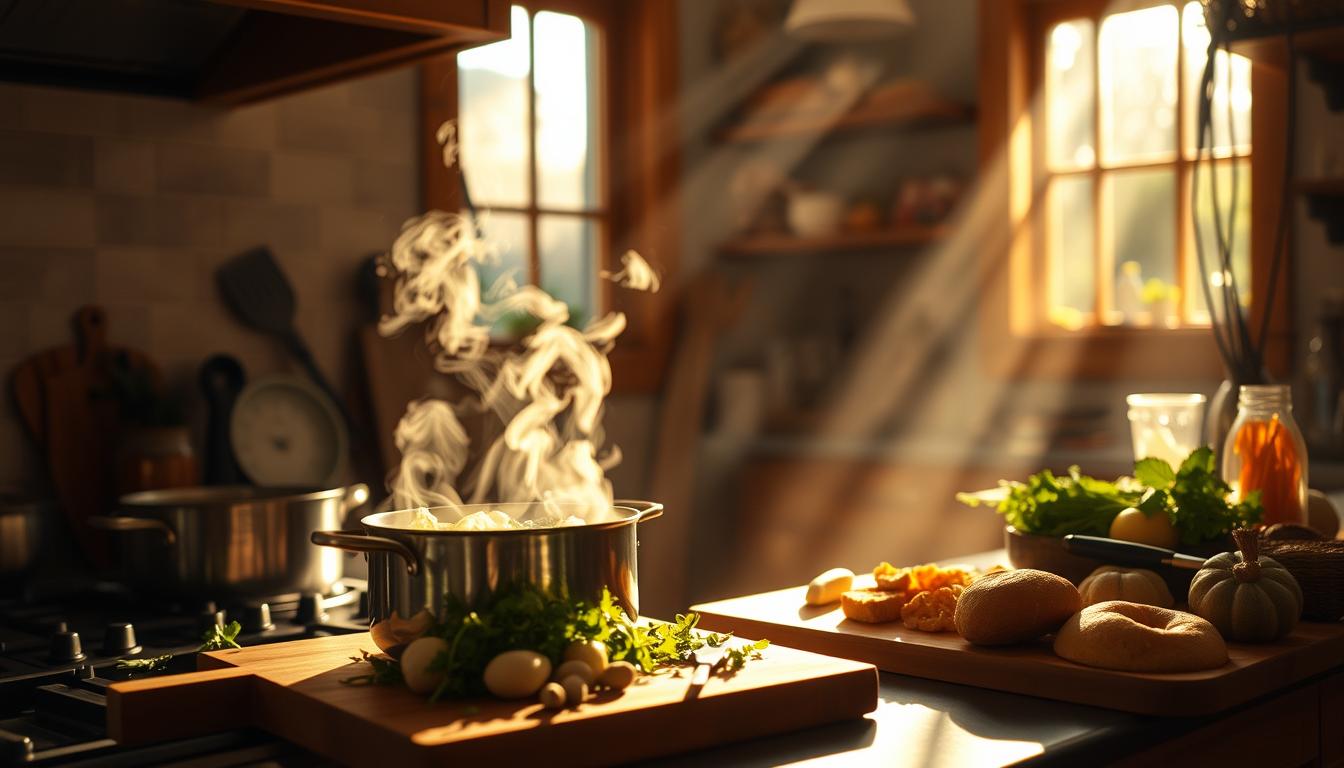
There’s a reason the smell of a simmering pot of soup or roasting garlic feels like a hug from the past. Home-cooked meals carry cooking aromas that shape our memories and emotions. From the warmth of cinnamon in hot chocolate to the savory sizzle of a pan-seared dish, kitchen scents connect us to comfort and belonging. These food smells aren’t just about taste—they’re a language of love and tradition.
Science explains why nostalgic scents hit so deeply. The brain’s olfactory bulb, linked to emotion and memory, turns smells into cherished moments. Yet 5% of people experience anosmia, a smell loss that dims this connection. During the pandemic, 30% of those with COVID-19 briefly lost this sensory link, highlighting how vital these scents are. Now, many seek to savor these aromas fully, turning back to home kitchens for comfort and joy.
The Emotional Power of Home-Cooked Aromas
The smell of soup or fresh bread is more than just a scent. It’s a journey back in time. Comfort food smells like cinnamon or vanilla bring back childhood food memories. These smells connect us to loved ones and places, instantly.
Imagine walking into a kitchen where garlic is cooking. It might remind you of a grandparent or a happy holiday. These smells trigger deep memories and emotions.
Science calls this aroma psychology. Smells go straight to our brain’s emotional centers. This is why certain smells can make us feel nostalgic or happy.
Research shows these memory triggers often come from our early years. This is when our brain links smells to memories the most.
Cooking is more than just making food. It’s about emotional nourishment. The emotional response to food aromas helps us connect with our past or heal. Baking a family recipe can feel like a hug from someone we miss.
Even science backs this up. Studies show these smells can reduce stress and bring us joy. So, next time you smell caramelizing onions, let it take you home.
The Science Behind Food Aromas
Every time you catch a whiff of roasting garlic or simmering herbs, your olfactory system springs into action. Inside your nose, millions of smell receptors work like tiny sensors. They decode molecules in the air. These receptors send signals directly to your brain’s smell center, creating the aromas you recognize.
Did you know humans can distinguish over one trillion different scents? That’s thanks to 5 million olfactory receptors working together. They are far more than taste buds, which detect just five basic flavors.

Cooking chemistry plays a starring role in these sensory moments. When you sear a steak or toast bread, the Maillard reaction turns amino acids and sugars into rich, complex aromas. This chemical dance happens best when food is dry, like pan-frying, not steaming.
Boiling veggies might keep them crisp, but it limits the food aroma science magic that comes from browning. Caramelizing onions or roasting coffee beans also releases volatile compounds. These tiny scent-carrying molecules float into your nose.
Even simple steps like toasting spices or simmering broth rely on these invisible reactions. Understanding this science helps you amplify aromas intentionally. Next time you bake, notice how the smell of warm butter and yeast signals dough’s transformation.
Science turns ingredients into inviting smells, making every meal more than just fuel—it becomes an experience your brain remembers.
Cooking Techniques That Enhance Aroma
Learning cooking techniques for aroma can make your kitchen smell amazing. Start by simmering soups or stews in a Dutch oven. This method traps the smells, letting ingredients like garlic and onions blend into the dish.
Science tells us that chicken soup’s rich taste comes from amino acids. These compounds get stronger when cooked for a long time. Cooking a stew for 2 hours is perfect for aromatic cooking methods without overcooking the meat.
For grilling aromas, use high heat to start the Maillard reaction at 300°F+. This process caramelizes sugars and proteins, making burgers or roasted veggies taste rich and savory. Brushing oil on the grates helps prevent sticking and adds smoky scents.
Studies show that E-nose sensors can detect 39 volatile compounds in slow-cooked dishes. This proves that longer cooking times make flavors more complex.
“Balanced flavors start with mindful cooking,” says chef Christine Ha. “Let your nose guide seasoning choices.”
To improve enhancing food smells, listen to the sizzle and feel the sauce’s thickness. Brown meats before slow cooking to start the aroma. Adjusting the heat helps control the release of bitter or sweet amino acids.
Whether you’re simmering or searing, these methods turn your kitchen into a sensory playground. Every sniff brings you closer to a dish that pleases all your senses.
Family Traditions and Cooking
The smell of tomatoes and basil might bring back memories of Italy for one family. Another might remember Mexico with warm spices. These family cooking traditions are more than food—they’re family heirlooms. Recipes passed down through generations tell stories of love and strength.
My grandmother’s macaroni and ground beef casserole was a weekly favorite. It was baked at 400°F for 45 minutes. This dish connected us to our past.

Sharing recipes is a way to show love. A 1988 recipe journal in my family has stories of our journey. Each entry, from a note to a splatter of sauce, teaches us about our history.
Cooking together brings families closer. Studies show it improves communication and emotional health. Kids learn by measuring and stirring.
Start new traditions with Sunday pancakes or holiday breads. Let kids help and elders share stories. This builds confidence and pride in our roots. The kitchen is where our heritage comes alive, one dish at a time.
The Impact of Seasonal Cooking
Summer brings scents like ripe tomatoes and grilled peaches. These remind us that seasons shape our meals. Imagine the crisp aroma of basil mixed with lemon in summer salads. These scents are not just fleeting—they’re tied to peak flavor and nutrition.
When blackberries burst in late August Tuscan fields, their sweetness fades fast. This makes their seasonal ingredients all the more cherished.
Winter turns kitchens into cozy hubs of winter comfort foods. The slow simmer of cinnamon and cloves in spiced apple cider warms us. The rich holiday cooking aromas of gingerbread evoke warmth and tradition.
These seasonal cooking smells aren’t just about taste—they’re emotional anchors. A 15-year focus on seasonal cooking shows how shifting menus with the seasons deepens our connection to food’s origins.
Cooking with seasonal ingredients aligns with health research. Studies show home-cooked meals rich in seasonal vegetables lower chronic disease risks. The book Stagioni highlights how seasonal rhythms influence flavor and culture.
By prioritizing seasonal ingredients, we reduce reliance on ultra-processed foods. Grilled summer veggies or a winter stew’s slow-cooked herbs aren’t just recipes. They’re part of a healthier, more flavorful cycle.
The Role of Cooking Oils and Fats
Choosing the right cooking oils aroma can change a dish. From aromatic fats like butter to traditional cooking fats like lard, each fat carries flavor. Butter has a nutty butter vs olive oil smell, while olive oil has fruity notes. This is because of how fats react with heat and ingredients.

Heat changes fats chemically. When butter browns, its sugars caramelize, releasing compounds like diacetyl. This boosts its cooking oils aroma. Olive oil, with its high monounsaturated fats, keeps its aroma up to 375°F, perfect for sautéing.
Coconut oil, with its saturated fats, has a distinct tropical scent. It’s great in baked goods. The American Heart Association suggests oils with less than 4g saturated fat per tablespoon for health and flavor.
Global cuisines use aromatic fats like Indian ghee and Mexican mole dishes with lard. These traditional cooking fats are cultural and aromatic. Even refining affects aroma: cold-pressed oils keep more aroma compounds than processed ones.
Trying different oils is more than just about health. Knowing how cooking oils aroma changes with heat can make meals better. Next time, try duck fat instead of butter for roasted veggies. You might be surprised by the scent difference.
Baking: A World of Wonderful Scents
Home baking’s magic starts with the baking bread smell. Yeast fermentation brings out earthy notes. As sugars caramelize, they mix with baking spices like cinnamon or vanilla. This creates homemade bakery scents that fill our homes with joy and tradition.
To make these scents even better, try slow fermentation. It makes bread richer. Adding a pinch of nutmeg to pies or a dash of vanilla extract boosts pastry aromas.
Even a simple banana bread, with brown sugar and spices, brings back memories. The baking spices in every batch remind us of special moments.
These scents are more than just smells. They’re invitations to relive happy times. An air purifier can help keep these scents alive. It captures the science behind fermentation and spice blends, making every bake a memorable experience.
Creating a Welcoming Kitchen Environment
Make your kitchen a place of both inviting smells and function. Good kitchen ventilation keeps air fresh and scents pleasant. Open layouts let smells spread, but you can control this with fans or windows.
In smaller kitchens, special ventilation systems and sliding doors manage airflow. This keeps warmth in without blocking smells.

Keep surfaces clean to manage smells. Clean appliances monthly to get rid of odor causes. A lemon or thyme spray can quickly freshen up countertops.
Simmering citrus peels with cinnamon can mask bad smells from cooking. Place baking soda near trash to absorb smells. Run vinegar-water down drains weekly to keep them fresh.
Add aromatic kitchen herbs like rosemary or lavender for cooking and air freshening. Potted herbs like basil add freshness. Simmering mint leaves in water can also deodorize.
Charcoal filters over frying pans catch smoke, and vents with activated carbon filters get rid of grease smells. Using an air purifier can help control odors even more.
Find a balance between function and charm in your kitchen. A welcoming kitchen design has open spaces and smart storage. Cooking aromatic dishes for guests and using citrus candles at holidays adds to the comfort.
Small changes can make your kitchen a place where meals and memories come together.
The Connection Between Scent and Health
Therapeutic food smells are more than just a pleasure—they’re good for our health. Up to 49% of people have olfactory disorders, which can make them less hungry and affect their mental health. Scents like vanilla and citrus calm the nerves, while smells from foods like rosemary or cinnamon desserts make us feel better.
Science proves these smells release chemicals in our brain that reduce anxiety and improve focus.
When we smell cooking, our brain tells our stomach to get ready. This helps with digestion. For those who can’t smell, like 5% of people, cooking with garlic or basil can make food more appealing. Even small improvements in smell can make us happier and eat better.
It’s also important to manage kitchen smells. Strong smells can be overwhelming, but using air purifiers or ventilation helps. By choosing the right scents, we can make meals that are good for both our body and mind. This means every meal can help us feel better overall.
Sharing the Scent of Home-Cooked Meals
New tools like food aroma technology are changing how we share cooking moments. Devices that capture cooking scents help families keep special smells alive. Platforms that share virtual cooking smells spread traditions far and wide.
Imagine a potluck where everyone swaps recipes and smells. Or a kitchen where an air purifier keeps favorite smells fresh. These ideas celebrate dishes like rendang, a West Sumatran specialty, whose aroma has brought families together for years.
Creating aromatic gatherings is easy: just plan meals with bold, familiar scents. A simmering stew or freshly baked bread can be the center of family time. For those far away, sharing food traditions online can bridge gaps.
A mother’s recipe for comforting meals can inspire others. Families adapt dishes to suit different tastes. Even small actions, like packing an extra lunchbox, can build connections.
Home cooking has the power to bring joy. The science behind dopamine’s release during meals shows how smells connect us to comfort and memory. With capturing cooking scents through tech or tradition, we keep heritage alive.
Every effort to save a recipe or host a dinner preserves the warmth of shared meals. These moments, not just the food, but the laughter and stories, become heirlooms. Cooking at home saves money and strengthens bonds, proving that the best aromas are those we share.