




Behind the piles of toys and stacks of old magazines lies more than just mess. Family memories in clutter often hide stories only we can understand. UCLA research on 32 American homes found that even the simplest items—like a half pack of Bic pens—carry emotional weight tied to daily life.
The emotional value of mess isn’t just about stuff. A child’s doodle or a chipped mug can remind us of laughter, holidays, or quiet mornings. For many, these objects are the story behind clutter, holding moments too personal to part with easily.
Take Jess’s journey: 100 baskets filled with toys and keepsakes told her family’s history. Even Marie Kondo’s decluttering philosophy admits that every item has a purpose—whether practical or sentimental. Clutter isn’t just chaos; it’s where life’s narratives live.
How Everyday Chaos Creates Family Narratives
Everyday chaos isn’t just mess—it’s the stuff of family stories. A half-built Lego spaceship, a pile of board games, or a craft table can tell a tale. Psychologists say these items hold our shared moments, growing with us as we do.
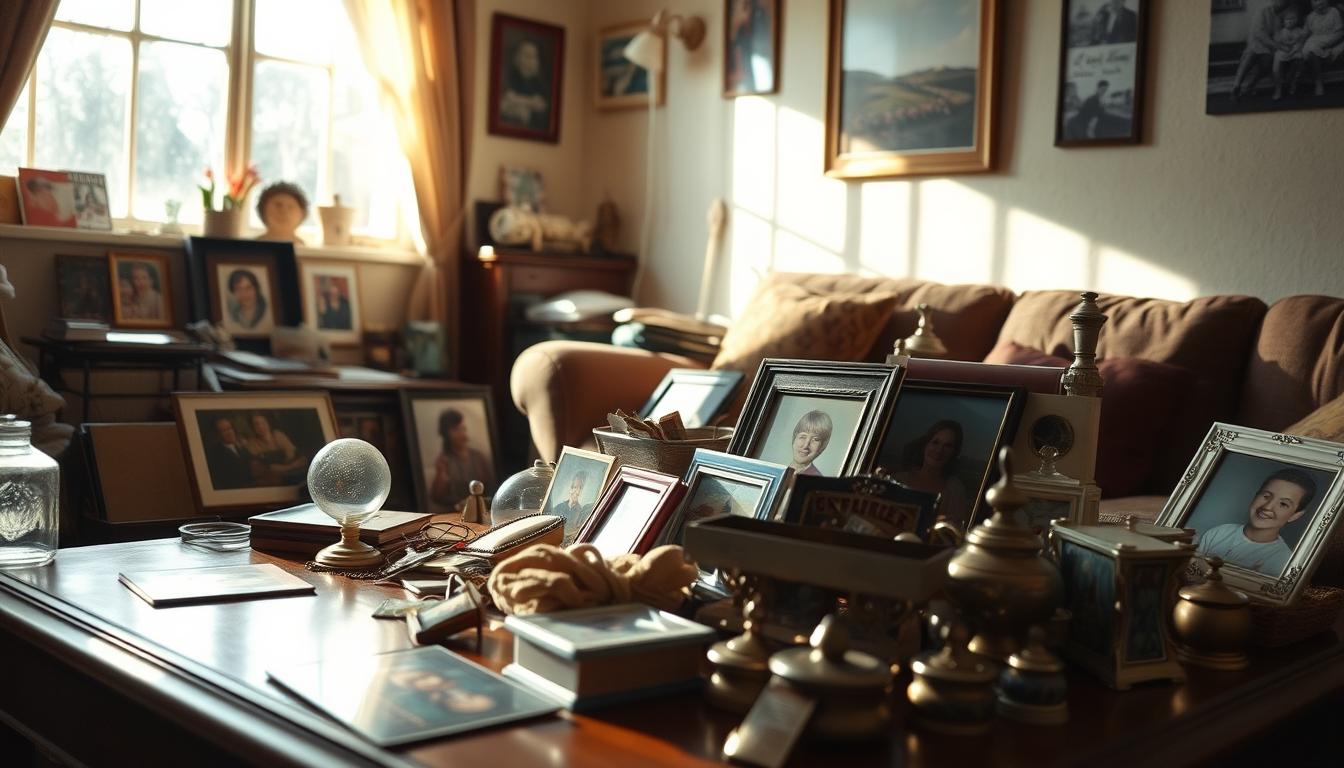
A toy left behind might remind us of a wild game night. A photo frame on a messy counter tells stories of holidays past. These objects weave our memories into a family story.
In the U.S., 1 in 3 families are stepfamilies. They blend traditions and share spaces, shaping their identity. A study of 20 adults showed how mismatched dishes or hand-me-down books symbolize belonging.
Even fights over movie choices can add to the family story. They teach us values and quirks. This shows how objects can carry our family’s history.
Objects gain meaning through repetition, like a worn couch for bedtime stories. They anchor us through life’s changes. A messy craft table shows creativity and teamwork. As one researcher said, “possessions embody our hopes and dreams,” making our daily lives a living history.
The Story Behind Each Object
Everyday items often hold unexpected stories. A chipped mug or a faded toy might seem like just another piece of sentimental clutter. But these are memory objects. Each chip or stain can recall moments that shaped our lives.
A parent’s old textbooks, a child’s first stuffed animal—these aren’t just things. They’re bridges to the past.

In 2009, the Significant Objects Project showed stories boost an item’s worth. A plastic pink horse bought for $1 became a $104.50 treasure after a fictional tale. People pay more for items with narratives, showing how emotional connection to possessions turns ordinary objects into heirlooms.
Over 1,000 contributors on objectstories.org share how these items become family legacies. Even tangled cables in a drawer map a family’s tech journey, each knot a memory.
“The things we struggle to discard often mirror our self-worth.”
Researchers found holding onto these items isn’t just nostalgia—it’s how we anchor our identity. The Portland Art Museum’s Object Stories project, now in its 13th year, involved 1,000+ participants. It proves storytelling turns clutter into shared history.
These objects aren’t trash; they’re the quiet keepers of our lives’ chapters.
The Role of Kids in Daily Mess
Every block tower, crumpled drawing, and abandoned toy car tells a story. Children’s clutter isn’t just a nuisance—it’s a visual timeline of growth. A study shows 70% of parents feel overwhelmed by their kids’ belongings. Yet, these items hold parenting memories that soften the frustration.
A toddler’s mud-streaked boots or a teen’s scattered gaming controllers become childhood development artifacts. They mark phases like milestones on a calendar.
Think of a fridge covered in finger-painted suns or a drawer of tiny dinosaur figurines. These messes aren’t random—they’re proof of curiosity, creativity, and evolving skills. A child stacking blocks isn’t just making a mess; they’re building motor skills and spatial awareness.
When a 7-year-old leaves a half-finished art project, it’s a snapshot of their imagination. Even outgrown clothes or forgotten board games show how kids shift from parallel play to collaborative storytelling.
“Toys like Legos or dollhouses aren’t just clutter—they’re tools of learning,” says child development expert Dr. Elena Torres. “Their mess is a language parents learn to decode over time.”
While 60% of families lack toy storage systems, the mess itself becomes a silent teacher. Letting kids organize their own children’s clutter builds responsibility. By age 4, 75% of kids can tidy up with guidance, turning chores into lessons in accountability.
The key? Seeing the mess as more than a problem—it’s a map of their journey from toddler to teen. Next time you pick up that crumpled paper airplane, remember: it’s not just trash, but a fossil of their growth.
Memories Made in the Kitchen
The kitchen is where family recipe clutter turns into treasures. Flour stains and sticky notes tell stories of kitchen memories. A recipe card from Grandma or a chipped bowl passed down tells tales only a family knows.

Alecia and her mom Amy Roy have baked together for five years. Alecia started mixing dough at 2.5 years old. They use simple ingredients like flour, sugar, eggs, and butter, teaching patience and love.
“Every crumb is a memory,” Amy says. Their chocolate chip cookies, filled with chunks and peanut butter cups, are more than sweet treats. They’re a cherished tradition.
Cooking traditions thrive in the chaos of a kitchen. A drawer full of measuring cups or mismatched pans is not just clutter. It’s a legacy. Quartz countertops may be easy to clean, but they can’t replace the warmth of a splattered stove top.
Kitchen islands are more than homework zones. They hold stories. When Amy and Alecia bake together, they’re not just making dough. They’re weaving their heritage into daily life.
Family recipe clutter is more than just stuff. It’s a language. A chipped mug from Aunt Linda’s wedding or the pot for holiday tamales are timeless. They show that a tidy kitchen can’t compare to the messy beauty of laughter and garlic bread.
The Living Room: A Storytelling Hub
A living room is more than a space—it’s where family gathering spaces come to life. Shelves filled with books, games, and photos aren’t just clutter. They’re the foundation of living room memories.
A favorite book, like Every Child’s Story Book, sits next to Dad’s old Sanford and Merton. These items turn the room into a home storytelling center. Every object brings back a memory.
Imagine a coffee table worn from countless debates or a sofa that’s seen many holiday meals. Even fights, like over a broken game, add to the room’s history. The tangled holiday lights in the corner tell of years of traditions.
Your living room’s mess is not chaos. It’s the story of your family’s journey.
The Art of Decluttering: A Double-Edged Sword
Decluttering can free up space but might mean losing special memories. Mindful decluttering finds a balance between keeping things tidy and holding onto memories. You can keep sentimental items by taking photos or digitizing them. This way, you can have organized memories without cluttering your space.
As one expert says, “The real cost of stuff is the space it steals from your life.”
The best legacy isn’t stuff—it’s time, love, and memories.

Research shows 75% of people don’t have a plan when decluttering. They often throw away important stories along with the clutter. A tidy home can cut down stress by 40%, but 60% of stored items are rarely used.
Start by boxing up old items and wait three months. See if you miss them. You can also scan photos, label heirlooms, or make memory boxes. This keeps your stories alive without cluttering your space.
Adults with ADHD face special challenges. Studies show 90% feel overwhelmed by tasks without clear boundaries. Use labeled bins to keep things organized. Pair organized memories with practical systems like weekly reviews and celebrate small victories to stay on track.
Remember, 80% feel a sense of accomplishment after organizing. This shows that finding balance is possible.
Preserving Family History Through Mess
Everyday objects in our homes often hide deep stories. A coffee-stained recipe card or a child’s half-finished drawing can be generational keepsakes. They connect us to our family’s past. Services like StoryWorth, founded in 2012, turn life stories into treasured keepsakes.
Letting go of items feels like betraying our identity. A faded letter or a worn-out tool is more than just clutter. It’s a tangible link to our ancestors. High school projects, like migration story units, help students find family histories through interviews.
These projects show how meaningful messes reveal our resilience and cultural ties. They turn household chaos into a living archive.
Sorting through clutter requires careful thought. Ask if an item sparks stories or reflects a tradition. A cracked vase from a grandparent or old concert tickets can be more meaningful than formal records. By seeing these items as family history preservation tools, we honor our past and make room for new memories.
“It’s not just about saving stuff—it’s about saving the stories stuff holds.”
Crafting Narratives from the Ordinary
What’s the story behind that chipped teacup in your cupboard? Everyday items are more than just clutter—they hold storytelling through possessions. A faded quilt or a child’s first drawing can start conversations. These talks turn object narratives into treasures of family connection.
Transform your kitchen table into a storytelling spot. Choose an object and ask: Who owned it? What challenges did it face? A cracked vase might tell of a grandparent’s strength during tough times.
Writing “object biographies” or hosting family “show and tell” nights can make routine items special. Each chip, stain, or scratch is a part of your family’s story.

“Stories have shapes which can be drawn on graph paper, but only six of these shapes are used repeatedly,” Kurt Vonnegut once remarked. Even a dusty coffee mug can follow his “Man in a Hole” arc: falling into chaos (spilled coffee) and climbing out (the repair with glitter glue). The key is to let the object’s history guide the tale.
Decluttering doesn’t mean losing your family’s history. A child’s scribbled drawing can start a talk on family values. By seeing possessions as characters in a story, you view clutter as chronicles. These family history in everyday items become treasures of connection, showing that every household object has a story to tell.
Intergenerational Memories: Learning from Clutter
Family heirlooms like old photo albums or hand-me-down dishes are more than just clutter. They connect generations. A child’s first sweater, kept by a grandparent, holds deep meaning. It’s a symbol of family stories and heritage.
Books like The Patchwork Quilt and Chave’s Memories show how younger generations learn from objects. A faded letter or a tool from a grandparent can start important conversations. They share stories of cultural traditions and survival.
But, it’s hard to keep clutter in today’s fast-paced world. A parent holding onto baby clothes is not just keeping fabric. They’re keeping a part of their identity alive. Grandchildren sorting through old tools might learn new skills and hear about their ancestors’ lives.
Modern trends like minimalism might make us want to get rid of things. But studies show that valuable heirlooms stay cherished. Even in our digital age, physical objects keep our stories alive. By sharing these items, families strengthen their bonds and learn about their roots and shared legacy.
Embracing the Mess to Build Family Bonds
Cluttered counters and mismatched toys show a family having fun. A positive view of mess sees chaos as a chance for meaningful moments. The American Psychological Association says strong family bonds protect us from stress.
Small moments, like making blanket forts or spilling cereal, create lasting bonds. These messy routines make memories that last a lifetime.
Picture a living room with crayon drawings on the fridge or a kitchen where baking turns into laughter. Embracing these moments means not aiming for perfection. UCLA research shows less clutter means less stress, but some messiness shows we’re living fully.
Try making clean-up time a game or create a “memory corner” for keepsakes. These changes help families see mess as a chance for shared stories, not just disorganization.
Dr. John Gottman’s work shows small moments, like a toddler’s sticky hands, build trust. Families who have weekly game nights or keep a funny mishap journal feel closer. Letting go of a perfect home makes room for meaningful rituals.
When toys pile up, they show curiosity. When spills happen, they’re part of learning. The goal is connection, not perfection.
Remember, 70% of families who practice daily gratitude feel closer. Start by naming one thing you love about your home’s mess each day. Let mess be the glue that holds your story together, not a source of stress. The messiest moments often become the stories we tell with pride at family gatherings.