






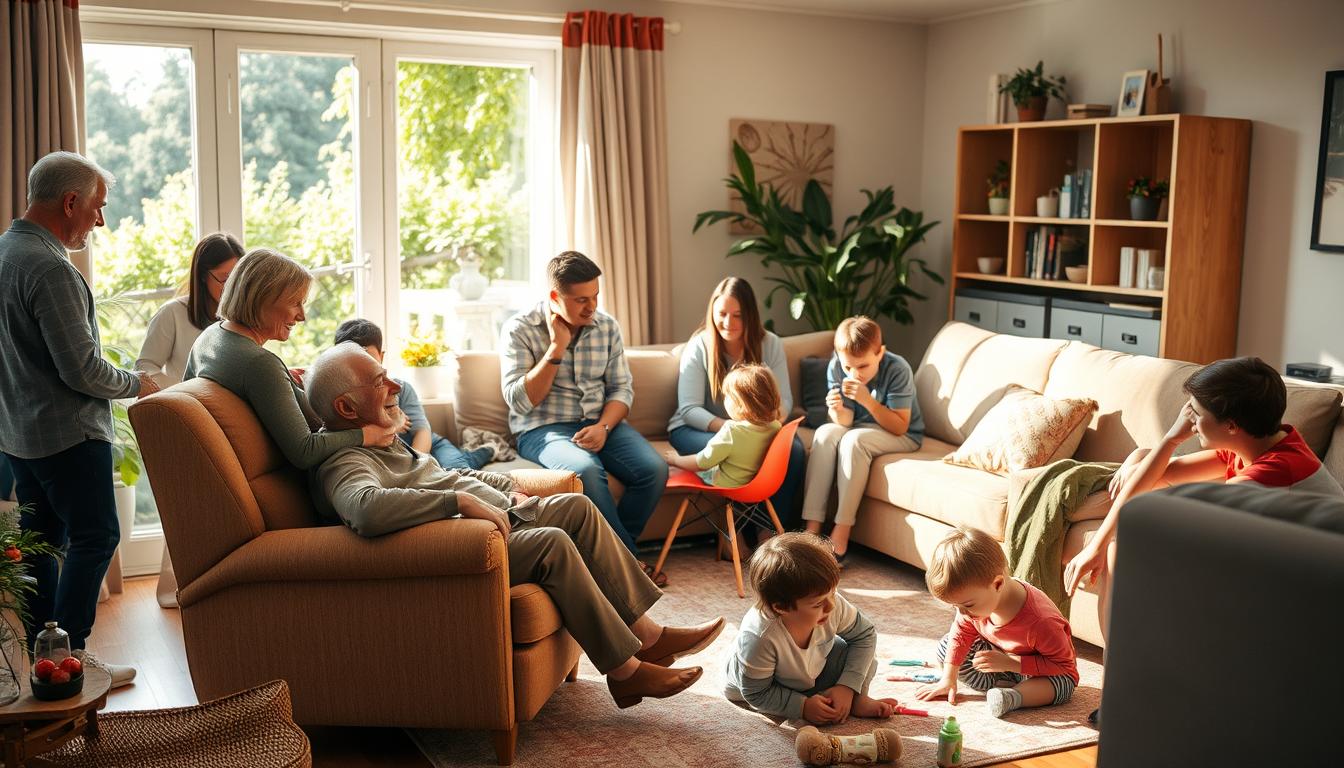
Caregiving bonds connect families like threads in a tapestry. In the U.S., working-age adults give $412 billion a year to help older family members. This support often starts at home, where family members of all ages help each other.
Programs like California’s Paid Family Leave Program help families balance work and care. They make it easier for families to support each other.
Family care is built on respect. For example, ONEgeneration’s programs bring seniors and younger people together. This reduces loneliness and builds trust.
These bonds create lasting memories. Spending time together, like having meals or hobbies, strengthens family ties. Small moments, like sharing stories or gardening, are key to lifelong bonds.
Every time families connect, they show their love. These moments are the heart of caregiving across generations.
Understanding Generational Caregiving Dynamics
Generational differences affect how baby boomers and millennials care for others. Older generations see caregiving as a lifelong duty, based on tradition. Younger caregivers focus on flexibility and mental health, using technology like virtual exercise programs.

There’s a big difference between traditional and modern caregiving. Baby boomers rely on their life experience, while millennials use apps and telehealth. Both bring unique strengths, like patience and adaptability.
“Care should flow like unconditional love, without expectations of return.”
Stories like Angela and Marbeya’s show the power of intergenerational care. These Nicaraguan grandmothers in Costa Rica and Miami balance tradition with modern care. They support their grandkids and keep families close.
The Importance of Open Communication
Effective family caregiving communication is key to strong family bonds. Studies show that 70% of older adults feel less lonely when they talk to younger family members often. Talking openly about health, money, and feelings helps families understand each other better.
A study of 121 caregivers found that those who talked more had 31% less stress. This shows how important it is to keep the conversation going.

“Families who talk a lot build trust and feel less stressed,” says the study. It notes that 50% of families who talk regularly feel closer. When we share our needs openly, we understand each other better. For example, talking about medical wishes or daily struggles early can avoid confusion later.
Simple steps like weekly family meetings or doing things together, like gardening or cooking, can start good conversations. These moments let older adults share their wisdom and younger ones learn from them. Also, talking openly makes caregivers feel more confident when advocating for their parents’ care.
Even small changes can help a lot. Starting with simple questions like, “Tell me how you’re feeling today,” can lead to deeper talks. Remember, honest eldercare conversations don’t just solve problems. They also make family bonds stronger for the long term.
Navigating Caregiving Challenges
Every family faces unique caregiving stress management hurdles. Role reversals, long-distance care, and differing expectations can spark family caregiving conflicts. Emotional exhaustion affects 40-70% of caregivers, but practical steps ease the strain. Open dialogue and empathy help bridge generational caregiving barriers, ensuring everyone’s needs are heard.
Generational caregiving barriers often arise when younger and older generations clash over care choices. For instance, older adults may resist tech tools younger relatives suggest. Caregiving problem-solving requires patience. Setting clear roles—like scheduling doctor visits or managing medications—can reduce friction. Remember, 34% of caregivers report physical health impacts, so regular check-ins matter.
“Caregiving challenges are best met with teamwork, not blame,” says Comfort Keepers, a national home care provider with over 600 locations. Their 25-year experience highlights solutions like shared calendars or virtual check-ins to ease coordination.

When conflicts arise, focus on caregiving problem-solving. Start with small goals: scheduling a weekly family meeting or dividing tasks by strength. Tools like shared digital calendars or community support groups help 70% of caregivers feel less alone. Remember, 83% of “sandwiched” caregivers (those balancing work and care) rely on these strategies to find balance.
By prioritizing respect and flexibility, families turn challenges into opportunities for connection. The PBS Caregiving documentary, premiering June 2025, features stories of families navigating these exact issues. Caregiving stress management isn’t about avoiding friction—it’s about addressing it with care.
Innovative Caregiving Solutions
Technology is changing how families care for aging loved ones. Caregiving technology innovations include smart homes with motion sensors and medication dispensers. These tools help seniors stay independent and give family members peace of mind.
Remote monitoring apps and remote caregiving tools make it easier to schedule doctor visits or track health. This way, family members can help from a distance.

Apps like Silvernest connect seniors with roommates, fighting loneliness. In Japan, Silver Human Resources Centers find retirees part-time jobs, showing tech’s global impact. NYC and the Netherlands have programs that bring together seniors and students, creating supportive communities.
“Technology bridges gaps but never replaces human connection,” says a Cyber-Seniors founder. They teach seniors how to use video calls and social media.
Telehealth platforms reduce hospital visits, and apps like Medisafe remind seniors to take their pills. The American Rescue Plan adds $12B for home care and $50B for childcare. This mix of tech and personal interaction empowers all generations to help.
Financial Considerations in Caregiving
Managing caregiver financial planning is key, as 72% of caregivers fear eldercare costs could ruin their futures. With 17% of homebuyers planning for caregiving, it shows a practical approach. Yet, hidden costs remain.
Over 38 million unpaid caregivers spend $7,000 yearly on average. 18% use retirement savings to fill the gaps.
Unpaid care’s $600 billion yearly value shows its caregiving economic impact on families and the economy. Almost 63% of caregivers have no plan for costs, risking their retirement. Gen X and millennials face big challenges: 55% and 72% expect caregiving to slow their careers.
“Medical and long-term care expenses outweigh inflation concerns for retirees,” noted Lincoln Financial Group’s 2023 survey.
Smart intergenerational financial support begins with tax tools like HSAs and flexible spending accounts. Programs like Medicare/Medicaid and state paid-leave policies help. Early talks on finances, like asset management or tax deductions for medical costs, ease tensions.
Resources like VA aid for veterans or Biden’s home health initiatives offer stability. Balancing today’s needs with tomorrow’s goals turns financial strain into shared resilience.
Celebrating the Moments Together
Every caregiving journey has special moments that joyful caregiving moments turn into lasting memories. Sharing laughs over old photos or telling childhood stories strengthens the caregiver-care recipient relationship. These moments create bonds that last through tough times.
Small acts like baking a family recipe or planting a garden together become precious positive caregiving experiences. They grow mutual respect and joy.
Studies show that intergenerational activities boost seniors’ energy by 60%. Youths gain 35% better memory retention through storytelling. These moments lay the groundwork for a caregiving legacy, keeping traditions and wisdom alive for future generations.
Even simple actions like video calls or handwritten notes can bridge gaps. They foster a sense of belonging and reduce loneliness.
“Grandparents Day reminds us that intergenerational bonds are vital,” declared President Jimmy Carter in 1978 when establishing the holiday. Today, 80% of seniors find fulfillment sharing life lessons with younger generations.
Creating keepsakes like scrapbooks or voice recordings turns everyday moments into treasures. Celebrate every milestone, big or small, like a grandchild’s first piano recital or a shared tea ritual. These moments not only make lives richer but also fight off loneliness, improving mental and physical health for everyone.
By focusing on being together, caregivers and recipients find joy in life’s ups and downs. Small joys keep them going through all of life’s changes.
Training and Resources for Caregivers
Caregiving requires both emotional and practical skills. Caregiver education programs help fill this need. They offer online courses and workshops on stress management and medical tasks.
Family caregiver training focuses on communication between generations. Libraries and community centers host caregiving support groups. These groups are where caregivers share their experiences and strategies.
Local caregiver resource centers offer free materials and legal advice. They also provide emergency planning guides. The American Library Association sees libraries as key partners, hosting workshops and peer networks.
A 2020 study showed caregivers in caregiving support groups had 30% less stress after six months. This highlights the importance of these groups.
“80% of adults want to spend more time with people outside their age group, fostering connections that ease caregiving strains.”
Programs like adult day care and respite services give caregivers a break. The National Alliance for Caregiving suggests combining formal training with peer support. Whether online or in local centers, these resources help families face challenges together.
Remember, asking for help is not a sign of weakness. It’s a step towards stronger, healthier caregiving partnerships.
Recognizing the Signs of Caregiver Burnout
Spotting early signs is key to preventing caregiver burnout. Family caregiver stress often shows as chronic fatigue, irritability, or a pull away from hobbies. Ignoring these signs can lead to compassion fatigue, affecting emotional health.
Over 30% of caregivers face mental health issues, yet many see asking for help as selfish.
Physical signs like headaches or sleep issues warn of neglecting self-care. Emotional signs include feeling hopeless or angry. Behavioral changes, such as skipping meals or isolating, signal deeper problems.
Data shows caregivers spending up to 253 hours a month at risk of burnout. Yet, only 23% seek help. Recovery starts with small steps: take 10-minute breaks daily, set clear boundaries, and share tasks with family.
“Caregivers often confuse burnout with normal stress until it’s overwhelming.”
Caregiver self-care is not a luxury—it’s essential for survival. Simple actions like deep breathing for 10 minutes or delegating tasks can help. Remember, asking for help is key to your health and the care you provide. Prioritize rest; your care journey depends on it.
The Future of Caregiving Across Generations
Future caregiving trends will show how family structures are changing. With over 60 million Americans over 60, new ways to care are needed. Digital tools like video calls and platforms like CareYaya, which offers care at $15 an hour, are helping. These tools make care more affordable and accessible.
Caregiving in the digital age will use technology to connect people. Apps and community programs help families manage their duties. Affordable care options, like CareYaya’s $120 for 8 hours, are available. Also, housing that combines daycare and retirement communities helps seniors and kids connect.
Studies show that intergenerational bonds are good for everyone. Older adults who mentor youth stay mentally sharp. Programs like Big Brothers Big Sisters show that these bonds can make communities stronger. Supporting these bonds can help caregivers and fight ageism.
The heart of caregiving is love and support. By using technology, affordable services, and programs for all ages, families can grow closer. The future of caregiving is about building strong relationships. It’s about keeping family bonds strong while adapting to new times.