






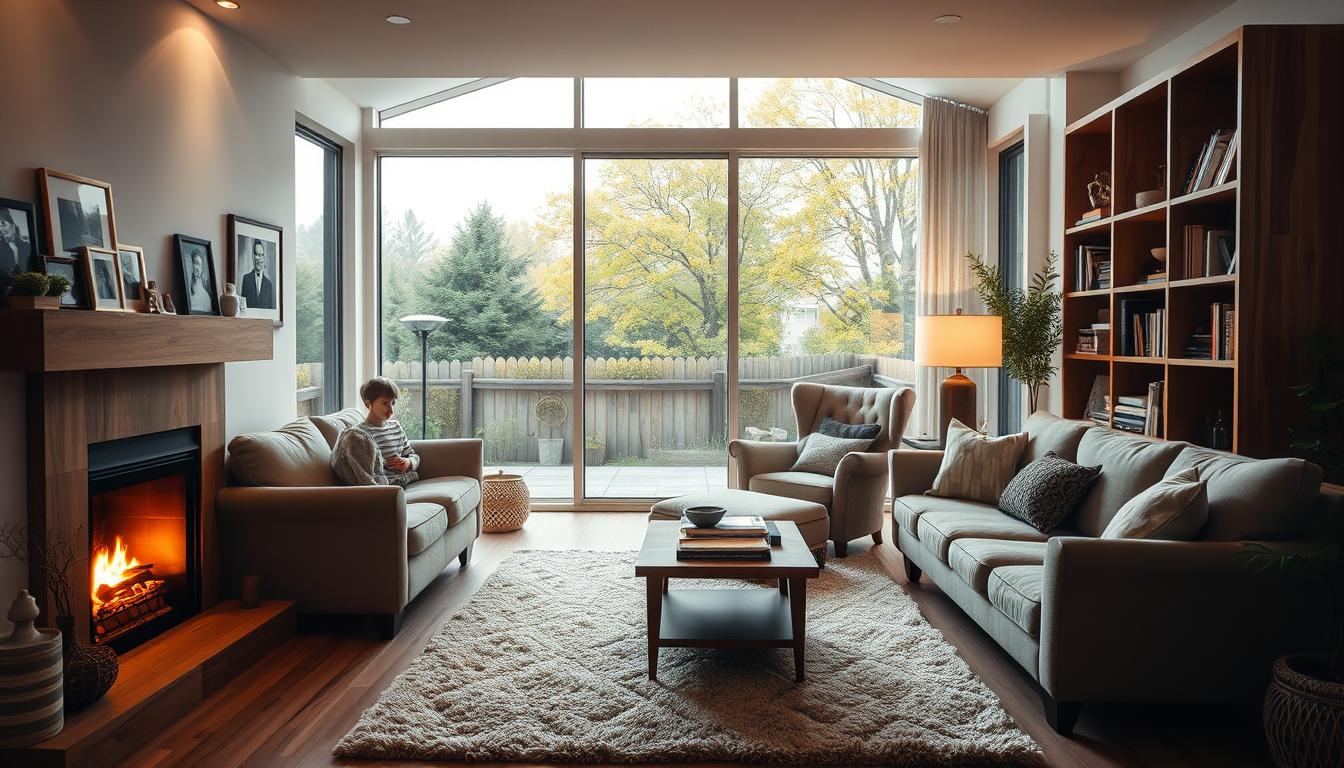
Feeling safe is a basic need for our well-being. It’s not just about having a roof over our heads. It’s about feeling secure in our own space. The design, environment, and culture of our homes play a big role in how safe we feel.
Studies show our nervous system affects our sense of safety at home. It helps calm our stress, making us feel more secure. During the pandemic, research like Fanning et al. (2020) found our homes greatly impact our mental health.
More than 8,000 UKCP-registered therapists agree on the importance of home safety for our well-being. Organizations like Shelter help those facing housing issues, with a free helpline: 0808 800 4444. Changes like job loss or divorce can shake our sense of safety, showing the need for community support.
A home’s psychological impact begins with basic safety needs. Design choices and clear boundaries, like separating work areas, boost our sense of security. These elements turn a house into a place where self-esteem and safety blend, helping us build resilience.
The Concept of Home and Safety
The definition of home safety is more than just locks and alarms. A home is a home sanctuary when it offers psychological safety at home. This means people can be themselves without fear of being judged or hurt. In the past, shelters protected us from wild animals. Now, our homes protect our emotional well-being, like trust and feeling at home.
Today, home security concept means more than just physical protection. It also means emotional support. Brene Brown found that being open and honest builds trust. Without this, classrooms can feel unsafe, but homes can be a safe space for open talks.
Vulnerability is the birthplace of belonging.
Harvard studies show that feeling safe lets us share our mistakes openly. The safety we feel in our childhood homes shapes how we act as adults. A safe home environment lowers stress and boosts mental strength. By focusing on both physical and emotional safety, homes become places where we can truly thrive.
The Role of Physical Design
Home design security begins with the layout of spaces. Safe homes focus on clear views and easy access. For example, windows and open sightlines help you keep an eye on your surroundings, easing worries.
Features like strong locks and slip-resistant floors make homes secure. A cozy bedroom with soft lights and tidy space is a peaceful escape. Kitchens that are open and welcoming bring families closer together.

Studies show that our surroundings affect our happiness. Cluttered homes or dark rooms can increase stress. Modern homes now mix beauty with safety.
For instance, sliding glass doors with strong frames offer both openness and security. Bedrooms with sound-absorbing materials help you sleep better by reducing noise.
“A state of complete physical, mental and social well-being” — WHO
Safe homes also meet specific needs. Homes for kids have rounded edges and safety gates. For the elderly, grab bars and easy entrances are key.
In Los Angeles, 41% of cluttered homes felt more stressful. This shows the importance of organized spaces. By focusing on both safety and layout, homes become places of comfort and security.
Emotional Safety in Your Home
Your emotional safety at home is key to trust and feeling at home. A home should be a place where you can be vulnerable without fear. When family members feel safe, they do better mentally and emotionally.
Research shows that feeling secure at home makes our brains work better. It helps us think clearly and feel emotionally balanced.
An ideal home as safe haven values honesty. Everyone needs a place to share their thoughts without fear of being judged. Open talks and empathy are essential for this safety.
Studies show that families who listen actively have stronger bonds. They also handle stress better.
In big families, building trust takes time and patience. Disagreements can be chances to grow if handled with respect. Celebrating what makes each person unique and sharing values helps create a safe space.
For example, daily talks about feelings can prevent misunderstandings.
Without emotional safety, homes can become stressful places. Signs like fear of being judged or keeping secrets show trust issues. To fix this, we need to face problems and talk honestly.
Getting help from family therapy can also be helpful in healing.
Community and Safety
Your sense of safety goes beyond your home through home community connections. A strong neighborhood builds community security by making spaces where neighbors support each other. Front porches, shared gardens, or block parties help streets become places of trust.
A strong sense of community is essential for building feelings of safety and belonging.
In the U.S., over 70% of adults face trauma. This makes community networks key for recovery. Places like the SAFEchild Advocacy Center in Raleigh and Mary’s Center in D.C. focus on safety and cultural sensitivity for families.
Schools play a big role in safe community living. Classrooms with good teacher-student relationships see better attendance and grades. SEL programs teach kids how to solve conflicts. The Bill Richards Cancer Center uses nature to help patients with PTSD feel better.
Building community security begins with small steps. Go to a block meeting, join a clean-up, or just say hello to your neighbors. These actions help weave trust into our communities, making them safer for everyone.
Childhood Homes and Safety Perception
“A protected little girl” once described the moment she first felt safe. Such formative safety experiences shape how we perceive danger and trust long after childhood ends.
Our earliestearly safety perceptionbegins where we grow up. A securechildhood home safetyenvironment teaches kids to navigate risks confidently. But when homes feel unsafe, adults may carry hypervigilance into adulthood. Research shows 23 parents in a recent study faced unanticipated risks as their kids interacted with smart home tech—proving even modern homes require intentional safety planning.
Erikson’s life review theory highlights how older adults revisit childhood homes mentally, seeking comfort. This ties directly tointergenerational safety—how parents today build safe spaces to break cycles of fear. For example, parents with tech-savvy skills use parental controls to address digital risks, while others limit device access. Both approaches aim to create secure foundations for kids.
Carstensen’s research on aging shows people prioritize emotional safety as they age. This starts in childhood. A stable home teaches kids to assess risks wisely, fostering resilience. When childhood homes fail, therapy and mindfulness practices can help rewrite harmful safety scripts. By understanding these patterns, families can nurture safer futures—one generation at a time.
The Influence of Technology
Smart home security systems have changed how families protect their homes. New tech like motion sensors, AI cameras, and apps for remote access keep homes safe 24/7. Devices like Nest and Ring let you lock doors or check cameras from your phone, making life easier and safer.

But, this new tech also raises safety concerns. Over 85% of US teens use social media, showing how tech is part of our lives. Smart devices like thermostats and voice assistants make our homes more connected. Yet, we must use these tools wisely to protect our data.
“Passive social media use was positively related to anxiety and depressive symptoms.”
Today, finding the right balance is key. While 58% of US adults see the internet as essential, studies show that moderate use is better for our well-being. Families should check if devices are secure, update them often, and set limits on use. This way, we can keep our homes safe and our privacy intact.
The Role of Family Dynamics
Family safety dynamics are key to a safe home. When parents and kids talk openly, trust grows. A safe family environment is built when everyone feels heard.
As one study says, “There is no greater love than that you share with your own blood.” But yelling or ignoring problems harms the family bond. Stress from unresolved issues can cause anxiety, sleep problems, or even high blood pressure.
Starting to solve conflicts at home is simple. Families can show empathy by sharing feelings without blaming. For instance, saying “I feel hurt when plans change last minute” instead of blaming others.
Consistent support is important too. Kids in supportive homes are less likely to face aggression or obesity. But harsh criticism or secrecy can trap families in stress cycles, harming their health.
Creating safety means setting clear rules. A stable routine, like family dinners, brings predictability. When conflicts happen, focusing on solutions, not blame, helps rebuild trust.
Remember, a home filled with respect protects against life’s challenges. Strong family bonds even help older adults recover from surgeries or chronic illnesses.
Moving Homes and Safety
Moving home safety is all about planning. It’s about keeping your stuff and your mind safe. Martin-Christopher Harper moved 40 times in 9 years. He shows us how important relocation security is.

Changing homes can be tough on your emotions. Doug LeBow struggled to sell his NYC apartment for three years. He shows how hard it is to let go of a home.
Keeping familiar items, like family photos, helps. Simple routines, like morning walks, also help you feel in control.
Professional movers can make things easier. Don’t forget to stay hydrated, wear gloves, and have a first-aid kit. Even small steps, like taping box bottoms twice, help. Moving is not just about moving stuff. It’s about making every detail safe.
Cultural Influences on Safety
Cultural home safety isn’t the same everywhere. Door locks and family roles differ greatly. In some places, mirrors at entrances ward off bad energy, just like alarms do. Others rely on watch systems, showing the power of community over individual effort.
This quote shows how culture shapes safety roles for men and women. Hofstede’s work on cultural differences, like individualism versus collectivism, shows their impact on safety. For example, societies with a strong power distance see security as the leader’s job. But in more equal societies, everyone shares the responsibility.
Immigrant families mix old and new traditions. A Japanese family in Texas might keep Shinto rituals but also use smart locks. Studies show this blending makes everyone feel at home without losing modern safety needs.
But, when cultures clash, problems can arise. Like when a German engineer’s strict rules meet a Brazilian company’s focus on relationships. Knowing these differences helps families respect each other’s ways. By learning about cultural security expectations, we can turn misunderstandings into strengths. Whether through feng shui or community watches, diversity makes our homes safer and our bonds stronger.
Safety and Home Decor Choices
Every item and color in your home affects your safety. Safe decor isn’t just about locks and alarms. It’s about creating calm and protective spaces.
Color plays a big role. Navy blue walls, for example, can calm you down. Muted colors reduce eye strain. Sunlight through windows brightens your mood. These choices are key to safe decor.

Textures also matter. Plush rugs and velvet throws add comfort. Plants and flowers, backed by NIH research, improve focus and reduce stress.
Layered lighting, like candles or dimmable bulbs, creates cozy spaces. Even small changes, like organizing clutter, can lower anxiety. Cluttered spaces can raise stress hormones as much as extreme situations.
Disorganization increases anxiety, but intentional design combats this. Pairing soft textiles with neutral tones builds a sanctuary.
Star Furniture’s partnership with Susan G. Komen shows how decor supports wellness. Their Breast Cancer Awareness Month campaign turns homes into healing spaces. Shoppers can vote on styled vignettes, with proceeds aiding cancer research.
Start small: swap harsh lights for warm lamps, add a potted plant, or arrange cherished photos. These steps make your space a haven of safety and beauty.
Future Trends in Home Safety
Home security is about to get a big upgrade with new safety tools. Expect to see biometric entry systems and AI threat detection everywhere. These advancements could lead to a 25% drop in burglaries by 2030.
Look for homes that are both safe and eco-friendly. Smart appliances like Samsung’s Wi-Fi fridges and GE’s smart devices will save energy and reduce waste. By 2040, homes could use 20-30% less energy thanks to IoT technology.
Homes will change as families grow and needs shift. By 2040, 70% of new homes might have features that use no energy at all. You’ll also see wider doorways for robots and drone delivery docks, making emergencies 40% faster to respond to.
Expect to see more health-focused technology in homes. Wyze’s health monitors and Shark’s automated cleaning robots will become common. By 2040, 40% of homes might even offer telemedicine tools, linking health and safety.
Even as tech advances, human needs won’t change. Apps like Frontdoor’s live expert support show that tech and human care can work together. Remote work spaces and community designs will remain key for long-term safety.
Choosing smart systems now means preparing for the future. As costs fall 15% by 2030, investing in new safety tech ensures your home stays safe. It’s all about finding the right balance between innovation and timeless human values.