






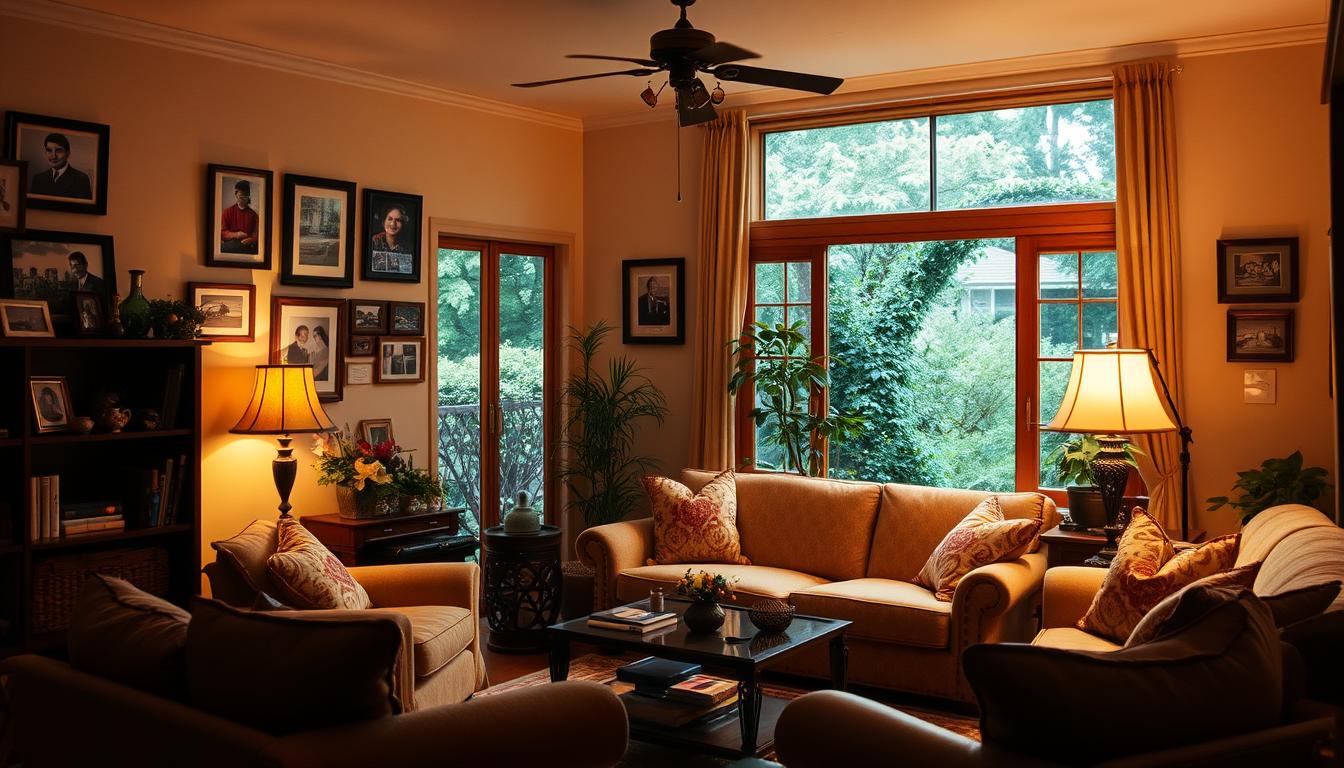
Home is more than a place to sleep—it’s where our sense of self begins. A study of 107 female psychology students at Complutense University in Madrid showed how bedrooms shape identity. They used 16,083 adjectives to describe their spaces, showing how personal identity ties to the rooms we inhabit.
Rooms belonging to women got more adjectives linked to agreeableness. On the other hand, male-linked bedrooms saw traits like conscientiousness. These findings highlight how home environments influence who we become.
Identity development starts early. Childhood memories in family homes shape how we view ourselves. Bedrooms, whether shared or private, become canvases for expressing personality.
Adolescence amplifies this process, as teens use rooms to test roles and build personal narratives. By understanding these connections, we see how home and identity formation are deeply intertwined.
The Concept of Home and Identity
Understanding the meaning of home is more than just physical structures. A 2008 Pew study showed 38% of Americans don’t see their current home as truly home. This highlights that home is deeply tied to emotions and a sense of belonging.
Psychologists say home is a psychological anchor. It’s a place where people feel they belong. For many, home is a reflection of who they are, with 58% of people worldwide feeling this way.
Cultural views of home vary greatly. For nomadic cultures, home is about movement. In contrast, many in Asia and Latin America see home as a place of family legacy. In the West, individualism often takes center stage.
These cultural concepts of home shape how we see ourselves. For example, 18% of people tie home to where they’ve lived the longest. Another 15% connect it to their ancestral roots.
Immigrant experiences show the complexity of home. Elderly migrants often hold onto childhood memories. Younger generations, on the other hand, embrace new norms.
The author’s own story, moving from Teesside to Wales, illustrates this. Their family’s Irish famine history shows how displacement can change identity over time.
“Walls and weapons in society reflect a historical continuity of belonging,” Toni Morrison noted, linking conflict to the universal search for home.
Today, trends like hyphenated identities show how home influences our identities. Climate change is displacing millions, making the distinction between shelter and sanctuary less clear. Yet, 66% of homeowners and 62% of women see home as a place of emotional refuge.
This mix of physical and emotional aspects makes home a timeless anchor for identity.
Childhood Memories Shape Our Identities
Childhood memories and identity are closely linked. Smells from a kitchen, laughter in a backyard, or a favorite blanket’s feel all shape us. These early experiences leave deep marks on who we become.
Bedrooms and playrooms are where kids try out different roles and interests. These spaces are part of our story, influencing how we see ourselves even when we’re grown.
Family rituals, like holiday meals or bedtime stories, give children a sense of belonging. Studies show 70% of adults hold onto values from their childhood. Also, 85% say early family interactions shaped their adult beliefs.
Having supportive parents is key: kids with nurturing parents are 50% more likely to have strong self-esteem. Even small moments, like comforting a scrape or celebrating a win, shape how we face challenges later.
Before age five, children’s brains grow most, with 90% of growth happening then. This period sets the stage for empathy, resilience, and curiosity. Early interactions with siblings, toys, or nature shape our identity.
As adults, these early experiences influence our decisions, fears, or passions. They remind us that our stories started in our earliest homes.
Physical Spaces Influence Our Sense of Self
Environmental psychology shows us how home design and identity are closely linked. The shape of walls, the way sunlight enters through windows, and the layout of furniture all affect our thoughts and feelings. A messy desk might show a chaotic mind, while open spaces help us feel more confident.
Private areas serve as our emotional anchors. Teens with their own study spots feel more independent. On the other hand, shared rooms can make it hard to keep personal space.
Choosing bold colors or simple decor can reflect our personality. Even the lighting in a room, whether warm or cool, can influence our self-image and dreams.
“A room is not a room until it has shaped the people inside it.”
A study by the National Trust found 67% of young adults see their homes as a reflection of themselves. In Istanbul, Professor Timur Hammond’s research showed how the Tree of Heaven symbolizes immigrant strength. These spaces reflect our values, memories, and goals.
When rooms feel cramped or unwelcoming, our self-image can suffer. But when they’re well-designed, they help us grow.
Every time we change our decor or hang new art, we’re having a silent conversation with our space. Environmental psychology teaches us that the walls around us are more than just backgrounds. They’re partners in our journey of self-discovery.
Community: The Link Between Home and Identity
Community identity is more than just where you live. It’s about the streets, parks, and local businesses that shape who you are. A lively neighborhood can turn strangers into neighbors, creating shared values.
For example, neighborhoods with annual festivals or local markets foster cultural rootedness. This makes residents feel part of something bigger. Social belonging is key. It’s not just nice; it’s essential.
Studies show that strong cultural practices help kids build self-esteem. They also help keep traditions alive, like celebrating heritage holidays or speaking ancestral languages.
“Place attachment grows when people see their history reflected in public spaces,” says urban planner Maria Gonzalez. “A park named after local activists or a library showing regional art reminds residents of their shared story.”

Neighborhoods also impact mental health. Research shows that areas with more resources have better emotional well-being. But, areas with less have higher stress due to limited green spaces or healthy food.
Yet, even in tough spots, cultural practices like kinship care or local storytelling can strengthen place attachment. Schools and families teaching kids about their heritage help them form strong identities. When communities support these connections, homes become anchors of traditions, faces, and memories.
So, a neighborhood is more than just a place. It’s a living part of who you are.
Home as a Sanctuary for Growth
A home is more than just a place to live. It’s a key part of our psychological safety, where we can truly be ourselves. In these safe spaces, we can explore who we are without fear of being judged. Studies show that homes with natural light, plants, and tidy layouts help us feel less stressed. This lets us grow emotionally and creatively.
A nurturing home environment contributes to healthy attachment styles and positive self-esteem in children.
Children do best in homes that are stable. They need predictable routines and quiet areas to deal with school stress. Parents who create calm spaces help kids feel safe again. Even small changes, like tech-free evenings or cozy reading nooks, make a big difference.
Designs that bring nature indoors, like indoor gardens or soft lighting, have a calming effect. These elements don’t just make homes look good. They make them safe places to be vulnerable. When homes are peaceful, they help us find ourselves again after tough times.
Not every home is perfect, but we can make it one. By adding warmth and structure, we turn our homes into places of growth. Here, everyone can feel at home, breathe, and grow together.
The Role of Home in Personal Narratives
Every home has stories just waiting to be shared. Home in personal stories is more than just a place—it’s a key character in our life storytelling. Think of a kitchen where families have shared meals for years, or a porch where family family narratives were passed down. These spaces are the foundation of who we are, turning simple buildings into living chapters of our history.

Family gatherings, like the Griffin’s annual event, show how home traditions shape our values. A 2019-2021 study of 15 seniors in long-term care found 12 used life storytelling to define their legacy. Even with memory loss, their stories held onto family ties. For example, one person remembered learning patience from watching their grandmother knead bread.
Every object—a faded quilt, a childhood drawing—holds a thread to who we were. These items aren’t just heirlooms; they’re key moments in our ongoing family narratives.
Physical spaces and heirlooms connect us to our past. The smell of a holiday meal, the crack in a dining room window where a toddler cried—these details create nostalgic connections to home that last forever. For families like the Troy clan, caregiving cycles across generations are part of their shared identity. As we grow, our homes silently witness our daily performances, their walls echoing with our stories.
Moving and Its Impact on Identity
When people move, it can shake their sense of self. It’s like losing a thread in a big tapestry. Studies show 60% of immigrants struggle to feel at home, caught between two worlds.
This feeling of being in between affects 70% of those who have been displaced. It changes how they see themselves. Moving means leaving behind what’s familiar, like streets, accents, and social cues.
“New environments force us to question who we were—and who we can become,” says Dr. Lena Torres, a cultural psychologist.
Adapting to new places means rethinking what’s important. Cultural differences or new opportunities can change our habits and values. For instance, 75% of migrants rethink their beliefs when they see different norms.
Yet, 65% grow through friendships with people from other cultures. They mix old and new ways of life into a new identity. But, challenges like job problems or discrimination can make it tough. Yet, many find strength in their resilience.
Over half build support networks to help them adjust. And 70% say being exposed to different cultures has enriched their lives in the long run.
Identity changes aren’t straightforward. They’re a mix of losing and finding. The important thing is to see change as a chance to discover hidden strengths. Every move, though scary, helps us grow into a more flexible and adaptable person.
Home Ownership vs. Renting: Different Identities
Homeownership and renting shape our views of ourselves and our futures. Owning a home means stability, with tax breaks and long-term gains. But, it’s not easy: you need good credit, a big down payment, and closing costs.

Renters have more freedom, with short leases and no equity worries. A 2016 Pew study showed 72% of renters want to own. Renting lets you move easily, without worrying about repairs.
“Housing status impact extends beyond finances—it’s about who gets to thrive in stable environments,” notes the Harvard Joint Center for Housing Studies. Racial disparities persist, with Black and Hispanic applicants facing higher mortgage denial rates. Portland’s 1930s zoning laws, reserving 74% of land for single-family homes, entrenched segregation. Such policies affect residential identity today.
Residential identity is shaped by systems, not just personal choices. Renters and owners face equity gaps and zoning laws. Whether buying or renting, both paths show our values and limits. Housing reflects who we are and our dreams.
Technology and Modern Homes
Technology changes how we live in our homes, mixing the real and digital into a new digital home life. Smart devices, like voice assistants and automated lights, control our daily routines. This makes us wonder about smart home psychology—how controlling our environments affects our sense of home and belonging.
Virtual home spaces, like VR living rooms or social media profiles, let us show who we are beyond our homes. A virtual home space can be a place for self-expression. But it also risks mixing our personal and public lives. Over 90% of Americans are concerned about tech’s long-term effects, yet only 10% think it severely harms our brains (FIT CFMM, 2019).
Smart homes make life easier but also raise privacy concerns. The American Academy of Pediatrics says too much screen time is bad for kids’ brains. Studies show it can lead to sleep problems and anxiety. Yet, many people use these tools to stay connected. Finding a balance between new tech and careful use is essential to keep our homes’ essence alive amidst technology impact on home identity.
Modern homes are no longer just bricks and mortar—they’re ecosystems of data and desire.
As cities like Austin and Seattle add tech to their designs, the difference between our physical and digital lives gets smaller. We need to make smart choices to make sure technology enhances, not takes over, what makes a home truly ours.
The Influence of Home Design on Behavior
Home design psychology shows how spaces shape our habits and self-expression. Every choice, from wall colors to furniture, impacts how we behave. For example, warm colors like red or yellow in dining areas make us talk more. Cool blues in bedrooms help us relax.
Natural light boosts our productivity, seen in offices and home workspaces.

Intentional home design is more than looks. Open floor plans bring people together, while separate rooms help us focus. Dr. Sergio Altomonte says design that prioritizes safety and comfort makes us feel better.
Soft fabrics and warm lighting create spaces that make us feel at home. Even small changes, like adding plants or rearranging furniture, can make our spaces reflect our values.
“Spaces that honor human needs create harmony between people and their surroundings.”
Choosing colors and light is key. Bright colors energize, while soft shades calm us. Using rugs and curtains can make rooms feel cozier and quieter.
Designing with goals in mind, like minimalism or sustainability, makes our homes a part of who we are. Every detail, from cozy reading nooks to sleek kitchens, shows how we want to live. Good design is about creating spaces that truly reflect us, not about being perfect.
Seasonal Changes and Their Effect on Home
Seasonal home changes are more than just changing decor. They change how we use our spaces. In spring, we open windows and use lighter curtains to let in warmth. In winter, we add blankets and cozy lights to make our homes snug.
These changes start with small decisions. In summer, our patios become places for friends to gather. In winter, our dens become cozy spots to relax. These changes reflect our connection to nature’s cycles.
Climate changes make these changes more important. As the planet warms, springs come earlier and autumns later. This means we use our outdoor spaces differently. Families might make their homes more open to the outdoors.
Coastal areas face rising seas, forcing homeowners to take action. They might raise their homes or strengthen their foundations. These changes show how we adapt our homes to both nature and our needs.
Seasonal changes also show regional differences. In the East, birds migrating early signals spring. In the West, droughts lead to water-saving gardens. These changes show how our homes reflect our values and the local environment.
The Future of Home and Identity
Future homes are changing how we see ourselves. Tiny homes, co-housing, and living with family members are becoming popular. These ideas focus on community and simplicity, showing a shift towards values-driven living.
Sustainable living is becoming a key part of who we are. Homes with solar panels, green roofs, and zero-waste systems show our commitment to the planet. As we face more climate issues, our homes reflect our care for the environment.
Future homes will focus on mental health over luxury. Open layouts, personal art, and smart tech will let us create spaces that truly reflect us. This approach aligns with research that shows our homes shape our self-image.
In the next 15 years, homes will be more innovative and intentional. We’ll see modular designs and materials that are good for the planet. This change shows how our identity is linked to where we live. Future generations will define themselves by choices that care for both the planet and their personal truth.