






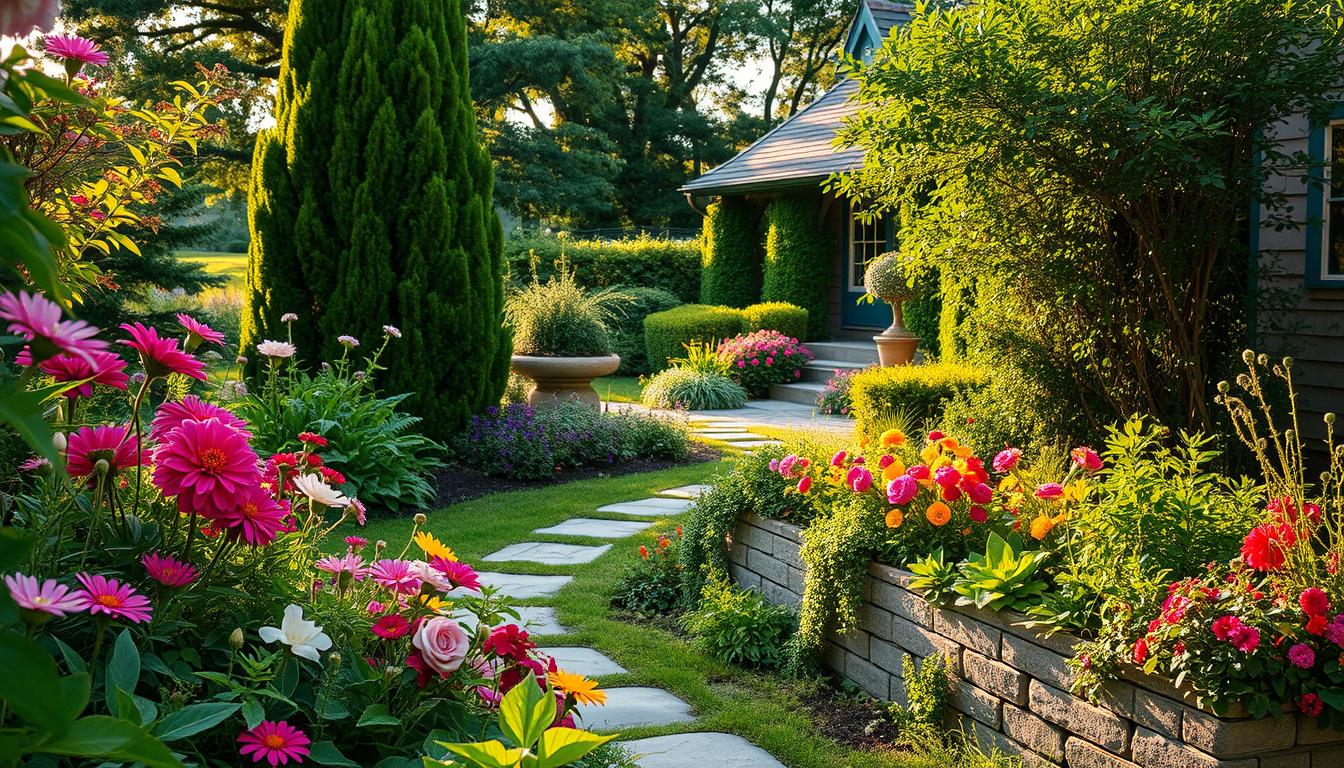
Home gardens have always connected our living spaces to nature. From ancient times to now, they are more than just outdoor areas. They are where families grow food, bond, and flourish.
Trevor Hamlyn shapes his environment through gardening. Kylie Johnson feels a deep connection with her native plants. This shows how gardens are more than just yards—they are part of our home life.
Gardens are changing how we design our homes. Urban families around the world grow a significant portion of their food. In Indonesia, poor farmers earn 25% of their income from gardens.
These spaces are both useful and beautiful. They turn yards into essential parts of our homes and gardens.
Today, gardens are seen as outdoor rooms. They are both functional and cozy. With 54% of people living in cities, homes use every inch for food and well-being.
In China, a small garden bed can produce ten crops a year. This shows how even small spaces can improve nutrition and resilience. By seeing gardens as part of our lives, families everywhere are finding their value in health and sustainability.
The Emotional Connection to Gardens
Gardens are more than just plants—they’re spaces where garden therapy and nature connection thrive. For many, tending soil becomes a path to emotional wellbeing. A 2020 study in Landscape and Urban Planning tracked 370 people in Minnesota. It found that home gardening boosts mood as much as walking or biking.
Over 30% of participants gardened weekly. Women and those with lower incomes reported greater emotional gains than others.
Walter Schuler of Florida describes his native plant garden as a “stepping stone” to a calmer mindset. His story mirrors findings from Pittsburgh’s Phipps Conservatory, where 70% of participants kept gardening three years later. Delia Delgado of Virginia agrees: her front-yard native garden “transformed my life,” showing how therapeutic gardening shapes identity.
Texas A&M research confirms this: plants reduce stress, while garden psychology highlights how nurturing plants mirrors nurturing self-worth.
Over 50% of urban dwellers now seek green spaces, proving gardens are vital for mental health. These outdoor sanctuaries offer a break from daily stress, aligning with the UN’s goal for sustainable, green cities. Whether planting vegetables or wildflowers, gardens become living journals of growth and resilience.
Designing Your Garden Space
Creating a garden that fits your lifestyle is key. Garden design is more than just plants. It’s about making outdoor living spaces that fit your daily life. Start by thinking about where you’ll eat, play, or relax.
A good garden layout should look good and work well. It should make every part of the garden useful.
Patrizia Capplil’s garden shows the power of smart planning. She replaced hard-to-care-for plants with native shrubs. Now, her garden is easy to maintain and beautiful all year.
“Adding native plants made all the difference.”

Begin with simple zones for different activities. Use paths or hedges to divide areas without walls. Choose perennials like hellebores for less work, and vertical gardens for color without taking up space.
For small gardens, use 2.4m arches and mirrors to make areas seem bigger.
Make sure your plants like your soil. Hornbeam does well in clay, beech in lighter soils, and yew hedges need grittier soil. Add 200mm of grit when planting yews in heavy clay to help roots grow strong.
Herb gardens in small spaces can mix annuals like basil with perennials like thyme.
A great garden design grows and changes with you. Include space for new needs, like raised beds for older knees or shaded spots as your family grows. Make your garden feel like an extension of your home, where life flows easily outside.
The Role of Gardens in Sustainable Living
Turning outdoor areas into sustainable gardening spots begins with green landscaping. Native plants, like those in Wisconsin by John Norquist, need less water and help wildlife. Switching to drought-tolerant plants cuts down on emissions from mowers and fertilizers.
“Our native prairie plants now thrive without chemicals,” says Norquist. This shows how gardening for the environment creates strong ecosystems.
Wildlife gardens help pollinators, with native flowers increasing bee numbers by up to 30%. Composting and using rain barrels turn waste into useful things, reducing landfill waste. Doug Coupar in Florida says native landscapes protect communities from storms, showing green living is more than looks—it’s about climate action.
“Handle soil and watch plants grow” is a big motivator, but taking action is key. Drip irrigation saves 50% more water than sprinklers, and using peat-free soil protects bogs. Sustainable plant pots made from bamboo or recycled plastic replace harmful materials. Even small actions, like planting a tree that absorbs 48 lbs of CO2 yearly, make a difference.
With 91% of U.S. households seeing gardening’s environmental value, every garden is a chance for change. They help reduce food miles and support biodiversity, showing green living is both useful and powerful.
Connecting with Nature Through Gardening
Gardening is more than growing plants—it’s a way to connect with nature. Kelly Konieczki from Michigan found that caring for native plants shows us how soil, wildlife, and seasons are linked. This mindful approach turns simple tasks into moments of calm, like touching soil or watching pollinators.
This practice is part of biophilic living. It helps us feel grounded in the Earth’s rhythms, even in our busy lives.

Seasonal gardening teaches us patience. Planting bulbs in fall for spring blooms shows us nature’s cycles. It’s a way to balance the constant indoors with nature’s flow.
Jim Scott says native plants do best when they’re in the right place. This shows how seasonal gardening helps us understand the environment. Even in cities, a small garden can be a peaceful spot, bringing people together.
Children who garden are more likely to try new foods, like cherry tomatoes they’ve grown. Gardening helps them connect with life’s cycles, fighting the effects of too much screen time. Every action in the garden strengthens our bond with nature, a topic of study for many.
Family Engagement in Gardening
Gardening with kids turns outdoor spaces into living classrooms. At Crestwood Elementary School, 80% of families join in. They plant vegetables or paint garden murals together. These activities build bonds and teach patience and teamwork.
Designing educational gardens with safe zones for all ensures everyone contributes. Younger kids measure plant growth, while teens track soil moisture. Grandparents share their childhood gardening techniques, blending old with new.
At Crestwood, bilingual signs make spaces welcoming for all. Families noticed 60% fewer safety concerns after starting their garden. Side gates became entry points, fostering trust.
Teachers use pests as lessons, like how ladybugs control aphids. This sparks curiosity. Over 200 families now help maintain the space, making weeding quality time.
Studies show kids who garden eat more veggies, like snap peas they grew. Crestwood’s program improves problem-solving skills by troubleshooting plant issues. Even small tasks, like filling watering cans, build confidence.
Family gardening isn’t about perfection. It’s about hands in soil, shared laughter, and roots growing deeper than the plants.
Integrating Gardens into Home Aesthetics
Seventy percent of homeowners believe a well-designed garden enhances a home’s garden aesthetics. To blend indoors and outdoors, focus on indoor-outdoor flow. Begin by matching your home’s home garden style in outdoor areas. Use materials like stone or wood that match your home’s look.
Large windows or sliding glass doors serve as natural frames. They connect rooms to the outdoors.

“Garden art isn’t just a way to beautify your yard—it can also nourish your soul. Thoughtful pieces complement plants and bring tranquility to indoor-outdoor spaces.”
Landscapers use garden design elements like pathways or water features to guide the eye. A consistent color palette, like matching greenery to your interior decor, ties spaces together. Modern landscape architecture favors clean lines, while cottage styles embrace wild blooms.
Add sculptures or potted plants that reflect your home’s style.
Seasonal plants and evergreens keep your garden looking good all year. Sixty percent of gardeners mix beauty with function, like seating areas near kitchens for herb harvesting. Strategic lighting makes evenings more enjoyable, and raised beds or tiered planters add height.
With 75% of homeowners adding personal touches, your garden becomes a part of your living spaces. It’s not just an afterthought.
Utilizing Vertical Space in Gardening
Urban gardening turns small spaces into green havens with vertical gardening. Living walls and green facades make bare walls bloom. These gardens boost yield and look great. Picture tomatoes climbing up or melons hanging from supports, all in a small area.
Vertical gardening fights disease by keeping plants off the soil. Plants like tomatoes and beans grow well up high, saving space. Use a trellis or mesh for squash vines, and hang planters for color.
Green facades cool walls by 50°F, saving on cooling costs. They also block noise and attract pollinators. Water use goes down with drip irrigation, cutting waste by 30%. Pruning and fertilizing vertical plants is easier than traditional beds.
Urban gardeners can grow all year with cold frames or green facades. The goal is to create 5,000 efficient gardens. Whether using kits or DIY planters, vertical gardening is both useful and beautiful. It shows that even in tight spaces, you can have a lush garden.
The Benefits of Edible Gardens
Edible landscapes blend beauty with function, turning backyards into productive areas. Kitchen gardens do more than provide fresh food—they teach patience and connect families to nature. Imagine eating a tomato warm from the sun or using herbs in your cooking.
These moments help us appreciate the value of growing our own food. They keep alive the traditions of culinary gardening.
The Three Sisters method, with corn, beans, and squash, is a great example. It shows how plants can help each other grow. This approach reduces the need for pesticides and supports biodiversity.
Even small spaces, like a balcony herb garden, can make a big difference. A 6-foot “food island” with strawberries and greens is a good example. Shaded raised beds can even produce 80 pounds of vegetables a year, proving you don’t need lots of sunlight to grow food.

Home food production cuts down on the long distances food travels. Lawns, covering 40 million acres in the U.S., could be turned into edible gardens. This saves water and keeps homes cooler in summer.
It also attracts pollinators, helping both gardens and local ecosystems.
Begin with something small, like a pot of basil or a dwarf fruit tree. Every edible plant grows your skills and connection to the earth. Culinary gardening is about nurturing life, one seed at a time.
Overcoming Common Gardening Challenges
Even experienced gardeners face problems like pests, poor soil, and not enough time. Garden challenges such as aphids or slugs can cut yields in half. Poor soil also drains productivity. Start by testing your soil and adding compost to increase nutrients by 25%. Use natural predators like ladybugs instead of chemicals to fight pests.
Space and time are big hurdles. Over 50% of urban gardeners use vertical gardening to make the most of low-maintenance gardening. Containers and raised beds save effort and boost yields. Time-strapped gardeners can cut upkeep by 30% with drought-tolerant plants and drip irrigation systems.
Extreme weather? Choose native plants that fit your local climate. Mulching keeps moisture in, reducing watering needs. For disease-prone areas, space plants properly to lower infection rates by 70%. Tools like soaker hoses and programmable timers make care easier.
Don’t let setbacks get you down. Garden troubleshooting begins with small fixes—like companion planting or DIY pest barriers. Focus on what grows well in your space. Embrace gardening solutions that fit your lifestyle. Every problem has a solution, turning frustrations into a greener, stress-free outdoor space.
The Future of Gardening at Home
Future gardening trends are all about technology and caring for the environment. Now, smart gardens use sensors and apps to check soil moisture or control systems like the Gardyn Home Kit 4.0. These tools help gardeners deal with climate changes, making it easier to grow food in cities.
As weather patterns change, climate-resilient landscaping is key. Homeowners like John Fischer in Wisconsin are choosing native plants for their lawns. This supports local ecosystems. Doug Coupar’s Florida garden uses plants that can withstand hurricanes, showing gardens can protect homes and wildlife.
These designs also save water and boost biodiversity.
Sustainable garden innovation brings new ideas. Eco lawns need less care but attract pollinators. Vertical systems like hanging plant pulleys save space. Hydroponics let renters grow lettuce in 6 weeks or microgreens in 7 days.
These methods reduce food miles and pesticide use. They match Gen Z’s love for eco-friendly products.
By 2050, cities will be home to 70% of the world’s population. Urbanites are turning to container gardening, with a 200% increase in households using pots and vertical setups. Even small spaces can now host thriving gardens, thanks to energy-efficient LED lights and soil-free systems.
Gardens are changing but their core purpose remains the same: connecting us to nature. Whether through smart tech or native plants, home gardens will keep evolving. They will provide food, beauty, and resilience for future generations.