






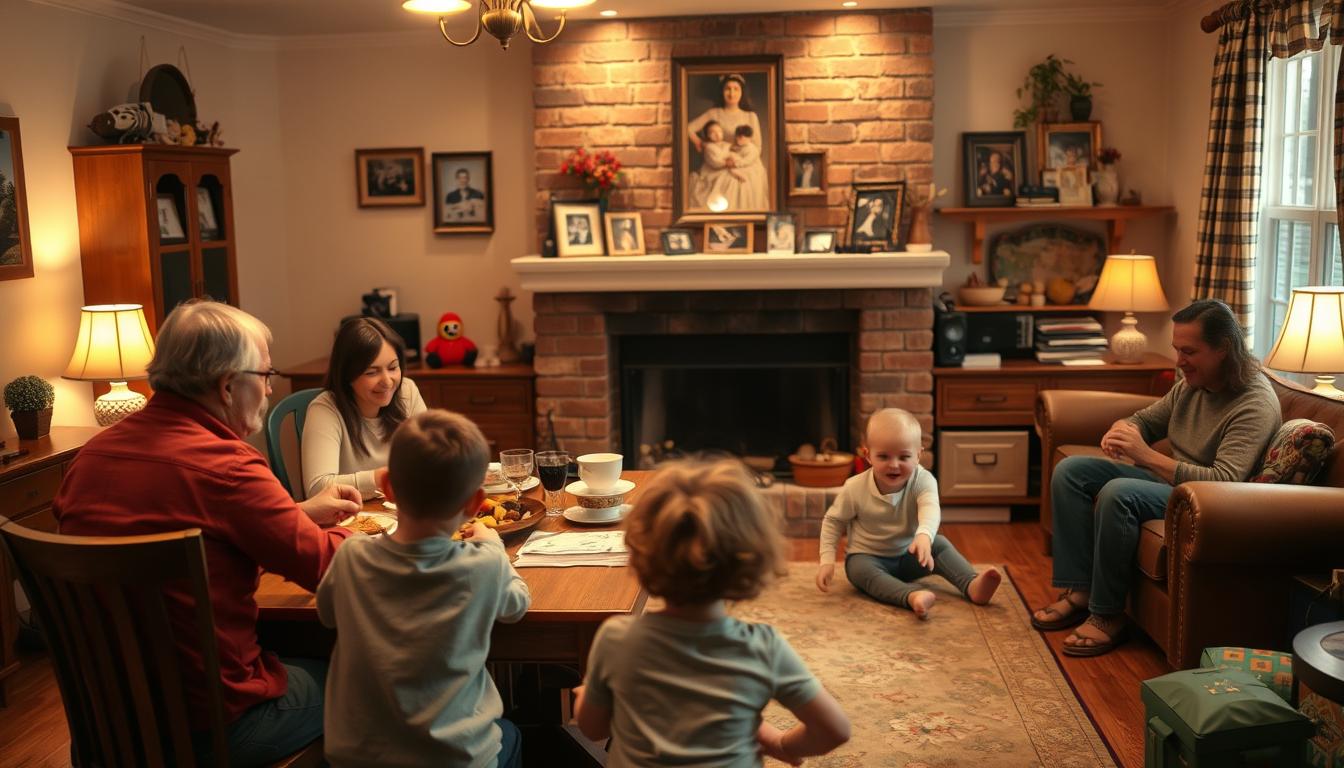
Life is always changing, but family rituals keep us steady. Traditions like weekly dinners or bedtime stories are key. They help us feel grounded and connected.
Our brains love routine. Activities like Daniel filming family videos or Sophia’s TV nights with parents meet this need. Studies show these rituals make us feel safe and strengthen family bonds.
Even small rituals, like a 5-minute gratitude chat before bed, can make a big difference. They improve kids’ emotional skills by 20%. Rituals are more than just tradition; they’re about connection.
When families face big changes, rituals are a lifeline. Keeping routines while introducing new ones helps kids like Isabelle, 18, stay grounded. These practices create lasting memories and build resilience. In a world of constant change, rituals help us hold onto what’s important.
The Importance of Family Rituals in Our Lives
Family rituals are more than daily habits—they are meaningful family practices that shape our identity. Unlike simple routines, rituals like weekend pancake mornings or holiday traditions hold deep meaning. Bruce Miller said, repetition in these practices helps families encode shared values into memory.
Take bedtime stories, for example. Studies show kids with consistent routines fall asleep faster. This boosts their emotional security and family stability.
Rituals create anchors during life’s chaos. During the pandemic, families adapted by hosting virtual game nights. This shows rituals stay relevant when they evolve.
These practices also foster identity—whether celebrating Passover or a child’s birthday, they build a shared story. Research even shows rituals reduce stress: stepchildren often feel excluded in marriage rituals, but intentional adjustments can strengthen bonds.
Understanding ritual vs routine matters. A study revealed LGBTQ+ families sometimes feel alienated by traditional weddings. This shows rituals must reflect each member’s needs. By adapting, families ensure their practices remain sources of connection, not sources of conflict.
The key is balance—keeping traditions alive while making space for change as families grow. From nightly dinners to holiday gatherings, rituals are more than habits. They’re the glue of family stability, providing predictability in unpredictable times. Their benefits extend beyond comfort—they shape resilience, belonging, and shared purpose.
Types of Family Rituals
Family rituals are many and varied, each with its own purpose. They range from daily traditions like morning hugs to big celebration rituals like holiday feasts. These practices fall into different family ritual categories. They include bedtime stories and seasonal gatherings, all aimed at strengthening family bonds.

Regular disruptions of family routines can lead to stress beyond what families can handle. — Harrist et al., 2019
Daily traditions like shared meals or bedtime chats bring stability. Studies show that evening reflection times can cut childhood anxiety by 20%. Shared cooking nights can boost bonding by 30%.
Weekly rituals, like game nights or Sunday pancakes, create something to look forward to. Research shows 60% of households feel closer after adopting weekly gatherings like movie nights.
Seasonal and annual rituals, like birthday ceremonies or quinceañeras, deepen cultural ties. A 65% majority of families say storytelling nights strengthen their sense of belonging to family history. Even modern practices like monthly park visits or DIY craft days count. Rites of passage like graduation celebrations or naming ceremonies also mark life changes, blending old and new family connection practices.
Whether it’s a quick morning check-in or a weekend adventure, these patterns shape identity. They turn routines into rituals, making everyday life a canvas for shared meaning.
The Psychological Benefits of Rituals
Family rituals act as invisible shields for mental health benefits. Studies show regular routines like bedtime stories or weekly game nights lower stress hormones. This eases anxiety for all ages. These practices build a family psychological wellbeing foundation by creating predictability in chaotic times.
For example, shared meals or holiday traditions remind members they’re part of something larger. This belonging through rituals strengthens bonds and self-confidence.
Rituals shape identity formation by anchoring individuals in their family’s values. A Harvard study found rituals like gratitude journals or cultural ceremonies help children understand their roots. This boosts resilience.
Even small acts—like lighting candles before dinner or weekend hikes—signal to the brain that “this is safe.” This reduces fear of the unknown.
When life shifts, rituals become lifelines. A 2016 study revealed participants who performed rituals before singing karaoke felt calmer and performed better. This proves their power as anxiety reduction techniques.
Families facing loss or moves often use rituals to regain stability. For instance, some light a candle in memory of a loved one or start a new tradition after a move. This rebuilds familiarity.
These practices aren’t just nostalgic—they’re neuroscience in action. By repeating actions, brains release oxytocin, fostering connection. Whether it’s a pre-game prayer or a bedtime mantra, rituals remind us we’re never alone. Their power lies in turning uncertainty into comfort, one shared moment at a time.
Rituals During Major Life Changes
Transition rituals help families deal with big changes. When moving, starting traditions like a “last night” celebration at the old home or a “first night” welcome in the new neighborhood can help. These practices turn uncertainty into shared stories.
Planting a tree in the new yard is a way to mix old and new memories. It’s a way to hold onto the past while embracing the future.
Grief rituals give structure during tough times. A parent might lead a funeral for a beloved pet, like a stick insect. This lets the child share stories and choose a song. Research shows small acts, even 5 minutes long, help process emotions.
Mourning rituals make the invisible visible. They help us feel less alone. For example, communities hold annual memorials, just like this family’s stick insect tribute.

Change management at home works best when everyone is involved. Remodeling a holiday tradition or inventing a goodbye ritual for a family member builds resilience. Rituals help bridge the gap between past and future.
Let children name a new family tradition or design a memory box. This way, they can hold onto cherished moments.
Rituals provide a framework for releasing emotions and marking beginnings.
Without rituals, families might feel disconnected. Structured rituals, like lighting a candle on an anniversary or creating a “new chapter” scrapbook, help us see change as a shared journey. Even small acts, done with intention, can anchor us in uncertain times.
Family Dinners: A Time-Honored Tradition
Family meals do more than just fill our plates. Studies show kids who eat with family are 12% less likely to take risks and 20% more likely to do well socially. It’s not just about the food; it’s about making mealtime connections. Just 37 minutes a day can make a big difference. Think about the happiness of hearing about your child’s day or learning family stories.
Even with busy lives, we can keep traditions alive. Begin with one meal a week. Let kids help with prep or pick the recipe. These moments help create shared eating traditions that improve communication. Try asking, “What made you smile today?” to keep conversations engaging. And remember, no screens at the table for real talk.
Creating rituals like “Taco Tuesday” or saying “itadakimasu” before eating adds culture to our daily lives. Even 15 extra minutes can make family bonds stronger. It’s not about being perfect; it’s about being there. Small steps today can lead to lasting memories that warm our hearts for years.
Celebrating Holidays Together
holiday family traditions are the heart of many homes. They include baking cookies, decorating trees, and sharing stories. For 21 years, one family has opened one gift on Christmas Eve. This started when their first child was born.
These customs, rooted in custom development, help families create lasting identities. They span generations.
Grandma Hart has hosted gatherings for 104 years. Her holiday dinners mix cultural dishes and laughter. This shows how traditions can connect people across ages.
Even in blended or foster families, creating safe spaces for traditions is key. It strengthens bonds. Open communication helps adapt celebrations to respect everyone’s background.
Meaningful celebrations don’t need big plans. Activities like ice-skating, craft nights, or virtual calls bring joy. There are over 80 ideas for traditions, from snow forts to caroling.
Small acts, like writing thank-you notes on National Thank You Note Day (December 26), add purpose. Research shows these rituals reduce stress and boost emotional well-being.
Whether it’s a child lighting a candle or a doctor’s office hosting lunches, these moments are important. By focusing on what connects us, families make holidays special. The best traditions start with a small, heartfelt choice and grow into cherished memories.
The Role of Rituals in Parenting
Parenting through rituals lays a strong foundation for healthy child development. Practices like bedtime stories for toddlers or weekly family meetings for teens grow with the child. These routines teach values through action, not just words.
In Japan, the Tea Ceremony (Chado) starts with kids as young as six. Nine-year-old Yuu, for example, learns alongside adults at the University of Illinois. This teaches patience and mindfulness, showing the value of harmony and humility.
Values are passed down through shared activities. The American Academy of Pediatrics says family rituals are key in organizing family life. They help during big changes like starting school or entering adolescence. Rituals like a bedtime gratitude chat or a team handshake teach empathy and teamwork.
Rituals change as children grow. A family might move from toddler bath-time songs to teen-led Sunday dinners. This keeps traditions alive while passing on important messages. The Search Institute found that these practices help kids deal with stress by providing a sense of familiarity.
“Rituals are not about perfection—they’re about presence,” says family therapist Dr. Elena Martinez. “Even small routines, like packing a ‘brave box’ for school mornings, build emotional security.”
Embracing ritual-based discipline means focusing on shared experiences over punishment. Activities like seasonal crafts or weekly errands teach responsibility and connection. Rituals, tailored to a child’s age, speak volumes of love, louder than words.
Digital Age: Adapting Rituals
Family rituals have changed with the rise of technology. During the pandemic, families got creative with virtual Passover Seders and birthday car parades. They even replaced hugs with window waves. These moments show how modern family practices mix technology and family rituals.
A Texas principal traveled 800 miles to give graduation notes. This act turned a challenge into a special memory. It shows how we can make the most of tough times.

It’s important to balance screen time. IDEO’s virtual meetings show we can stay connected online. Families can do the same with tech-free dinners or weekly video calls with grandparents.
Tools like shared photo albums or virtual game nights help keep families close. They make virtual family connections feel real.
Generational gaps can be bridged with hybrid rituals. Teens might use Snapchat, while parents have Zoom calls for meals. These digital age traditions show we can be flexible.
Research says online rituals are not as deep as in-person ones. But mixing both can strengthen family bonds.
Adapting rituals means using technology wisely. Families that set phone-free times keep rituals alive. The aim is to use screens to enhance, not replace, our shared moments.
The Power of Routine in Everyday Life
Small, consistent daily routines keep families grounded in chaos. Sharing breakfast or a quick check-in sets a calm tone for the day. Bedtime traditions, like storytime or a lullaby, help everyone relax.
These simple practices create rhythms that bring families closer together.
“During times of uncertainty, predictable touchpoints are vital.”
Morning rituals don’t need to be perfect. A high-five at the door or a joke during pancakes is enough. Bedtime traditions might include journaling or talking about the day’s best moments.
Even small actions, like a text at lunch or a wave through a window, strengthen bonds. What matters most is being consistent, not complicated.
Studies show routines lower anxiety by providing a sense of order. Families that make these moments a priority become more resilient. These practices turn into cherished memories over time.
Begin with a small change, like a nightly hug or a song. Over time, these small actions build a strong foundation of love and stability.
Engaging the Community in Family Rituals
Bringing neighbors and friends into family rituals makes everyone’s life richer. Community rituals like block parties or seasonal potlucks build strong bonds. For example, an annual harvest dinner mixes extended family customs with neighborly gatherings, promoting respect.
Many places celebrate cultural celebrations like Lunar New Year parades or Diwali. These events let families learn about traditions beyond their own.

Getting involved in neighborhood traditions like park cleanups or holiday lights contests teaches teamwork. A study found 75% of families see these activities as a way to bridge generations. Even small actions, like baking cookies for new neighbors or joining a community garden, can become special family traditions.
Technology also plays a role: families can share virtual holiday meals or use apps for group volunteering. By attending local events, families find that shared rituals like town fairs or heritage festivals become part of their story. These connections not only expand routines but also create a supportive network, helping families through life’s ups and downs.
Nurturing Family Bonds Through Adventures
Family adventures turn simple moments into lasting memories. Whether it’s an annual road trip or a weekend getaway, these trips anchor a family’s story. They create shared experiences that strengthen bonds and resilience.
Even small outings, like a hike or a museum visit, can deepen relationships. These activities are key to building memories that last.
Research shows 75% of people believe traditions are essential to their family’s identity. Travel traditions can be revisiting a childhood lake cabin or exploring new cultural landmarks. The goal is to mix familiar routines with new discoveries.
Consistency is key. These shared experiences give families stories to revisit, strengthening their collective history.
Adventure doesn’t need to be big. Local parks, cooking challenges, or stargazing nights offer chances to work together and laugh. Overcoming small challenges together builds teamwork and trust.
These moments help counter feelings of isolation. Studies show 34% of older adults value family support during life changes.
Make adventures accessible by involving everyone in planning. Let kids choose a destination or a teen pick a new recipe. Capture memories through photos or a shared journal.
Even virtual check-ins during travels keep distant relatives involved. Apps and photo albums turn fleeting moments into lasting keepsakes.
Whether it’s scaling mountains or exploring a nearby trail, family adventures forge unbreakable ties. These shared experiences remind families of their strength and shared history. Start small—a weekend camping trip or a backyard scavenger hunt—to nurture bonds that grow stronger with every journey.