






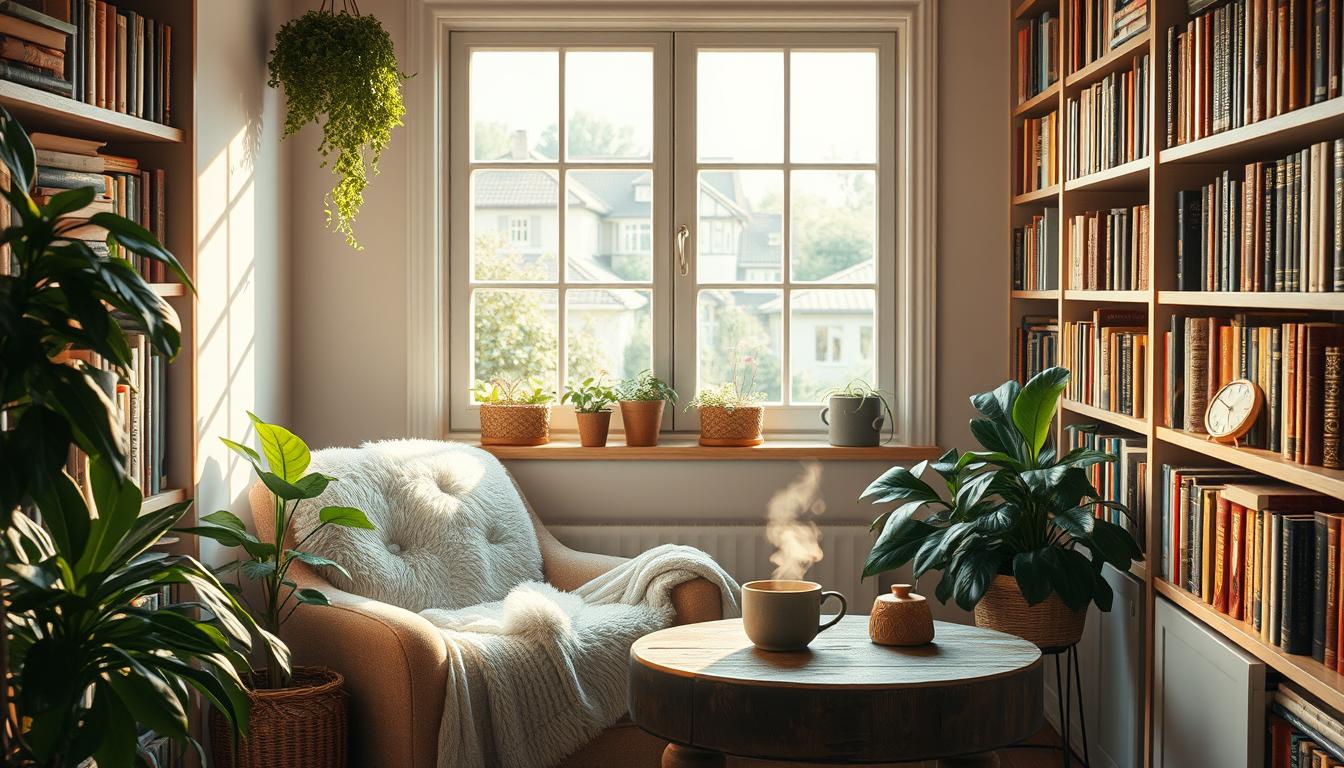
Cozy corners turn tiny spaces into safe havens. They are places where families and educators help everyone relax. These small spaces, like calming corners in classrooms, offer big comfort.
They have soft pillows or soothing colors. Research shows 100% of early childhood classrooms benefit from such spaces. This proves their power, even in small areas.
These corners focus on emotional safety and support. Studies say 70% of children struggle with managing their emotions. This makes these havens very important.
Dr. Siggie Cohen suggests starting at age 3. This shows how small space design can help build resilience. By mixing practicality with comfort, cozy corners become daily sanctuaries for all ages. They improve well-being in any setting.
Embracing Tiny Spaces: The Beauty of Minimalism
Minimalist design turns small spaces into calm and purposeful havens. For those living in small spaces, simplicity is not about giving up. It’s about choosing items that truly matter. A well-thought-out tiny home offers comfort through smart choices, like multiuse furniture or open layouts.
Dr. Siggie’s advice is clear: “The simpler, the better for cozy corners. Too many items can overwhelm kids—and adults alike.”
“The simpler, the better when it comes to cozy corners. Too many items can overwhelm kids—and adults alike.”
Decluttering tips start with a simple question: Does this serve a purpose? Getting rid of unused items makes space feel bigger. Over 68% of tiny house owners say they feel less stressed after downsizing, showing that less can mean more joy.
Using storage under beds or in walls adds comfort without losing style. Even a 200-square-foot space can feel spacious with light, natural materials, and smart layouts.
Simplicity goes beyond looks. Tiny homes use 80% less energy and have up to 75% fewer possessions, fitting eco-friendly lifestyles. By focusing on the essentials, spaces feel welcoming, not cramped. This move toward mindful living is more than a trend. It’s a proven way to save money, clear your mind, and create homes that support well-being.
Creating a Cozy Atmosphere in Small Areas
Turn cramped spaces into cozy retreats by focusing on sensory details. Use cozy lighting and soft textiles to create a warm atmosphere. Even small corners can feel welcoming with smart design that balances comfort and practicality.
Start by layering light sources. Table lamps with warm bulbs or string lights cast a gentle glow. This adds warmth without overwhelming the room.

Ambient lighting sets the mood. Dimmable fixtures let you adjust brightness to match the moment. Soft textiles like chunky-knit throws or faux-fur pillows add tactile warmth.
Plush rugs in neutral tones anchor the space. Textured blankets draped over chairs invite relaxation. These elements create a sensory journey that feels larger than it is.
“In small spaces, lighting becomes the foundation of comfort. A mix of soft glow and practical light ensures every corner feels inviting.” – Sarah Green, Interior Designer at Modern Nest Designs
Combine these elements with subtle scents from reed diffusers or the rustle of silk plants. A narrow console table topped with a ceramic vase adds visual interest without clutter. By blending layered lighting, textural fabrics, and curated decor, even modest areas become havens of calm.
Every detail, from a wool area rug to a dimmable sconce, contributes to a space that feels expansive. This is thanks to thoughtful design choices.
Warm atmosphere emerges when light, texture, and scent align. Prioritize fixtures that cast a golden hue and textiles that drape loosely. These choices turn limitations into opportunities, proving small area design can feel unexpectedly vast when crafted with intention.
Multi-Functional Furniture: Smart Solutions
Compact living spaces shine with multi-purpose furniture that’s both stylish and practical. Think of storage ottomans that also serve as coffee tables. Or convertible furniture like sofa beds that turn into beds at night. These space-saving solutions not only save space but also make life better.
IKEA’s expandable dining tables make small apartments perfect for dinner parties. RealRooms’ Murphy beds with hidden storage show how walls can become workspaces or beds. This is what functional design is all about.
70% of city dwellers want furniture that saves space. The trend is towards compact furniture like modular sofas with USB ports or fold-down desks. These items, like Gateleg tables or flip-down kitchen counters, keep the floor clear while staying cozy.
Storage shelves that go up and nesting tables that stack save a lot of space. The global market for such furniture is growing fast, at 6.5% a year. This is thanks to more people working from home and living in cities.
Convertible seating, like stools that also serve as side tables, or daybeds with hidden storage, show that form and function can go hand in hand. Choosing functional design means every piece does double duty, like a desk-bed combo. With 85% of buyers looking for versatility, these solutions keep spaces feeling open and welcoming.
The Power of Personalization in Tiny Spaces
Imagine a corner that feels uniquely yours. Personalization turns ordinary spaces into personalized spaces where every detail tells a story. Even in small areas, small space personalization lets you add meaningful decor like family photos or travel mementos. These personal touches create a sanctuary feeling—a place to recharge without feeling crowded.

Research shows 80% of homeowners feel personalized decor makes homes more inviting. Start with one focal piece—a favorite lamp, a curated bookshelf, or a gallery wall. These items anchor your style without clutter. A 20% boost in perceived home value comes from intentional personal touches, proving small choices matter. Personalizing your space builds emotional bonds, like how 60% of people relax more in personalized settings.
Think of it as curating your own oasis. Choose colors that uplift your mood, arrange furniture to highlight cherished items, and let memories guide your choices. The result? A tiny area that feels expansive in spirit—a true sanctuary tailored just for you.
Nature’s Influence: Bringing the Outdoors In
Biophilic design connects indoor spaces with nature. Even in small apartments, indoor plants and natural elements make cozy spots. A small space greenery like a snake plant or pothos grows well without sunlight. It cleans the air and reminds us of nature.
Using natural materials like reclaimed wood or stone adds warmth. Nature-inspired decor—like linen or leaf-patterned items—brings harmony. Studies show biophilic design lowers stress and boosts focus. Kids in greener spaces sleep better and are more creative.
Spaces with natural elements improve cognitive function and emotional well-being by 20% in urban settings.
Urban dwellers can create tiny green spots. A ceramic pot with ivy or a rattan chair brings peace. Even a windowsill herb garden connects us to nature. These choices make small spaces calm and practical.
Storage Solutions for Clutter-Free Living
Clutter can quickly turn cozy corners into chaos. Hidden storage minimalist storage options like under-bed containers or furniture with secret compartments keep essentials out of sight. The FLYBOX 55L Large Under Bed Storage Box offers affordable space-saving solutions, rated 4.8/5 for its durability and ease of use.
Vertical storage maximizes tiny spaces. Wall-mounted shelves and ladders add small space organization without bulky furniture. A 60% increase in storage efficiency comes from floor-to-ceiling units, like slim bookshelves that double as decor.
“Decluttering is the first step to finding peace in your space.” – Interior Design Magazine
Decluttering tips start with keeping only items that serve a purpose. Seasonal rotations free up 30% more closet space. Drawer dividers and labeled bins, like tiered bathroom organizers, boost accessibility. Regular purging reduces clutter by 25%, making rooms feel larger.
Minimalist storage focuses on function. Narrow shelves, hanging racks, and cabinet systems streamline entries and bathrooms. Custom cabinetry tailored to your needs ensures every inch works for you.
Designing for Comfort: Layout Matters
Effective ergonomic design turns small spaces into cozy spots. Begin by focusing on small space layout that looks good and works well. Place seating away from busy areas to cut down on noise. Use bookshelves or screens to separate spaces.
A comfort design works best when furniture fits the natural flow of the room. Leave 3 feet behind sofas and 36 inches between walls for easy movement.
Accessible small spaces use vertical storage and items like ottomans with storage. Arrange seating around a central point, like a fireplace or window, to anchor the room. Light-colored furniture and vertical shelves make the room feel brighter and more open.
Tools like space planning apps, such as MagicPlan, help you see how a layout will work. They make sure every inch is used wisely.
Keep paths clear and focus on areas for different activities. A centered sofa or floating shelves can make a room feel bigger. Remember, good space planning means comfort is more than just style. It’s about how the space fits into your life.
The Role of Technology in Cozy Spaces
Smart home tech can turn cozy spots into useful retreats. Small space tech like smart lights or tiny speakers fits well in small areas. They don’t mess with the cozy feel.
Philips Hue bulbs change color to match your mood. Bose speakers are small but pack a big sound. These gadgets add comfort technology without making a mess. Think of wireless chargers hidden under shelves or nightlights that turn on when you move.

Creating tech-free zones keeps cozy spots calm. A 2023 study showed unplugging in these areas cuts stress by 30%. Even in small homes, a corner with books or plants is a digital detox area.
Choose wall sconces over bright screens. Or use a shelf for offline hobbies like puzzles or journals.
Making tech and calm work together is key. Use smart home technology to make life easier, but keep some areas tech-free. This way, your space is both modern and peaceful.
Turning Nooks into Havens
Every home has forgotten corners—like spaces under stairs or cramped hallways. These unused spaces are full of possibilities for nook transformation. Look for areas where sunlight enters or walls curve. A window seat under stairs can become a cozy reading spot with built-in shelves.
Hallways often go unused, except for walking through. A clever idea is to install a bench with hidden storage. Add a small side table and lamps to make it a cozy pause area. Under-bed or closet nooks can hold foldable desks or hanging planters.
Think outside the box. A nook doesn’t need to be large to be useful. Use throws or rugs for warmth. Add potted plants to improve air quality and mood. Over 60% of readers like sunlit corners, so place seating where light flows in.
Small spaces can bring big joy. With the right choices, every hidden corner can become a daily delight. Your home’s unused spaces are waiting to shine.
Making Tiny Bathrooms Inviting
Turn even the smallest bathroom into a cozy retreat with smart design. Focus on blending function with luxury for a cozy feel. Use wall-mounted sinks and slim-line cabinets to save space.
Add warmth with heated towel racks and soft lighting. This boosts comfort without taking up more space.
“Light and reflection turn small rooms into havens,” says interior designer Clara Martinez. “Mirrors and glass multiply the sense of space.”

Choose vertical storage like over-the-door racks to save floor space. Clear shower enclosures and slim fixtures make the room feel bigger. Use neutral colors with a bold accent wall for contrast.
Underfloor heating can replace bulky radiators, saving wall space. Floating vanities make the room feel larger while keeping things within reach.
Compact fixtures like 16-inch-deep sinks and corner toilets save space. LED strips under vanities or above mirrors add to the ambiance. Plants like pothos or ferns add life without taking up floor space.
Remember to add safety features like GFCI outlets and proper ventilation. This ensures your bathroom is both stylish and safe.
Every inch matters. Use these tips to create a peaceful space in your tiny bathroom. With careful design, it can be your daily retreat.
Real-Life Examples of Big Comfort in Tiny Spaces
Real-life tiny house designs show that even small spaces can be cozy. Urban lofts and family homes prove that small spaces can be big. A Brooklyn studio turned a corner into a dining area with a banquette and hidden drawers.
In Seattle, a 300-square foot kitchen was made bigger with vertical shelves and a fold-down table. These examples show that small spaces can be very adaptable.
Designers like Amie Corley have made tiny kitchens look great with matching cabinet panels. A Chicago family made a small bathroom work with wall storage and a freestanding sink. In Portland, a round table and area rugs made a converted carriage house feel spacious.
These examples show how smart design can make small spaces feel big. They use multifunctional pieces like ottomans with storage to keep things tidy.
In Denver, a bold wallpaper made a reading nook stand out. In San Francisco, mirrored walls made the space feel bigger. The secret is to start small and make small changes. Add a plant stand, move furniture, or install a sliding desk.
Every little change can make your space feel more welcoming. Even 200 square feet can be cozy with the right design.