






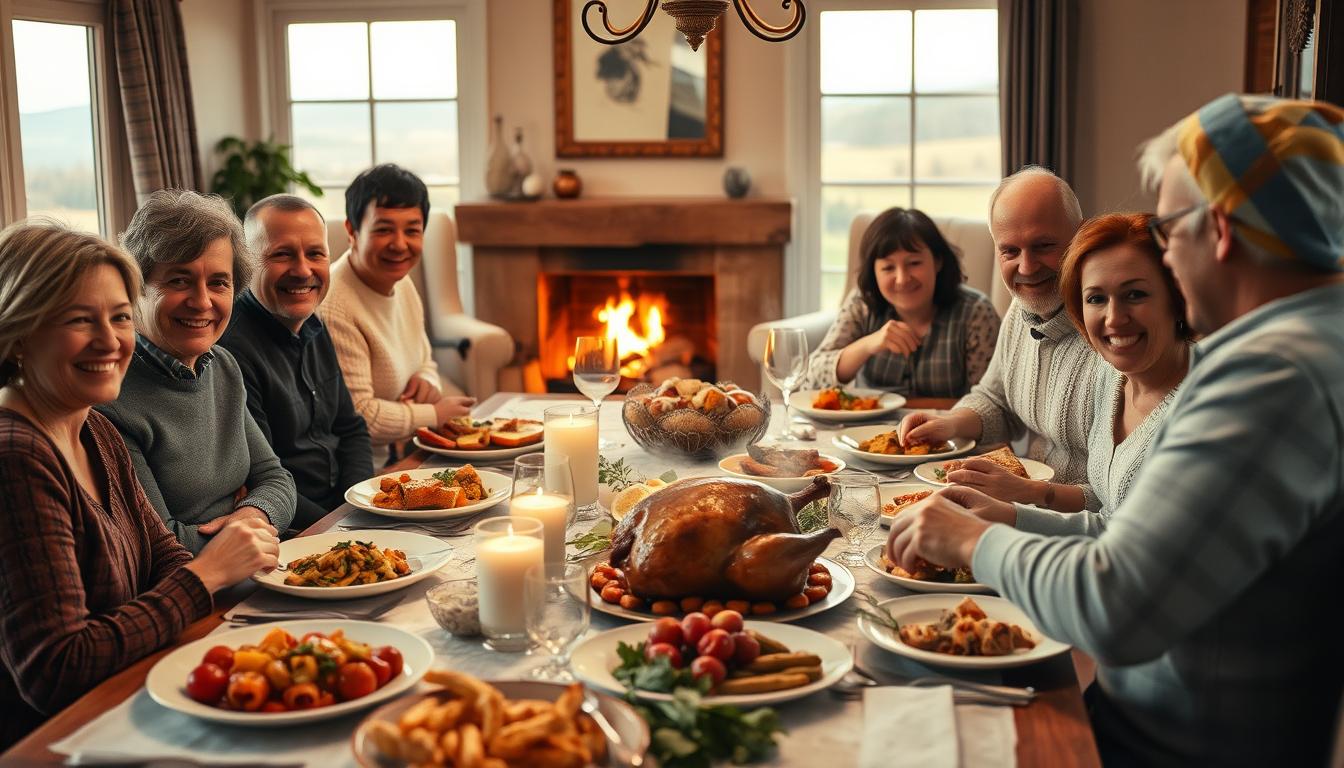
Family gatherings are more than just meals. They’re moments filled with stories, laughter, and shared plates. These moments create lasting bonds. From biblical traditions like the Last Supper to modern family reunion meals, mealtime connections are key to our lives.
In today’s fast-paced world, busy schedules and digital distractions can sideline these moments. Hosting dinner doesn’t have to be overwhelming. Whether for 8 friends or a smaller group, simplicity is the key.
Imagine a cozy taco bar or a slow-cooked lasagna. These dishes invite everyone to come together. They’re not just about food. They’re about rediscovering the joy of bringing family together in a world that often pulls us apart.
This guide shows how easy it can be to plan stress-free family reunion meals. You can grill chicken thighs for a crowd or bake mini fruit pizzas for kids. Let’s make your next dinner a memory everyone will want to repeat.
The Importance of Family Meals
Family meals are more than just eating together. They are a key part of a healthy lifestyle. Regular family dinners improve family communication and offer many benefits. For example, kids who eat with their family tend to eat more veggies and have lower obesity rates.
These meals also help protect against risky behaviors. Studies show a 25-50% decrease in substance use among those who eat with family compared to those who eat alone.
Even when life gets busy, the benefits of family meals are worth it. Over 80% of teens say family dinners are their favorite time to talk with parents. These dinner conversation topics help build trust and a sense of belonging.
For instance, teens who eat with their family often have half the anxiety rates of those who don’t. Schools also see better grades in students who eat with their family. Sometimes, these students outperform those who don’t share meals at home.
“Meals create space for stories and laughter that no screen can replace.”
Modern life often makes it hard to find time for meals. But the benefits are huge. Even just five shared meals a week can make a big difference.
Initiatives like the Family Dinner Project have helped over 2 million families see the value of this tradition. Whether it’s a homemade meal or takeout, making time for family strengthens bonds and builds resilience for life.
Planning the Perfect Family Meal
Mastering meal planning tips begins with advance preparation. Start by making a list of dishes that get better with time, like soups or casseroles. For example, vegetarian butternut squash soup tastes even better after a day in the fridge. Cheesy mac and cheese can stay in the fridge for up to four days. 
“The best family dinners are those that bring everyone together without chaos,” say kitchen experts. Potluck organization helps here: kids can set the table, while teens can chop veggies for a quick Grilled Chicken Ranch Burger. Even with busy schedules, easy family meals are doable with smart planning.
For family dinner ideas, focus on dishes that freeze well. Chili and meatballs can last months in the freezer, and breakfast casserole can be prepped days in advance. Use 9×13-inch pans for easy portioning. Keep a stash of quick recipes like Pressure Cooker Chili or Instant Pot Chicken and Broccoli to avoid stress. Label containers with dates to keep track of what’s in the freezer.
Get everyone involved by sharing tasks. Ask guests to bring sides, like carrot dishes, which stay fresh for 24 hours. Use 1:1 flour substitutions for gluten-free options. The aim is to enjoy the time together, not worry about perfect dishes. Start with one easy family meal this week and grow from there. Every meal is special when you have a plan.
Essential Kitchen Tools for Family Meals
Hosting big gatherings begins with the right cookware for large meals. A strong Dutch oven or roasting pan cooks food evenly. Pair these with serving dishes made of wood or marble to keep food warm and look good. Even small kitchens can handle family cooking equipment that serves as both storage and serving tools.
Classic kitchen essentials like the Lodge 12-inch cast iron skillet or Victorinox Fibrox Pro knife set make daily meals and special occasions easier. A Cuisipro 7-in-1 grater or OXO Good Grips colander save space on your counter. Kitchen tools for entertaining like a Prepara potato masher or Fellow Stagg kettle make things more efficient without costing too much.
Choose pieces that will last: All-Clad’s stainless steel cookware cooks food evenly, and a 10-pound John Boos cutting board lasts for years. Even small upgrades like a 5-star-rated KitchenAid mixer or Breville Smart Grinder make prep work easier. Focus on tools that work for different dishes, like sheet pans for roasting or charcuterie boards for snacks.
You don’t need to spend a lot to get quality. The Lodge skillet ($15-$41) or U-Taste silicone spatula are just as good as more expensive ones. Start with a basic set of pots, knives, and serving dishes. Then, add more as you go. A few reliable tools can make every meal special without costing a lot.
Tips for Inviting Guests
Family invitation etiquette begins with being clear. When scheduling family dinners, send out invites at least a week early. Digital invites save time and let guests RSVP right away. Tools like Paperless Post or Evite make planning family gatherings simpler.
Always include details like dress code and arrival time. This sets clear expectations for everyone.

Coordinating family schedules means checking everyone’s calendars for conflicts. Use shared digital calendars or apps like Calendly to find a date that works for everyone. For bigger groups, plan scheduling family dinners around holidays or weekends.
Mention dietary preferences upfront—60% of guests like to know about menu options before. This helps everyone feel included.
Matthew 18:20 reminds us that meaningful connections form when people come together. Keep invitations warm but clear. “Will you join us for a cozy meal on [date]?” is a great way to invite honesty.
Follow up with a reminder a few days before to boost attendance. For coordinating family schedules, pair the invite with a brief note about the event’s theme or purpose.
Balance personalization with simplicity. Avoid overwhelming guests with too many details. Mention if it’s a potluck—letting guests know to bring a dish eases your workload.
Always list any dietary restrictions in the invite to avoid surprises. Clear communication builds trust and ensures everyone feels welcome.
Making Room for Everyone
Hosting a family dinner doesn’t need a big house. Many families have gatherings in spaces as small as 900 square feet. Small space entertaining is all about smart planning. Start by picking the right family dinner table setup.
Expandable tables or foldable chairs help adjust for 8 adults and 9 kids. Even when in-laws come, you can fit 20 people. Outdoor spaces or dining rooms can also serve as extra seating, making sure everyone has a place.
When accommodating guests, think about comfort. Make sure chair heights match table levels to avoid discomfort. Add cushions on hard surfaces for elderly relatives.
Buffet-style setups with central dishes help keep tables clear. Encourage guests to bring a bottle of Kendall-Jackson Vintner’s Reserve Sauvignon Blanc to add to the spread.
Creating welcoming spaces starts with lighting. Soft lamps or string lights add warmth. Play background music softly to keep conversations flowing. Keep pathways clear for easy movement.
Even in small spaces, everyone feels at home with these touches. Folding tables and disposable dishes make cleanup easy, letting joy shine.
Cooking for Different Dietary Needs
Hosting a meal that respects accommodating dietary restrictions is easy. Over 75% of people can’t digest dairy, so dairy-free options are key. Just ask guests about their allergies or preferences to show you care.
Start by making allergen-free cooking a habit. Use separate areas for gluten-free foods. Replace wheat flour with corn tortillas or rice pasta for vegan family meals everyone can enjoy.
Chili made with cornmeal or a gluten-free options enchilada bar lets guests customize their meals. Tostada bars and vegetable-packed soups are great for serving many options without stress.
“A well-planned meal is a silent language of love.”
Make sure to label dishes and store ingredients separately to avoid cross-contamination. Breakfast casseroles with tofu or tempeh are great for inclusive family dinner menus. They stretch ingredients and please everyone.
Snacks like nut-free trail mix or gluten-free cookies keep everyone happy without stress. Classic dishes like pasta aglio e olio (with gluten-free pasta) or stuffed peppers are safe choices. Thoughtful cooking turns differences into shared traditions.
Fun Activities to Engage Family Members
Family dinner activities can turn regular meals into special moments. Start with mealtime conversation starters like “What’s one adventure you’d love to try?” to spark real talks. Over 90% of families who play games say they feel closer, showing these small changes have a big effect.
Games like “Guess the Ingredients” or “Train of Thought” (with 110 cards) keep everyone involved. For the little ones, kitchen activities for kids like decorating cookies or making veggie art are great. Even teens enjoy trivia or “What Animal Am I?”—games that mix fun with interaction.
Interactive family meals happen when everyone gets involved. Try “Sharing Time” with 120 prompts or “ABC Game” where players name foods starting with each letter. These activities, backed by 75% of parents noting improved atmosphere, make meals a team effort. Even simple tasks like setting the table together are bonding moments.
“Laughter during meals boosts family happiness by 85%,” says a recent study. Mix humor with creativity—like “Kids Against Maturity” or “Don’t Say It”—to keep the mood light. Let the meal be a place where everyone’s voice is heard, through cooking, games, or stories.
The Role of Music in Family Gatherings
Starting a family dinner playlist means picking background music for gatherings that’s gentle yet engaging. A mix of multigenerational music selection includes both old and new songs. This way, everyone from grandparents to kids can find something they love.
More than 40% of families use playlists to connect across ages. Tools like Spotify make it easy to create these special collections. Keep the music volume around 60 decibels to support conversation without drowning it out.

Placing the central speaker right ensures everyone hears the music clearly. Music for entertaining can start interesting conversations. Letting family members pick songs can lead to sharing stories or discovering new artists.
The right songs can make meals memorable. They help create moments where everyone connects through music. This shows that harmony can be found in many ways.
Capturing the Moments
Family dinner photography doesn’t have to ruin the meal. It’s all about finding a balance. Let one person take photos while others enjoy their food. Quick snaps or switching who takes pictures keeps everyone relaxed.
Keeping memories alive isn’t just about photos. Try writing down who loved Grandma’s recipe or recording laughter. A recipe journal with notes is a special keepsake. Audio recordings of stories add even more to your collection.
Kodak Easyshare Digital Frames make sharing photos easy. They let you stream pictures instantly. For big events, Flytographer’s professional services capture memories beautifully.
Stories and anecdotes matter: families who share them are 60% more likely to preserve heritage, according to research.
Simple ideas can make great photos: take a group shot before dessert or let kids take selfies. It’s not about being perfect—it’s about capturing what’s important. Organize photos in albums or digital galleries, respecting privacy. These efforts turn moments into lasting treasures, making memory keeping a joy, not a stress.
Handling Conflicts
Family dinner etiquette begins with respect. Even the warmest gatherings can face disagreements. Setting boundaries early can prevent clashes. For example, agree to avoid touchy topics like politics or finances during meals.
Simple steps like rotating seating or limiting event lengths help keep tensions low.

Managing family disagreements often requires calm communication. Use “I” statements like “I feel overwhelmed when topics get heated” instead of blaming others. Active listening—nodding and repeating back points—shows respect.
If voices rise, suggest a 10-minute break to cool down before resuming talks.
“Shared activities like baking together shift focus to teamwork,” say family counselors. Collaborative tasks ease stress and build unity.
Conflict-free family meals thrive on clear expectations. Plan shorter get-togethers if tensions run high. Assign roles like dessert prep to involve everyone.
If disagreements persist, consider a neutral space like a park or rotating hosts to balance responsibilities.
Peaceful family gatherings depend on compromise. Acknowledge differing views but redirect to shared values. If tensions linger, suggest professional help like family therapy to address deeper issues.
Prioritizing kindness over winning arguments keeps harmony alive.
Traditions to Incorporate into Family Meals
Family mealtime traditions can turn simple meals into special bonding moments. Start by celebrating cultural food traditions, like grandma’s recipe or holiday dishes. Sharing stories behind these dishes keeps family roots alive and invites everyone to contribute.
Creating family traditions doesn’t need to be big. Simple rituals like a weekly taco night or monthly potluck dinners can build excitement. Meaningful customs might include passing a gratitude jar at the table or ending meals with a shared toast.
Weekly themed dinners let kids help choose the menu, making them feel involved. A “Yes Jar” for activity ideas or crafting holiday ornaments adds fun. Even small acts, like serving dessert family-style or rotating who picks the movie after dinner, strengthen family bonds.
Research shows family-style meals increase togetherness. Traditions like these turn daily routines into cherished memories. Flexibility is key to keeping traditions alive. Adjust as families grow—maybe shift from nightly dinners to monthly game nights.
Studies show that consistent family rituals, even brief, combat the average 37 daily minutes of quality time many families experience. Whether it’s a seasonal soup kitchen visit or a “Happiness Jar” for jotting down highlights, these practices anchor shared identity. Let traditions evolve, but always prioritize the shared table itself as the foundation. After all, the greatest custom is simply showing up, again and again, to savor the moments only your family can create.